Sign of the Golden Ball
Displayed inside the Golden Ball Tavern Museum is the large gilded sphere that identified the tavern to travelers passing through Weston. In an era before standardized street addresses, and when not everyone could read, taverns commonly used distinctive objects or painted symbols as signs. A traveler did not need to recognize a written name to understand that the golden ball marked a place offering food, drink, lodging, and hospitality.
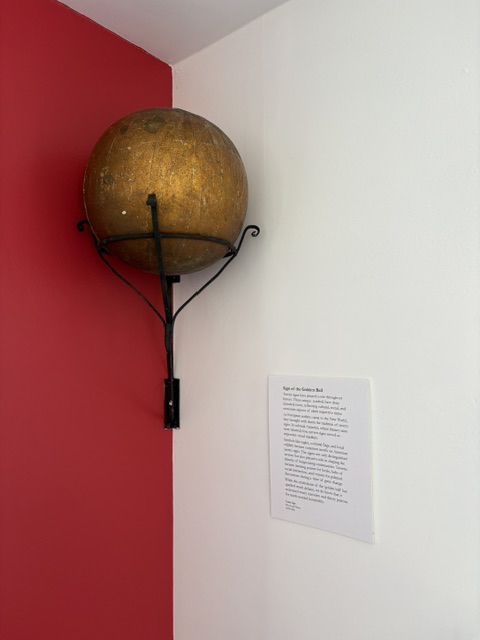
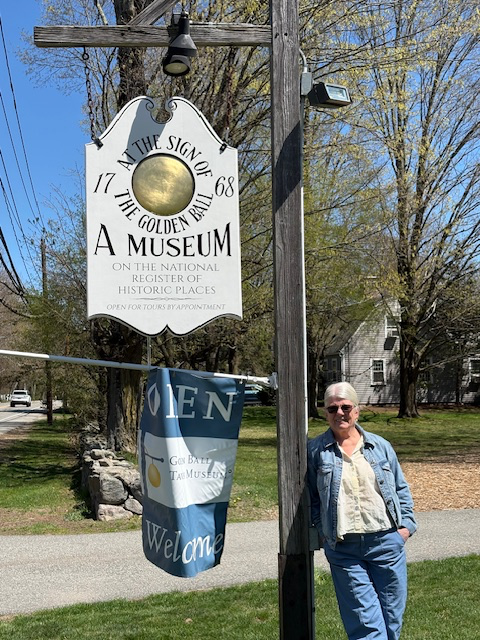
Captain Isaac Jones operated his tavern “at the sign of the Golden Ball” along the Boston Post Road from 1768 until 1793. The location was well suited for an inn because the road carried travelers, mail, news, and goods between Boston and communities farther west. The golden ball would have been visible from the road, guiding visitors toward a place where they could rest, exchange information, and hear news from beyond Weston.
The sign also represents a building closely connected to the tensions preceding the American Revolution. Jones was a Loyalist, and his tavern became the target of local Patriots during the 1774 incident remembered as the Weston Tea Party. British agents sent by General Thomas Gage also stopped there while gathering information about colonial military preparations.
Seeing the golden ball inside the museum provided a tangible connection to the tavern’s original purpose. It was once more than a decorative object. It served as a landmark along one of colonial New England’s most important roads and welcomed generations of travelers into a building that became part of Weston’s Revolutionary history.
Read More
Read More From Nancy
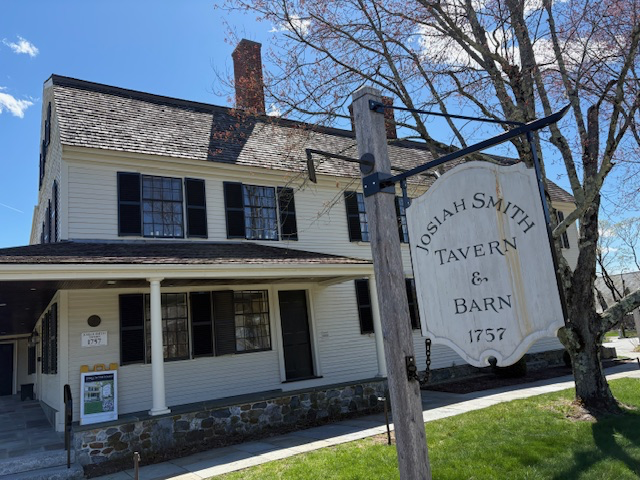
Josiah Smith Tavern
The Josiah Smith Tavern in Weston is not just a single historic building, but a location on one of the most important early roads in America: The Boston Post Road. Established in the 1600s and formalized in the early 18th century, the Boston Post Road connected Boston to New York and served as the main […]
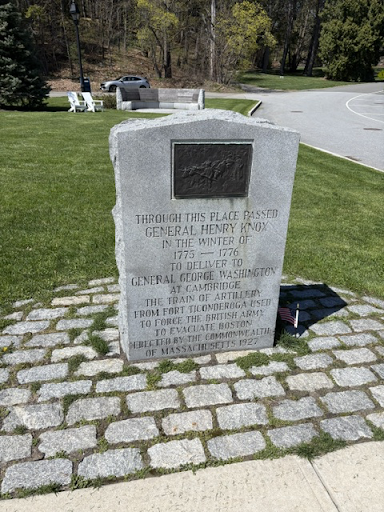
Henry Knox Trail Marker
As I continue to travel through eastern Massachusetts, I have made it a personal tradition to stop whenever I encounter one of the Henry Knox Trail markers. Although each monument commemorates the same remarkable journey, every marker represents another community through which Knox and his artillery train passed during the winter of 1775–1776. This marker […]
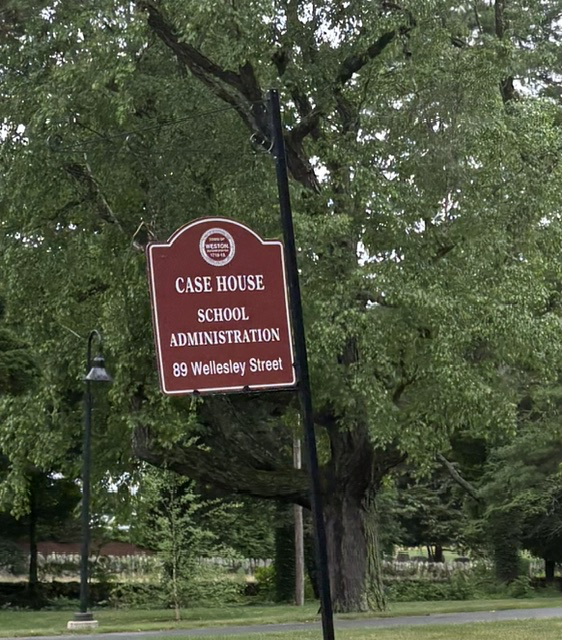
Case House and Case’s Corner
Driving along Wellesley Street in Weston, two signs bearing the Case name tell a story that reaches back more than a century. One marks Case House, today used by the Weston Public Schools administration. The other identifies Case’s Corner as a National Register Historic District. Together they preserve the story of a family whose presence […]

