The Jabez Howland House
Among the many historic houses in Plymouth, the Jabez Howland House has a distinction that makes it extraordinary. Built about 1667, it is considered the only surviving building in Plymouth where people who actually arrived aboard the Mayflower are known to have spent time. Those people were John Howland and his wife, Elizabeth Tilley Howland.
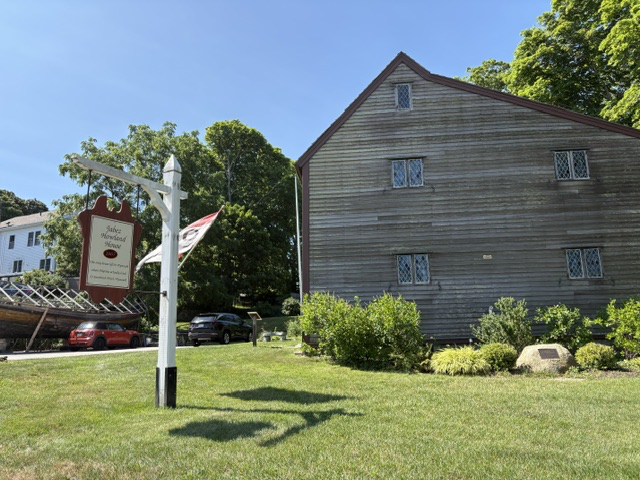
John Howland’s presence here connects this house directly to one of the most remarkable survival stories of the Mayflower voyage. During a violent storm while crossing the Atlantic in 1620, Howland was swept overboard. William Bradford later recorded that Howland managed to catch hold of a rope trailing from the ship. He was dragged through the sea before the crew was able to pull him back aboard with a boat hook.
That moment could easily have been the end of his story. Instead, Howland reached Plymouth, signed the Mayflower Compact, became active in the government of Plymouth Colony and married another Mayflower passenger, Elizabeth Tilley. Together they had ten children—four sons and six daughters—and became the ancestors of an enormous number of Americans.
Elizabeth’s story is equally compelling. She had traveled aboard the Mayflower as a young girl with her parents, John and Joan Tilley. Both of her parents died during the devastating first winter, leaving Elizabeth as the only member of her immediate family to survive. She eventually married John Howland and spent the next half-century building a life and family in Plymouth Colony.
John and Elizabeth did not make this Plymouth house their primary home. From 1638/39 they lived at Rocky Nook, in what is now Kingston, where John remained until his death in 1672/73. But because their son Jabez owned this house before John’s death, John would have known and visited the house. After John died, Elizabeth lived here with Jabez for a period of time.
The building itself has changed during its more than 350 years. The original seventeenth-century portion was a two-story timber-framed structure containing a porch, hall and hall chamber. Changes were made during Jabez’s ownership, and an addition dating to about 1750 introduced another period of architecture to the house.
Remarkably, it continued as a private residence until 1912, when the Pilgrim John Howland Society purchased it for preservation. Beginning in the 1930s, the Society undertook an extensive restoration intended to return the house more closely to its seventeenth-century appearance. The restored house was rededicated in 1941.
John Howland walked through this house after surviving an Atlantic crossing that nearly took his life. Elizabeth Tilley Howland lived here after surviving a first winter that took both of her parents. Their son Jabez raised his family within these walls.
More than three centuries later, the house remains a physical connection to them, not a reconstruction of where they might have been, but a surviving place where members of the Mayflower generation actually lived, visited and gathered as a family.
Read More
Read More From Nancy
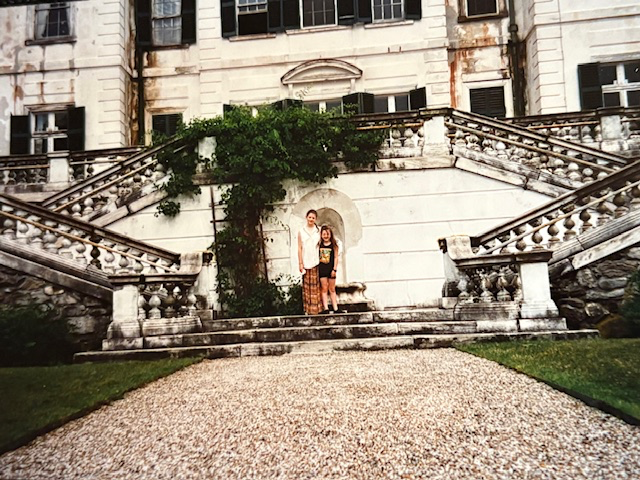
Edith Wharton’s Mount
Exploration through road trips was a big part of homeschooling in our household. Each spring, when historic homes reopened for the season, off we would go, ready to step into another life and another era. One such stop was Edith Wharton’s home in Lenox, Massachusetts, a place we returned to more than once, always drawn back […]
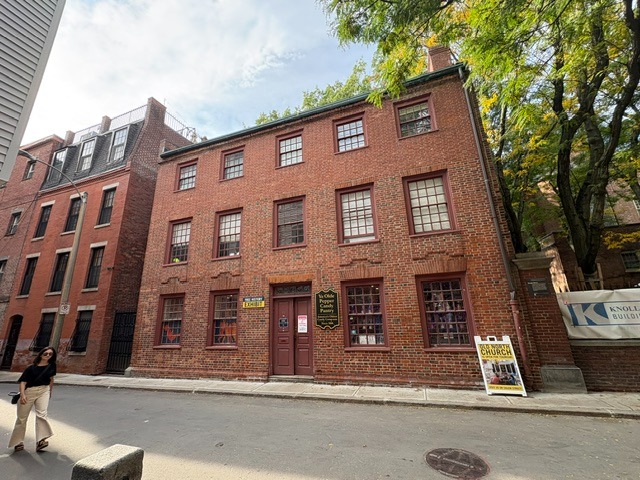
The Clough House
Walking through Boston’s North End, we stopped at the Clough House on Unity Street, behind Old North Church. Its brick exterior holds a history that reaches beyond colonial Boston into the lives of immigrant families who later made this neighborhood their home. Built around 1715, the house was the home of master bricklayer Ebenezer Clough, […]
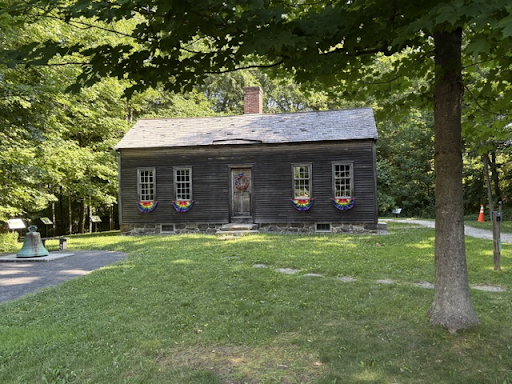
The Robbins House
When most people visit Concord, Massachusetts, they come to walk across the Old North Bridge, stand where the American Revolution began, and visit the homes of Emerson, Thoreau, Hawthorne, and Alcott. I have made that journey many times over the years and thought I knew Concord’s history well. On one of my more recent visits, […]

