Palau Maricel
Walking through the historic streets of Sitges, Spain, we came upon one of the town’s architectural treasures: Palau Maricel. Standing before its beautifully carved Gothic doorway, it is easy to imagine that this is a medieval palace. It is the product of an extraordinary vision that brought together centuries of Spanish architectural traditions to create one of the most beautiful cultural landmarks on the Mediterranean coast.
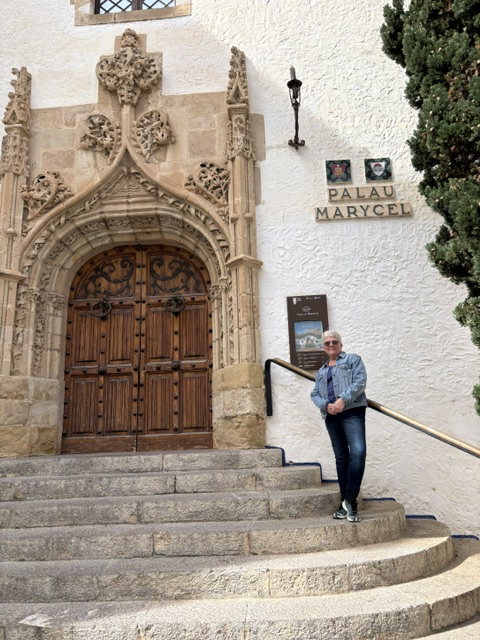
Palau Maricel was built between 1910 and 1918 by American collector Charles Deering, who had fallen in love with Sitges while visiting Spain. Working with artist and engineer Miquel Utrillo, Deering transformed a collection of old fishermen’s houses and adjoining buildings into an elegant palace designed to showcase his growing collection of art and antiques. Rather than constructing something entirely new, they incorporated historic architectural elements rescued from monasteries, churches, and estates throughout Spain, giving the palace the appearance of a building that had evolved over many centuries.
Its name reflects its remarkable setting. “Maricel” combines the Spanish words for “sea” and “sky,” an appropriate description for a palace perched above the Mediterranean. Throughout the building, Gothic, Renaissance, Mudéjar, and Baroque influences blend in graceful harmony. Intricately carved stone doorways, elegant courtyards, arches, balconies, and colorful ceramic details celebrate Spain’s rich artistic heritage while taking full advantage of the stunning coastal views.
Although Deering eventually returned to the United States and took much of his art collection with him, the palace remained. Today it serves as one of Sitges’ most important cultural landmarks, housing exhibitions, concerts, and civic events while welcoming visitors from around the world. Its architecture has become every bit as significant as the artwork it was originally built to display.
Standing at the entrance, I was struck by how perfectly the palace fits its surroundings. It feels less like a museum and more like a natural part of Sitges, blending seamlessly into the narrow streets and overlooking the Mediterranean as though it has always belonged there. It is one of those places where history, architecture, art, and landscape come together so naturally that it becomes difficult to separate one from the other.
Read More From Nancy
A Street Name Rooted in the Soil
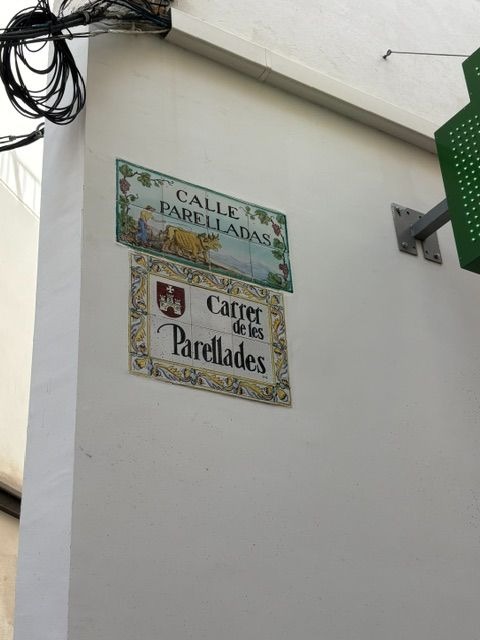
Along Carrer de les Parellades in Sitges, a ceramic street sign offers a clue to the meaning of an old name. Its scene of a farmer guiding two oxen through a field recalls a time when land was measured by the labor required to cultivate it. A parellada was an agricultural measure associated with the […]
Postal de Sitges: A Camera by the Sea
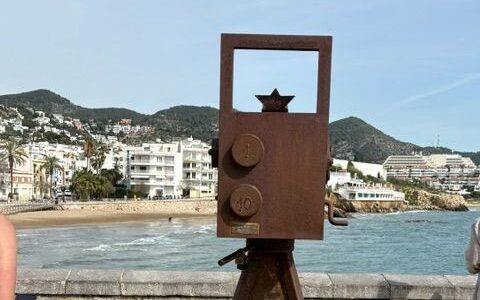
An oversized metal camera stands above the Mediterranean, its tripod planted firmly on the promenade. With circular details on its body and a star framed within its upper opening, it invites a closer look. This is Postal de Sitges, a sculpture by photographer and artist Joan Iriarte i Ibarz. Its camera form introduces a different […]
Flower Carpets of Corpus Christi
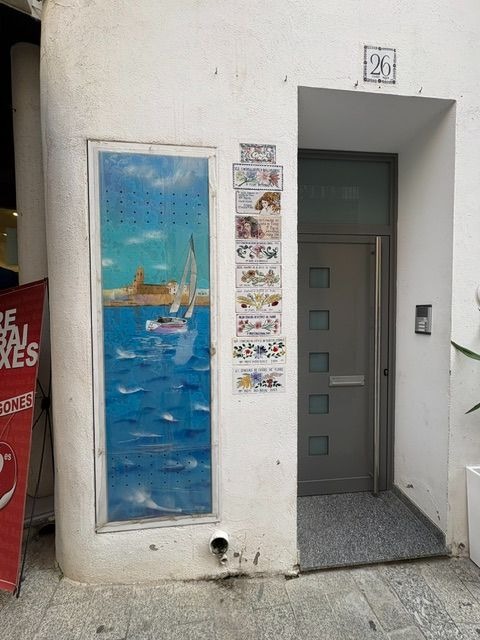
In Sitges, some works of art are made to last only a few hours. Each year for Corpus Christi, residents cover sections of the streets with elaborate carpets of flowers. Petals, whole blossoms and greenery form patterns across the pavement, transforming familiar routes into colorful displays before the evening religious procession passes over them. The […]

