Wellington Farm
I have driven by this sign on Wellesley Street countless times over the years. I noticed it often enough, but I never stopped to ask what it meant. “Wellington Farm Historic District” sounded important, yet there was no grand mansion, famous monument, or obvious attraction drawing attention to itself. It was simply another sign along a familiar road.
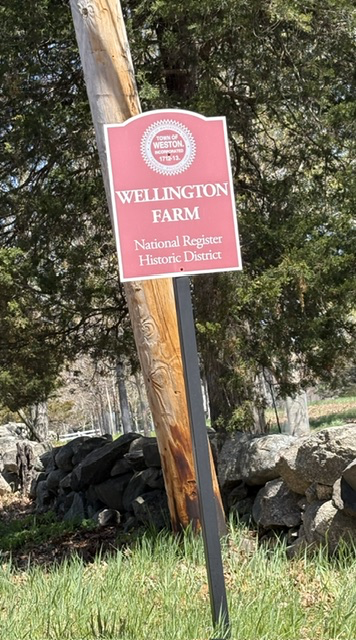
It wasn’t until I began exploring the history of the places around me that I finally asked the question: Why is this farm a historic district?
The answer isn’t found in a famous person or a single remarkable building. It is found in the landscape itself.
Long before Weston became known for its beautiful homes and quiet residential neighborhoods, it was a farming community. The town’s economy depended on families who worked the land, built stone walls from the rocks they cleared from their fields, raised livestock, harvested hay, and passed their farms from one generation to the next. That was the Weston that existed for nearly two centuries.
As the twentieth century progressed, almost all of those farms disappeared. Fields became subdivisions, barns were demolished, and agricultural land gave way to suburban development. What had once been an ordinary New England farming town slowly became one of Greater Boston’s most desirable residential communities.
The Wellington Farm Historic District survived that transformation.
What makes this property significant is not that one extraordinary event happened here. Rather, it preserves an entire way of life that has nearly vanished. The district still contains historic farmhouses, barns, open fields, stone walls, and the relationship between those features that defined a working New England farm. It allows us to see Weston not as it is today, but as it was for generations.
There is something fitting about the simplicity of the sign. It doesn’t try to tell the whole story. It simply marks a place worth remembering. The real story unfolds when you stop to ask why.
That is why Wellington Farm matters. It reminds us that before Weston became the town we know today, it was a town of fields, stone walls, and working farms. Without places like this, that chapter of its story could easily be forgotten.
Read More From Nancy
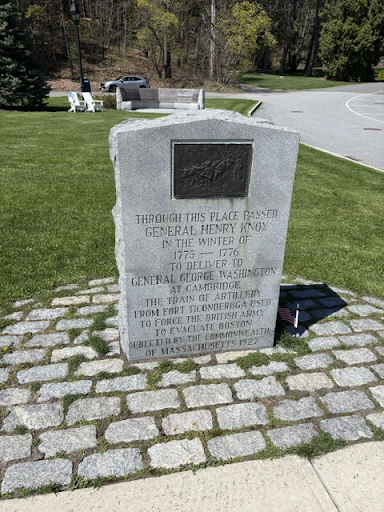
Henry Knox Trail Marker
As I continue to travel through eastern Massachusetts, I have made it a personal tradition to stop whenever I encounter one of the Henry Knox Trail markers. Although each monument commemorates the same remarkable journey, every marker represents another community through which Knox and his artillery train passed during the winter of 1775–1776. This marker […]
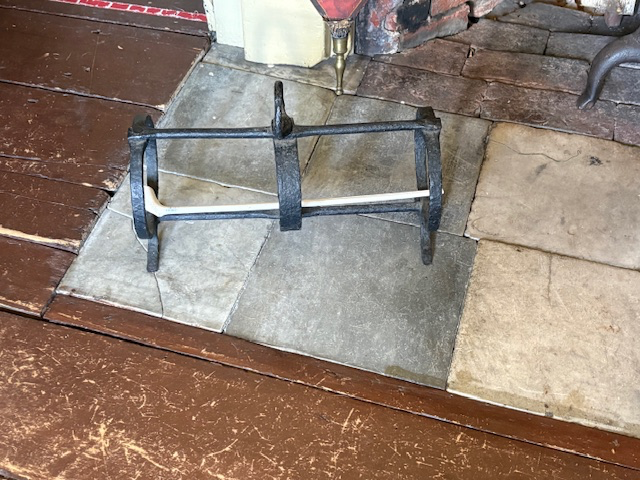
Clay Pipe Warmer
Resting on the hearth of a colonial tavern was this simple iron frame and without a pipe set across it, I would never have recognized it as a clay pipe warmer. As with every object, there is a history, and it is that curiosity that draws me in to learn more. Before matches were common and […]
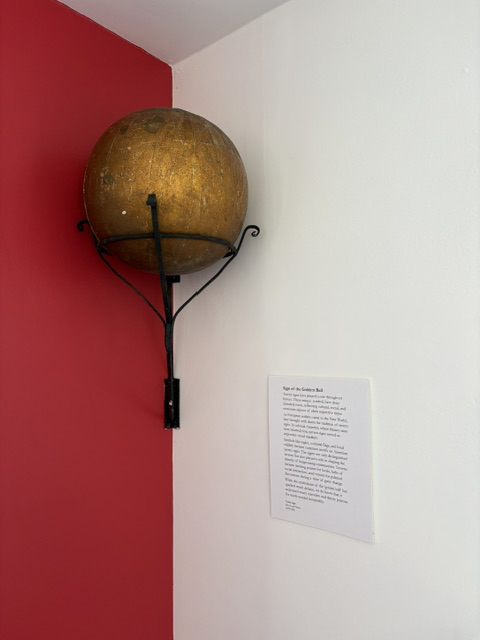
Sign of the Golden Ball
Displayed inside the Golden Ball Tavern Museum is the large gilded sphere that identified the tavern to travelers passing through Weston. In an era before standardized street addresses, and when not everyone could read, taverns commonly used distinctive objects or painted symbols as signs. A traveler did not need to recognize a written name to […]

