The Gibson House
On a rainy day, with gale-force winds sweeping through Boston, Marty and I made our way into the Back Bay to visit the Gibson House Museum. The weather seemed appropriate for stepping back in time. As we stood on Beacon Street, surrounded by modern Boston, it was hard to imagine that behind this brownstone door waited a house that had remained virtually unchanged for more than a century.
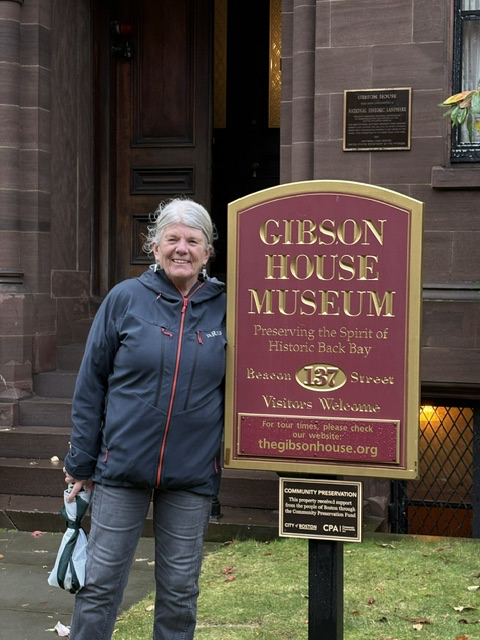
Built in 1860, the Gibson House was home to three generations of the Gibson family from 1859 until the last family member, Charles Hammond Gibson Jr., died in 1954. Unlike many historic homes that have been restored or recreated, the Gibson House is remarkably authentic. Charles Gibson understood the historical value of his family’s home and took extraordinary care to preserve it just as it had been. Today, visitors walk through rooms furnished with the family’s original furniture, artwork, books, clothing, photographs, and personal belongings, offering a rare glimpse into the daily life of an upper-middle-class Boston family during the Victorian era.
Following Charles Gibson’s death, the house was left in trust with the hope that it would continue to educate future generations. In 1957, the Gibson House Museum was established, and today it is owned and operated by the nonprofit Gibson House Museum. A dedicated board of directors, professional staff, volunteers, and supporters work together to preserve both the building and its extraordinary collection. Their stewardship has ensured that this rare survivor remains one of Boston’s most authentic historic house museums, allowing visitors to experience the home almost exactly as the Gibson family left it.
The Gibson House tells the story of ordinary life. It reveals how a prosperous Boston family lived, entertained guests, celebrated holidays, raised children, and adapted to changing times while remaining deeply rooted in tradition. Walking from room to room, I found myself noticing the small details that often disappear from history. The gas lighting, intricate wallpapers, richly furnished parlors, family portraits, and carefully preserved personal possessions all help tell a story that cannot be found in textbooks. These are the objects that once filled everyday life, yet today they provide some of our clearest connections to the past.
The Gibson House was a comfortable family home, representing the aspirations and lifestyle of Boston’s growing professional class during the second half of the nineteenth century. The Gibsons witnessed enormous changes: from horse-drawn carriages to automobiles, from gaslight to electricity, and through wars, economic upheavals, and dramatic social change. Yet remarkably, their home remained much as it had always been.
Few homes survive in such an untouched state. The Gibson House escaped that fate because one family recognized that preserving their home meant preserving a way of life, and because generations of dedicated caretakers have continued that commitment.
Read More From Nancy
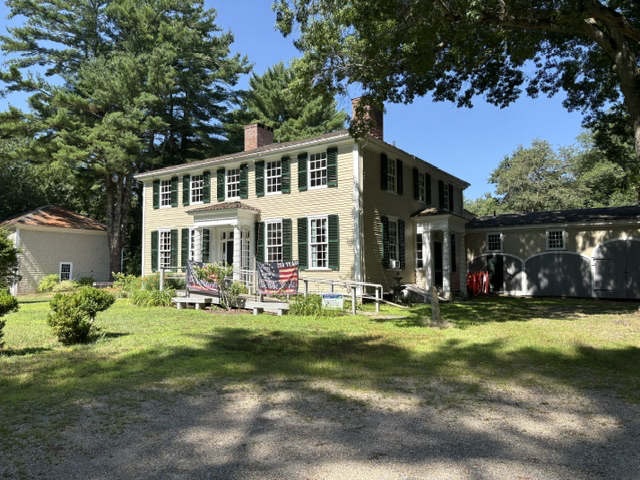
The Oliver Estate
On my way home from our camping trip to Plymouth, I made a side trip to Middleborough specifically to visit the Oliver Estate. I had learned that this was the home of one of Massachusetts’s prominent Loyalist families, and I wanted to understand more about the people who chose to remain loyal to the Crown […]
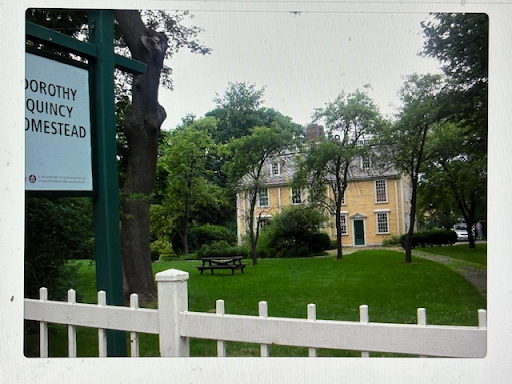
Dorothy Quincy Homestead
Visiting the Dorothy Quincy Homestead in Quincy, Massachusetts was another chance to step back into the life of one of colonial America’s most prominent families. This landmark dates back to 1686, when it was built by Edmund Quincy on land settled by the family in the 1630s. The homestead was the childhood home of Dorothy Quincy Hancock Scott, […]
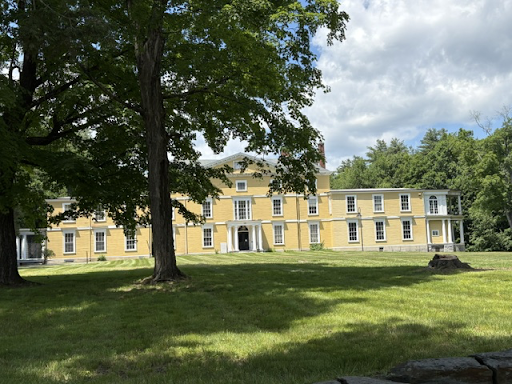
Nathaniel Thayer Estate
Driving through South Lancaster, I was surprised to come upon one of the grandest estates in central Massachusetts: the Nathaniel Thayer Estate, later known as Thayer Hall. Set amid expansive lawns and towering trees, the stately yellow mansion immediately conveyed the elegance and prosperity of nineteenth-century New England. Although many visitors associate South Lancaster with […]

