Johnny Appleseed Visitor Information Center
Sometimes a visitor center is much more than a place to pick up maps and brochures. It can also introduce visitors to the history and character of an entire region.
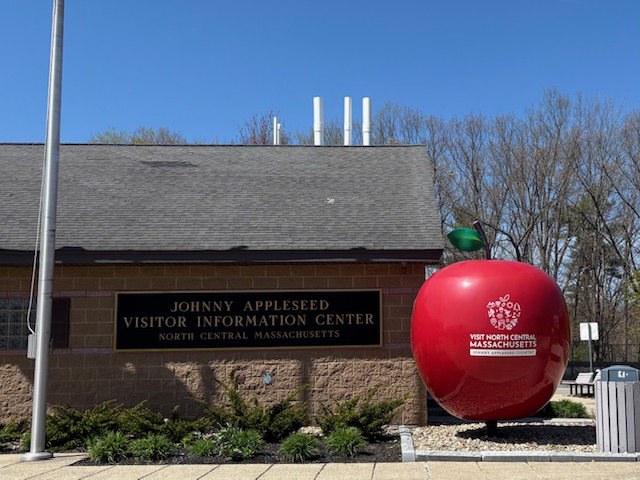
While traveling through north-central Massachusetts, Marty and I stopped at the Johnny Appleseed Visitor Information Center in Lancaster. Outside stands a giant red apple, welcoming travelers to a region that proudly celebrates one of America’s best-known folk heroes.
Although many people think of Johnny Appleseed as a legendary character, he was a real person. Born John Chapman in nearby Leominster in 1774, he spent much of his life traveling west, establishing apple nurseries throughout Pennsylvania, Ohio, Indiana, and Illinois. Rather than simply scattering seeds, Chapman carefully planted nurseries where settlers could purchase young apple trees. His work helped provide food, cider, and a source of income for families moving onto the American frontier.
Over time, his kindness, deep religious faith, and simple way of life transformed John Chapman into the legendary figure remembered today as Johnny Appleseed. While many stories about him have grown into folklore, his contributions to the early settlement of the Midwest were very real.
The visitor center serves as an introduction to the communities of north-central Massachusetts, an area known for its orchards, farms, historic towns, and natural beauty. It also reminds visitors that one of America’s most enduring folk heroes began life here before setting out on the journey that would make him a part of our nation’s history.
As I travel, I enjoy finding places like this because they remind me that history is often rooted in ordinary people who lived extraordinary lives. John Chapman never sought fame, yet his legacy has endured for more than two centuries. Today, visitors passing through Lancaster are welcomed by a symbol of the man whose life and work continue to connect this region with one of America’s most beloved stories.
Read More From Nancy
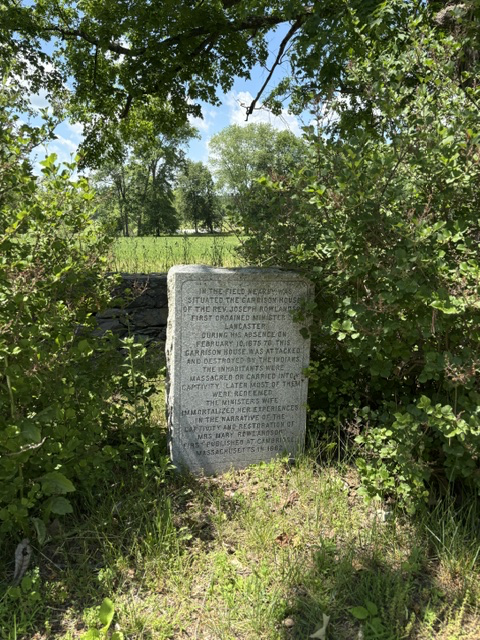
Site of Rowlandson Garrison
One of the most poignant markers I encountered in Lancaster commemorates the site of the garrison house of Reverend Joseph Rowlandson, where one of the most dramatic episodes of King Philip’s War unfolded. On February 10, 1676, during an attack on the frontier settlement, Native warriors destroyed much of Lancaster. The Rowlandson home was burned, […]
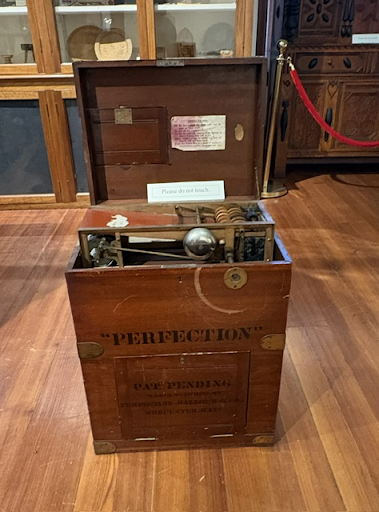
Perfection Ballot Box
One of the more intriguing artifacts we encountered in the Historical Museum at the Thayer Memorial Library was a beautifully crafted wooden voting machine known as the “Perfection” Ballot Box. Marked “Commonwealth of Massachusetts, Ballot Box No. 1483, Boston 1905,” the device offered a fascinating glimpse into the mechanics of democracy in the early twentieth […]
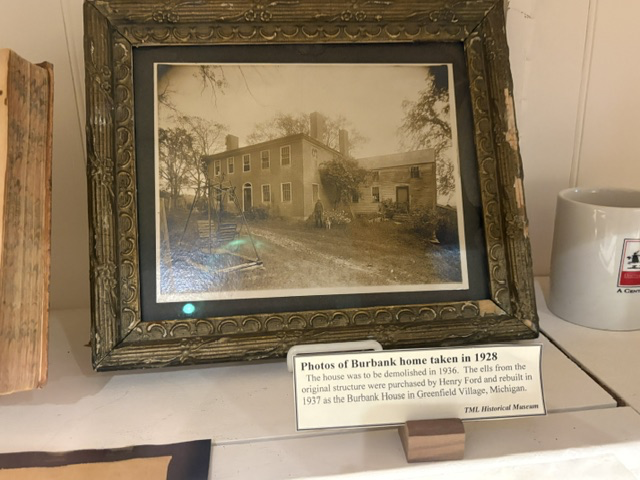
The Birthplace of Luther Burbank
Displayed in the Lancaster Historical Museum is a photograph of the Burbank family home as it appeared in 1928. Although the house was demolished in 1936, its story did not end there. Recognizing its historical significance, Henry Ford purchased timbers and other materials from the structure and reconstructed the home in 1937 at Greenfield Village […]

