Site of Rowlandson Garrison
One of the most poignant markers I encountered in Lancaster commemorates the site of the garrison house of Reverend Joseph Rowlandson, where one of the most dramatic episodes of King Philip’s War unfolded. On February 10, 1676, during an attack on the frontier settlement, Native warriors destroyed much of Lancaster. The Rowlandson home was burned, many residents were killed, and Reverend Rowlandson’s wife, Mary, along with three of their children, was taken captive.
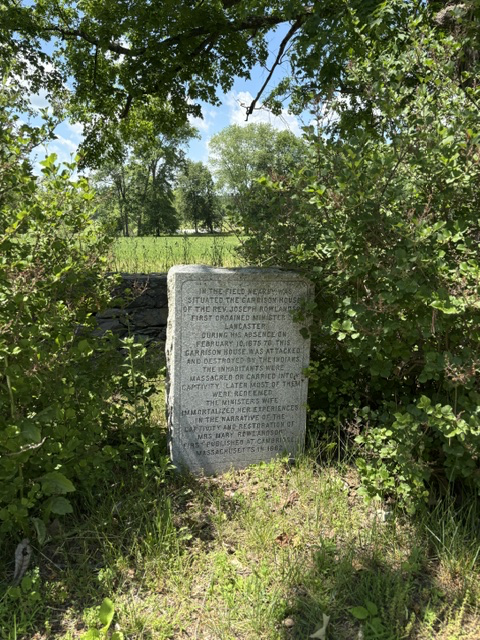
Mary Rowlandson spent nearly three months in captivity before being ransomed and reunited with her family. Her account, The Sovereignty and Goodness of God, published in 1682, became one of the earliest and most influential books written in colonial America. Widely read on both sides of the Atlantic, it shaped perceptions of frontier life and Native Americans for generations and established the literary genre known as the captivity narrative.
Mary Rowlandson spent nearly three months in captivity before being ransomed and reunited with her family. Her account, The Sovereignty and Goodness of God, published in 1682, became one of the earliest and most influential books written in colonial America. Widely read on both sides of the Atlantic, it shaped perceptions of frontier life and Native Americans for generations and established the literary genre known as the captivity narrative.
Today, the marker preserves the memory of an event whose echoes reached far beyond Lancaster and became part of the earliest literature and history of colonial America.
Read More From Nancy
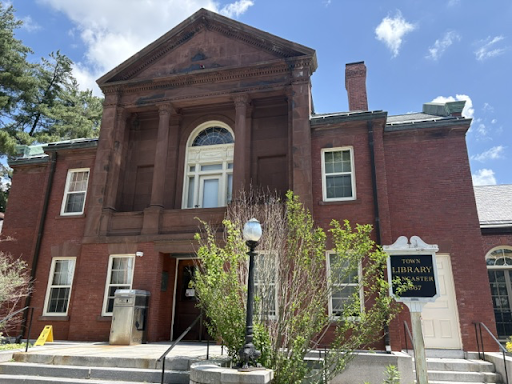
Thayer Library
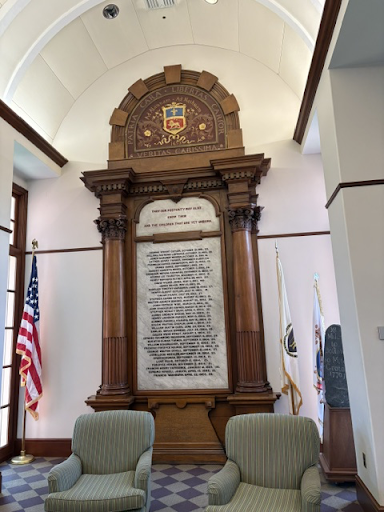
Another impressive building in the center of Lancaster is the Thayer Memorial Library. During our tour, we learned that the institution’s roots extend far beyond the beautiful structure that stands today. The town’s first library organization, known as the Lancaster Library and later the Lancaster Social Library, was established in 1790. In 1862, residents voted […]
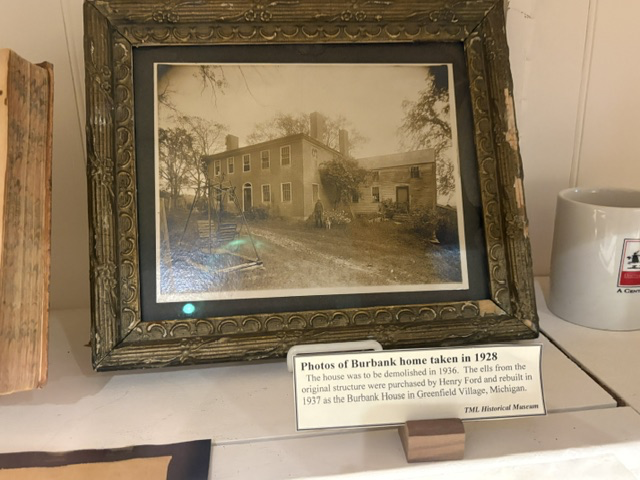
The Birthplace of Luther Burbank
Displayed in the Lancaster Historical Museum is a photograph of the Burbank family home as it appeared in 1928. Although the house was demolished in 1936, its story did not end there. Recognizing its historical significance, Henry Ford purchased timbers and other materials from the structure and reconstructed the home in 1937 at Greenfield Village […]
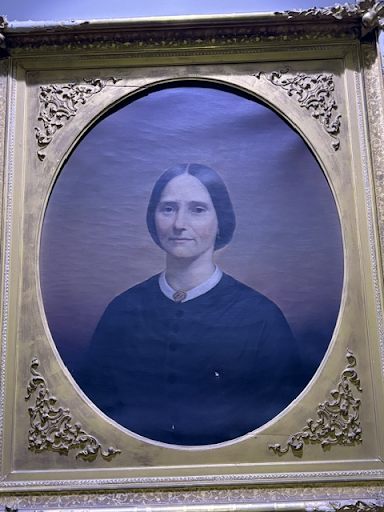
Cornelia Van Rensselaer Thayer: Connected to a Founding Father
Among the treasures preserved in the Lancaster Historical Museum is this 1853 portrait of Cornelia Patterson Van Rensselaer Thayer, painted by renowned American artist George Peter Alexander Healy, one of the most sought-after portrait painters of the nineteenth century. What makes this portrait particularly fascinating is Cornelia’s connection to one of America’s Founding Fathers. Her mother, Margaret […]

