Prescott Building
Exploring Lancaster, I came upon the Prescott Building, one of the town’s most important civic landmarks. Standing prominently near the town center, the stately brick structure reflects the pride and sense of community that characterized early twentieth-century New England. With its classical proportions, white pilasters, and formal entrance, the building conveys a sense of permanence and public purpose.
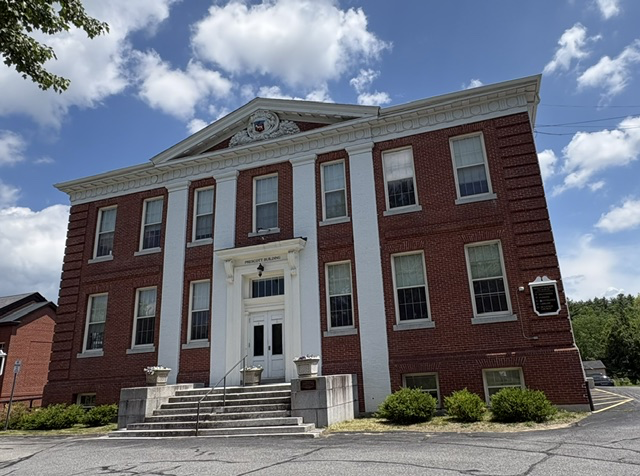
Constructed in 1903 and named in honor of the Prescott family, whose roots in Lancaster stretch back to the seventeenth century, the building originally served as the town’s high school. For generations, Lancaster students received their education within its walls before changes in the school system led to its adaptation for other community uses. Today, the building continues to serve the town and stands as a reminder of Lancaster’s long-standingcommitment to education and civic life.
The Prescott name has deep significance in Lancaster. The town’s founder, John Prescott arrived in the Massachusetts Bay Colony in the 1630s and played a leading role in establishing Lancaster in 1653. His grandson, Colonel William Prescott, became one of the heroes of the American Revolution. During the Battle of Bunker Hill in 1775, Prescott commanded the colonial forces and is traditionally credited with the famous order, “Don’t fire until you see the whites of their eyes,” a command intended to conserve the patriots’ limited ammunition. Although historians debate the exact wording, the phrase has become one of the most enduring quotations of the Revolutionary War.
Standing before the Prescott Building, I was reminded that every town leaves its values in brick and stone. More than a century after its construction, this handsome building continues to connect Lancaster’s colonial origins with its continuing story, serving as a visible expression of the importance the community has long placed on education, service, and civic responsibility.
An interesting chapter in the building’s own history occurred in 1927, when it ceased serving as Lancaster’s high school after the opening of a new facility. Rather than abandoning the structure, the town adapted it for municipal and community purposes, ensuring that it remained at the center of civic life. More than a hundred years after its construction, the Prescott Building continues to fulfill the public spirit for which it was originally built.

Read More From Nancy
Lafayette’s Visit
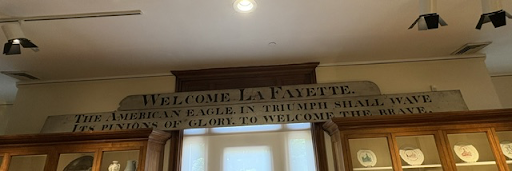
One of the most unexpected stories we uncovered during our visit to Lancaster centered on one of the most beloved figures of the American Revolution. Inside the Historical Museum at the Thayer Memorial Library hangs a large banner proclaiming: “Welcome La Fayette. The American Eagle in triumph shall wave its pinions of glory to welcome […]
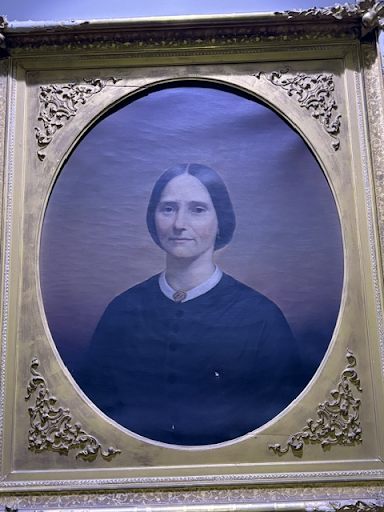
Cornelia Van Rensselaer Thayer: Connected to a Founding Father
Among the treasures preserved in the Lancaster Historical Museum is this 1853 portrait of Cornelia Patterson Van Rensselaer Thayer, painted by renowned American artist George Peter Alexander Healy, one of the most sought-after portrait painters of the nineteenth century. What makes this portrait particularly fascinating is Cornelia’s connection to one of America’s Founding Fathers. Her mother, Margaret […]
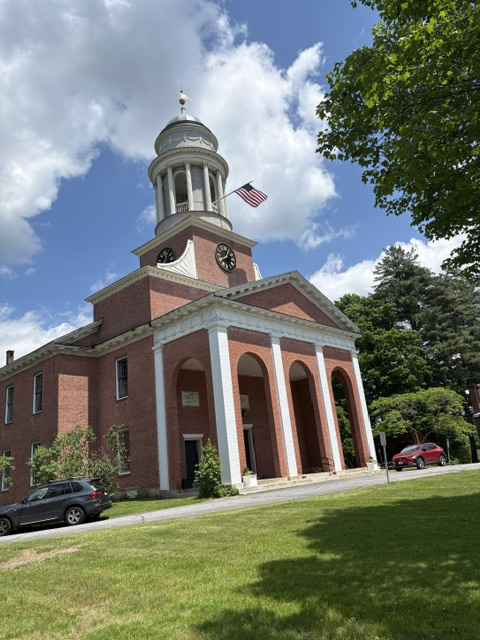
First Church of Christ
Driving to explore Lancaster, it was easy to see where the center of town has been for generations. Anchoring the broad common is the stately First Church of Christ, whose graceful dome rises above the surrounding landscape and serves as one of the town’s most recognizable landmarks. Built in 1816 and designed by renowned architect […]

