The Birthplace of Luther Burbank
Displayed in the Lancaster Historical Museum is a photograph of the Burbank family home as it appeared in 1928. Although the house was demolished in 1936, its story did not end there. Recognizing its historical significance, Henry Ford purchased timbers and other materials from the structure and reconstructed the home in 1937 at Greenfield Village in Dearborn, Michigan, where it remains today.
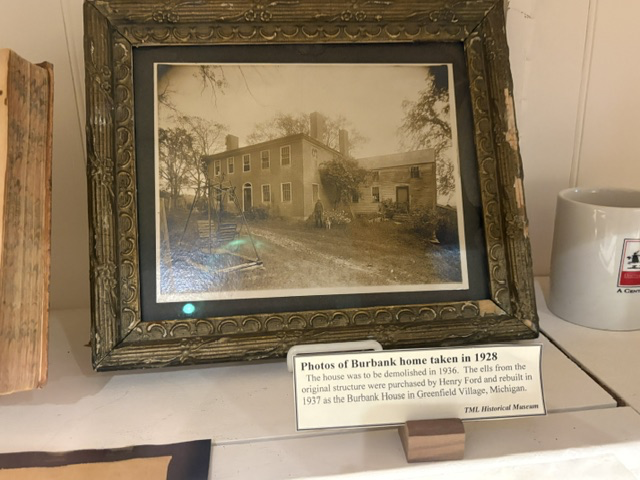
The house is important because it was the birthplace and childhood home of Luther Burbank, who was born in Lancaster, Massachusetts, on March 7, 1849. Raised on the family farm, Burbank developed an early interest in plants and experimentation. It was during his years in Massachusetts that he developed the Burbank potato, a variety that later gave rise to the Russet Burbank potato, one of the most widely cultivated potatoes in the world.
In 1875, after the death of his mother, Burbank left Massachusetts and moved to Santa Rosa, California. There he devoted the remainder of his life to horticultural research and plant breeding, introducing more than 800 varieties and strains of fruits, vegetables, flowers, and ornamental plants. His achievements earned him international acclaim and the nickname “The Plant Wizard.”
By the time of his death in 1926, Luther Burbank had become one of America’s most celebrated scientists and horticulturists. Henry Ford, who sought to preserve the homes of notable Americans whose ingenuity and accomplishments had shaped the nation, recognized the importance of Burbank’s early years in Lancaster. Rather than allowing the house to disappear completely, Ford gave it a second life at Greenfield Village.
Although the original house no longer stands in Massachusetts, the story of Lancaster’s most famous son lives on, both in Michigan and in the countless fruits, flowers, and crops that owe their existence to the curiosity and creativity of Luther Burbank.
Read More From Nancy
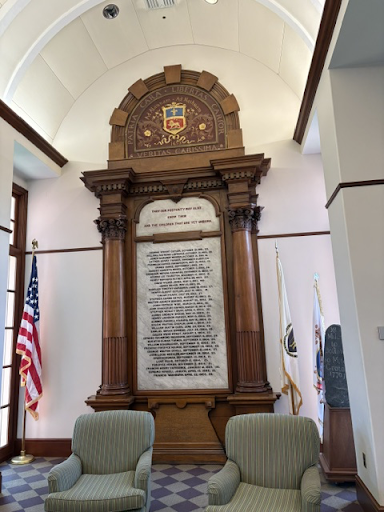
Civil War Memorial in Thayer Library
One of the most moving features of our tour of the Thayer Memorial Library was the magnificent Civil War memorial that stands inside the building. Today it occupies a place of honor within the library, but we learned that when Memorial Hall was completed in 1868, this monument was the first thing visitors encountered upon […]
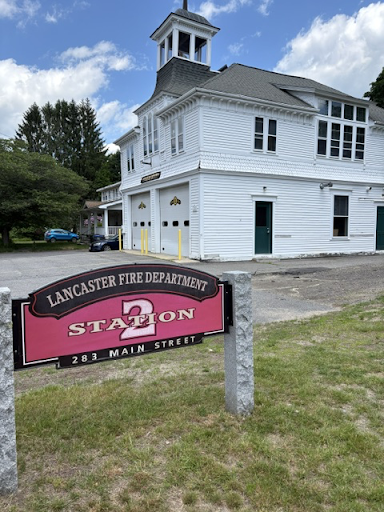
South Lancaster Engine House
One of the architectural gems we encountered in Lancaster was the South Lancaster Engine House, the oldest operating fire station in the town and one of the oldest continuously active firehouses in the region. Located in the village center of South Lancaster, the handsome white building immediately caught my attention with its Victorian charm, decorative […]
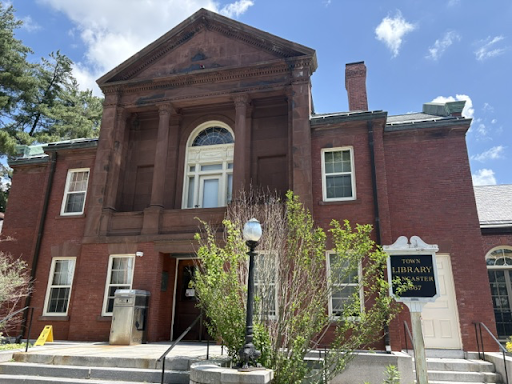
Thayer Library
Another impressive building in the center of Lancaster is the Thayer Memorial Library. During our tour, we learned that the institution’s roots extend far beyond the beautiful structure that stands today. The town’s first library organization, known as the Lancaster Library and later the Lancaster Social Library, was established in 1790. In 1862, residents voted […]

