Jewish Cemetery of Altona
One of the most memorable stops on Erin’s and my Jewish heritage tour of Hamburg was a visit to the historic Jewish Cemetery of Altona. It is not a place that most visitors ever see. Access is carefully controlled to protect this remarkable site, and through the special arrangements of our guide, we were able to walk among graves that have preserved more than four centuries of Jewish history.
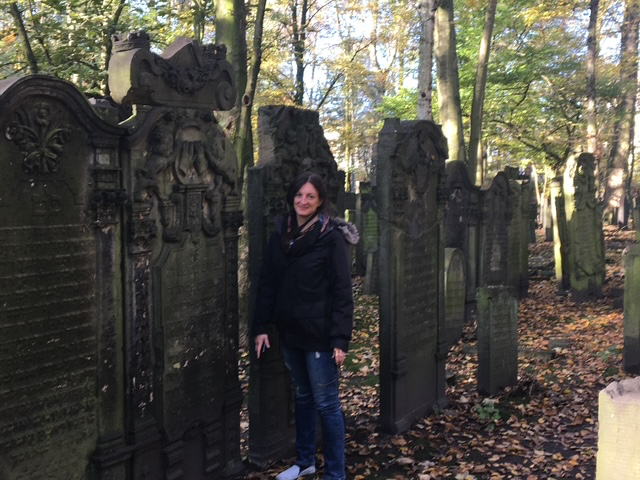
Established in 1611, the cemetery became the final resting place for both Sephardic Jews who had fled the Spanish and Portuguese Inquisitions and Ashkenazi Jews from Central and Eastern Europe. Together they built one of Europe’s most influential Jewish communities. Merchants, rabbis, physicians, scholars, and community leaders found opportunity in Hamburg and Altona, helping transform the region into an important center of commerce, learning, and Jewish life. Today, the cemetery is recognized as one of the most significant Jewish burial grounds in Europe. Walking through the cemetery, I was fascinated by the variety of the monuments. Some of the older Sephardic graves are horizontal stone slabs, richly carved with flowers, crowns, scrolls, and even skulls and crossbones
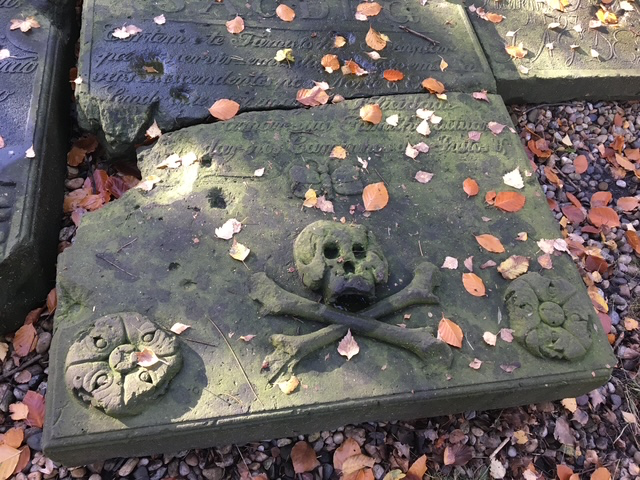
Standing among these centuries-old stones, I thought about the generations of Jewish families whose lives are preserved here. They came from different places and traditions, built homes, raised families, practiced their faith, and contributed to the commercial and cultural life of Altona. Together, the graves tell the story of a community that did more than endure. It established itself, flourished, and left a legacy.
It is often said that a cemetery tells the story of a community. Walking among these centuries-old monuments, I realized that this one tells the story of a people who preserved their faith, celebrated their traditions, and built a vibrant community that enriched Hamburg for generations. That may be the cemetery’s greatest legacy.
Read More
Read More From Nancy
Holocaust Memorial
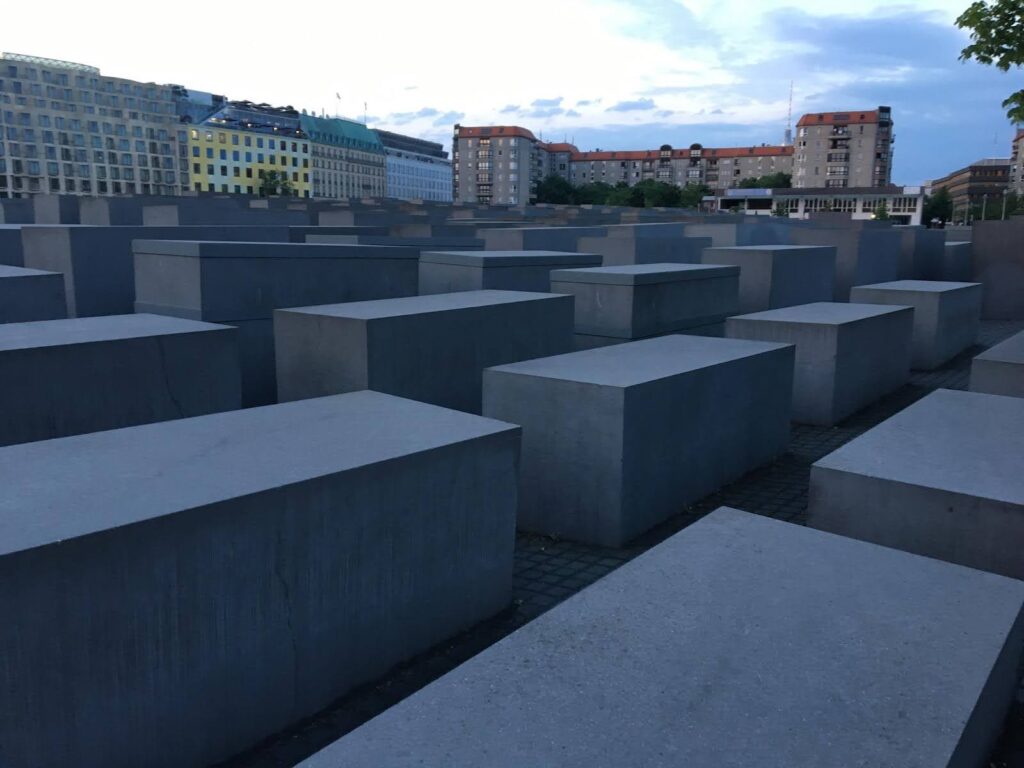
There are places that we visit, and then there are places we enter. This memorial in Berlin is one of those places. From a distance, the Memorial to the Murdered Jews of Europe, appears like a vast field of concrete blocks stretching across the city near the Brandenburg Gate. But as we walk into it, the […]
Historic Fish Auction Hall
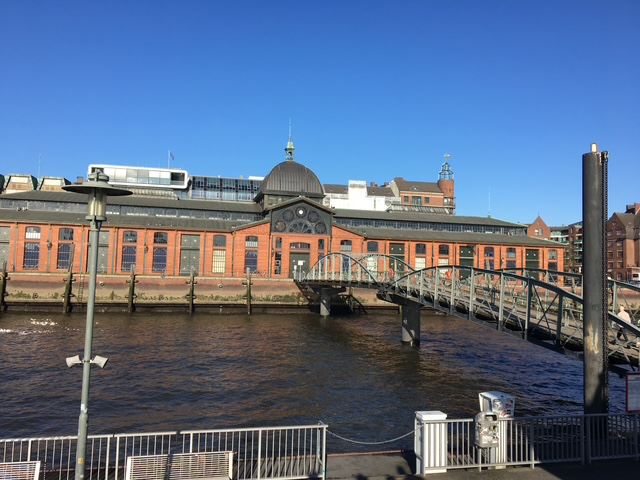
During our visit to Hamburg, we explored the waterfront that has shaped the city’s identity and prosperity for centuries. Along the Elbe River stands the historic Fish Auction Hall, or Fischauktionshalle, a reminder of the time when fishing boats, merchants, and dockworkers filled this part of the harbor. The fishing tradition in this area dates […]
Sachsenhausen Concentration Camp
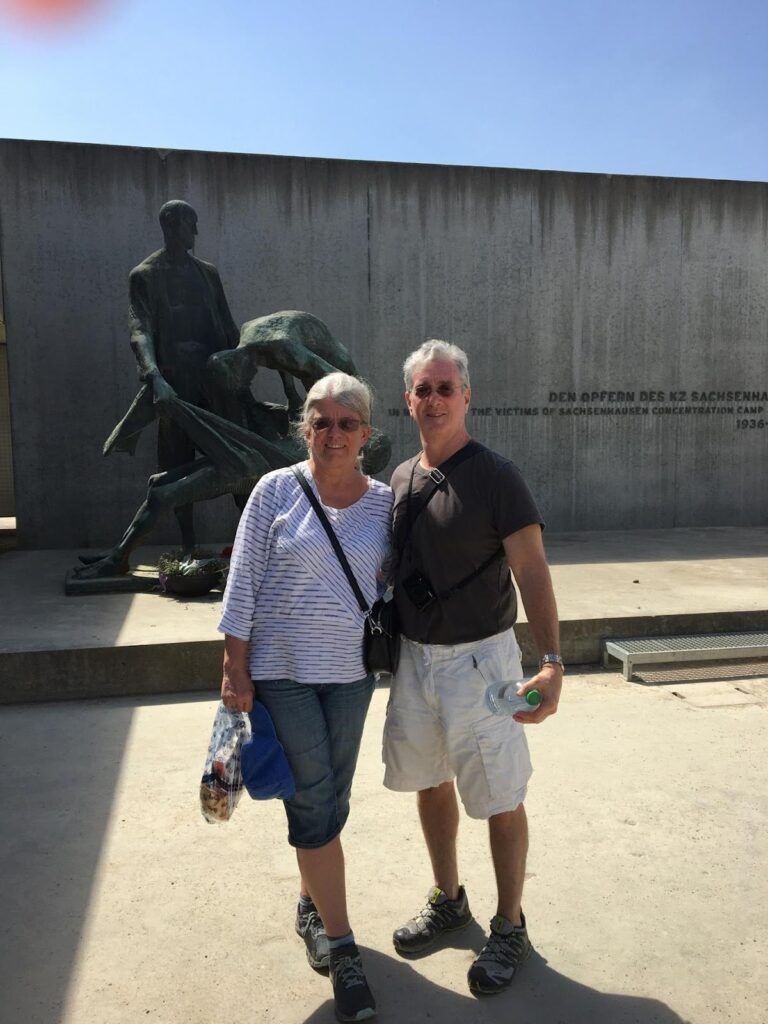
For me, exploring history means looking at the good, the bad, and the ugly. Traveling to Germany was a challenging choice for Marty. Our first German city was Berlin, a beautiful and vibrant place that embraces music, the arts, and an extraordinary culinary scene. Yet it was also here that we visited our first concentration camp: […]

