Marx-Engels Forum
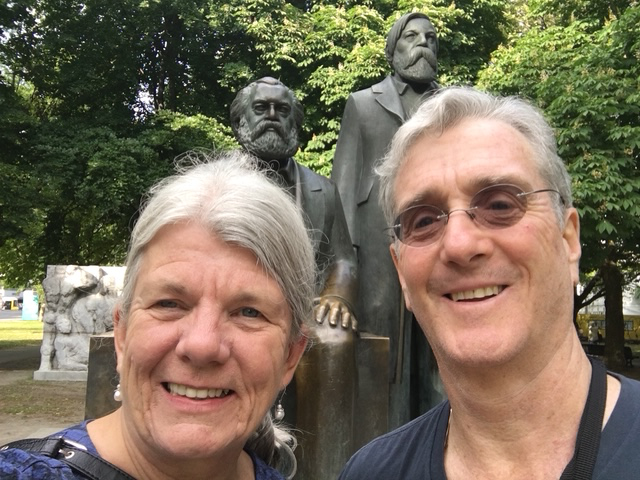
In a quiet green space in Berlin, we came upon the Marx-Engels Forum. There is no grand staircase, or towering pedestal. The monument is at ground level, integrated into the park.
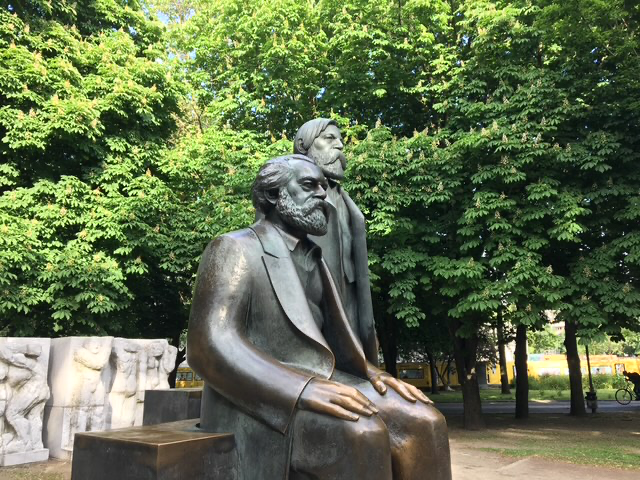
Karl Max is seated and beside him stands Freidrich Engles. One seated, one standing. One reflective, one present. To understand why they are here, you have to understand who they were.
Marx and Engles were 19th century German thinkers whose writings, The Communist Manifesto, laid the intellectual foundation for modern socialism, and communism. Marx, born in Germany, spent much of his life in exile, developing a critique of capitalism that would go on to influence political movements around the world. Engels helped develop and promote these ideas, ensuring they reached a broader audience.
As German philosophers, their work became deeply tied to the identity of East Germany after World War II. When Berlin was divided, the eastern half of the city became the capital of the German Democratic Republic, a state built on Marxist Leninist principles.
This monument was installed in 1986, during the final years of East Germany.
With the fall of the Berlin Wall and the reunification of Germany, many symbols of that era were removed. The prominent statue of Lenin that stood in East Berlin was dismantled. But this monument was allowed to remain.
These statues now stand as two men whose ideas once shaped nations. Here is Berlin, we are allowed to encounter history and reflect on it.