Unitarian Universalist Church
As I walked around Harvard Common, I was struck by how many times the town has chosen to rebuild rather than replace the places that matter most. The Harvard Unitarian Universalist Church is one of those places.
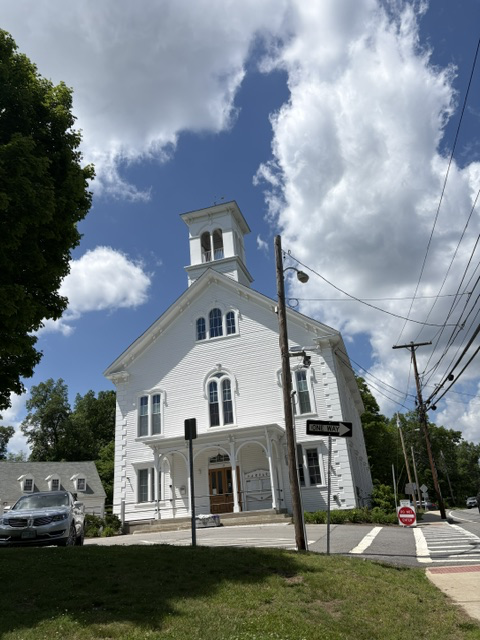
The congregation traces its beginnings to 1733, just one year after Harvard was incorporated as a town. That timing was no coincidence. In colonial Massachusetts, a newly incorporated town was required to establish a meetinghouse and settle an “orthodox minister” to retain its charter. Harvard’s first meetinghouse was therefore much more than a church. It served as both the spiritual and civic center of the community, housing worship services, town meetings, elections, and many of the decisions that shaped the young town. In eighteenth-century New England, church and town were, in many ways, one and the same.
The church standing today is the fifth meetinghouse to occupy this site. As the congregation grew, earlier buildings were replaced, but two devastating fires forever changed its history. In 1875, the meetinghouse was destroyed by fire. The congregation immediately rebuilt, only to face another fire in 1964 that claimed the fourth church. Once again, the members chose to rebuild, and in 1967 they dedicated the present sanctuary. Through each rebuilding, one remarkable connection to the past remained. The church’s bell, cast in 1806, survived both fires and continues to ring from the belfry, linking today’s congregation with generations who worshipped here before them.
The congregation itself also reflects the changing religious history of New England. Originally established as Harvard’s Congregational church, it gradually embraced Unitarian beliefs during the nineteenth century before later becoming part of the Unitarian Universalist tradition. Although the theology evolved, the church remained rooted in the same location at the heart of the community.
For nearly three centuries, this site has remained at the center of Harvard’s religious and civic life. The buildings have changed, fires have come and gone, and generations have passed, yet the congregation has endured. It is a reminder that while historic structures can be rebuilt, it is the people, their traditions, and their commitment to community that truly preserve history.
Read More From Nancy
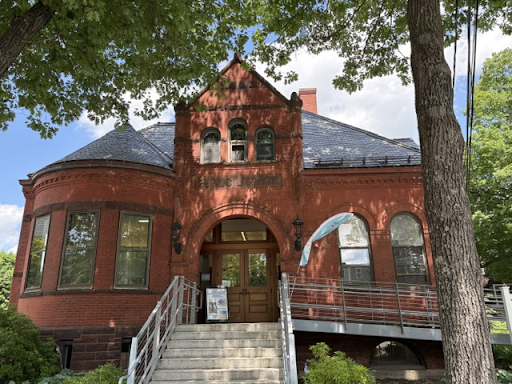
Old Library
Some buildings never really stop serving their community. Their purpose may change, but their importance remains. Harvard’s Old Library was built in 1886 through a series of generous gifts from residents who believed their growing town deserved a permanent public library. Designed by Harvard native William Channing Whitney in the Romanesque Revival style, the building […]
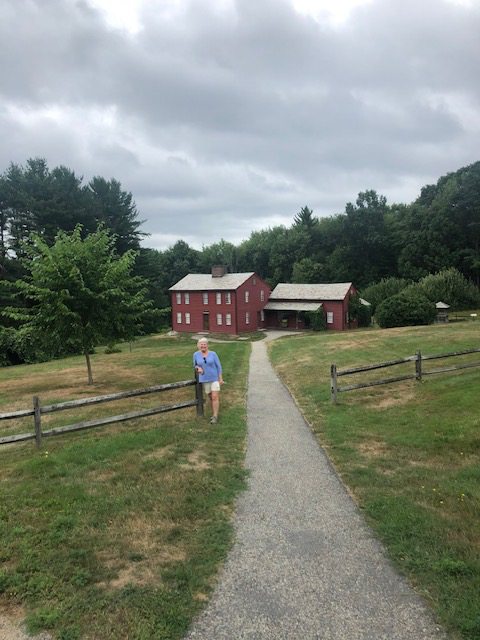
Fruitlands Farmhouse
The farmhouse at Fruitlands is a house that we visited often. When my daughters were volunteering at the Orchard House in Concord, the farmhouse at Fruitlands helped fill in another part of the story of the Alcott Family. It was here that Bronson Alcot attempted to create and intentional community based on transcendentalist ideals. In […]
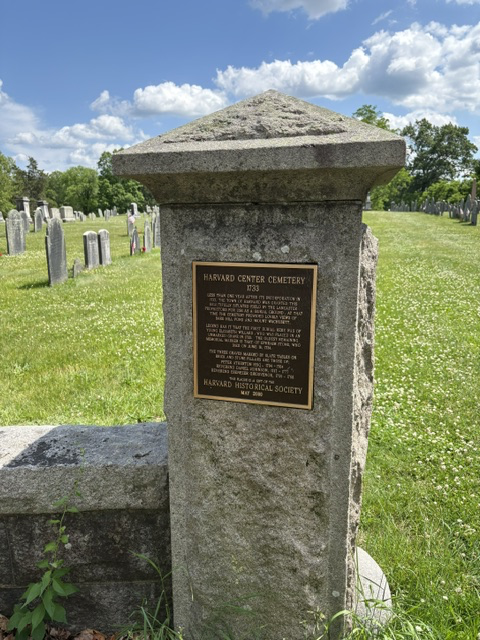
Harvard Center Cemetery
One of the best places to understand a town is the cemetery. More than a collection of gravestones, it is a record of the people who built the community and the lives they lived. Harvard Center Cemetery was established in 1733, just one year after the town was incorporated. Since then, generations of Harvard families […]

