Town Marker
Not every monument tells its story with a statue. Sometimes an ordinary object from everyday life says even more about the people who built a community.
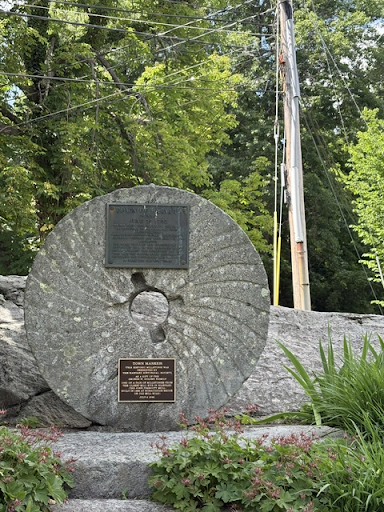
Standing on Harvard’s town common is a large granite millstone that once turned inside John Prescott’s grist mill, one of the earliest mills in town. Built in 1668 on nearby Nonacoicus Brook, the mill served generations of Harvard’s early settlers, who depended on it to grind their grain into flour and meal. Long before grocery stores and modern conveniences, a working grist mill was one of the most important places in any New England town.
When the mill was eventually lost, one of its original millstones survived. In 1948, the Harvard Historical Society received the stone as a gift from the George W. Golden family and placed it on the common as the town’s historical marker. Rather than creating a new monument, the community chose to preserve an authentic piece of its earliest history. The bronze plaque tells the story of Harvard’s incorporation in 1732, while the millstone itself reaches back even farther to the town’s colonial beginnings.
I enjoy finding monuments like this because they remind us that history is often found in the tools of everyday life. This stone was never intended to become a memorial. It was built for work, helping sustain a growing settlement through the simple but essential task of grinding grain. Today it stands as a reminder that communities are built not only by famous people and celebrated events, but also by the ordinary work that made life possible for those who came before us.
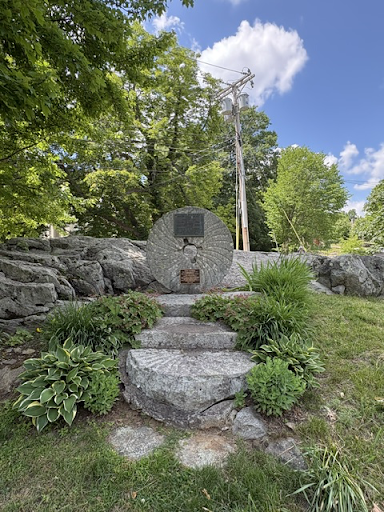
Looking at this weathered stone, it is easy to imagine the generations of farmers who waited their turn at the mill. In preserving it, Harvard chose to honor not just a building that once stood nearby, but the perseverance and industry of the people who laid the foundation for the town we see today.
Read More From Nancy
General Store
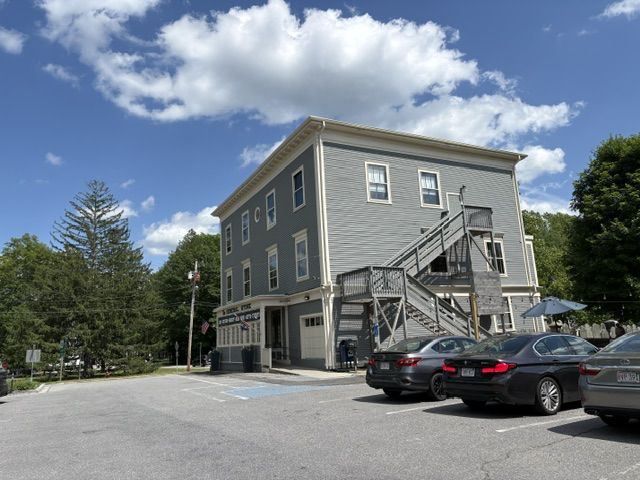
When Marty and I head out on a day trip to explore small New England towns, we look for a local place to have lunch. It gives us a chance to slow down, enjoy the community, and experience a place the way its residents do. While visiting Harvard, we found ourselves at the Harvard General […]
Harvard Center Cemetery
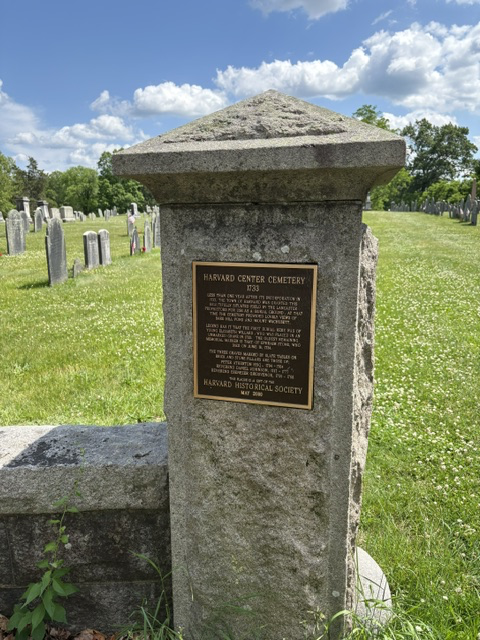
One of the best places to understand a town is the cemetery. More than a collection of gravestones, it is a record of the people who built the community and the lives they lived. Harvard Center Cemetery was established in 1733, just one year after the town was incorporated. Since then, generations of Harvard families […]
Old Bromfield School
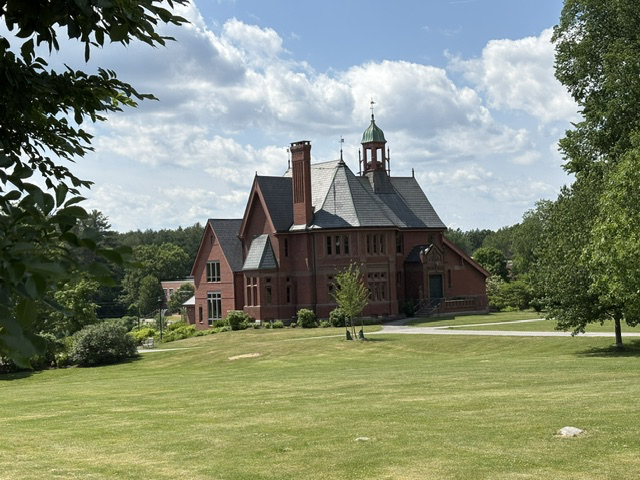
As we walked through Harvard, Massachusetts, this impressive red brick building drew my attention. Its steep slate roof, distinctive cupola, and richly detailed brickwork suggested that it had been built for something important. It was. Completed in 1878, the Old Bromfield School was made possible through the generosity of Margaret Bromfield Pearson Blanchard. At the time, […]

