Old Library
Some buildings never really stop serving their community. Their purpose may change, but their importance remains.
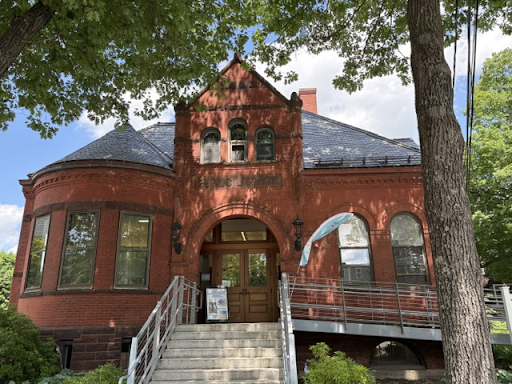
Harvard’s Old Library was built in 1886 through a series of generous gifts from residents who believed their growing town deserved a permanent public library. Designed by Harvard native William Channing Whitney in the Romanesque Revival style, the building was dedicated in 1887 and quickly became much more than a place to borrow books. For many years, one side of the building also served as Harvard’s post office, making it a place where residents came not only to read, but to gather, exchange news, and stay connected with one another.
As the library’s collection expanded, the building grew with it. In 1902, Warren Hapgood, one of the library’s original benefactors, donated funds for an addition to the east side of the building. The inscription “Hapgood Memorial,” still visible above the entrance, honors that gift and reflects the community’s commitment to education and public life.
After serving as Harvard’s public library for more than 120 years, the collection moved in 2007 to the renovated Bromfield School. Rather than allowing this landmark to become vacant, the town found a new purpose for it. Today the building is home to Fivesparks, a nonprofit community arts and cultural center that offers exhibitions, concerts, educational programs, and gatherings for residents of all ages.
Another feature that caught my attention is the building itself. Designed in the Romanesque Revival style by Harvard native William Channing Whitney, the library is constructed of red brick with rounded arches, broad stone trim, and a distinctive curved reading room that sets it apart from many of the town’s other civic buildings. Whitney donated his architectural services, and when the town lacked sufficient funds to complete the project, benefactor Warren Hapgood stepped forward to ensure the original design could be built. More than a century later, the building remains one of the architectural landmarks on Harvard Common.
Read More From Nancy
Old Bromfield School
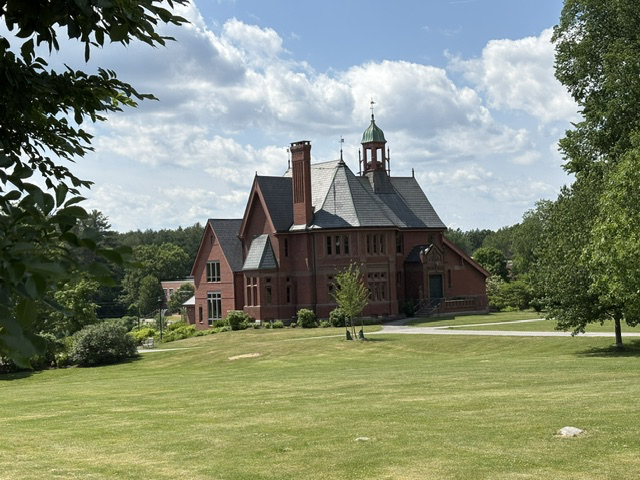
As we walked through Harvard, Massachusetts, this impressive red brick building drew my attention. Its steep slate roof, distinctive cupola, and richly detailed brickwork suggested that it had been built for something important. It was. Completed in 1878, the Old Bromfield School was made possible through the generosity of Margaret Bromfield Pearson Blanchard. At the time, […]
Veterans Memorial
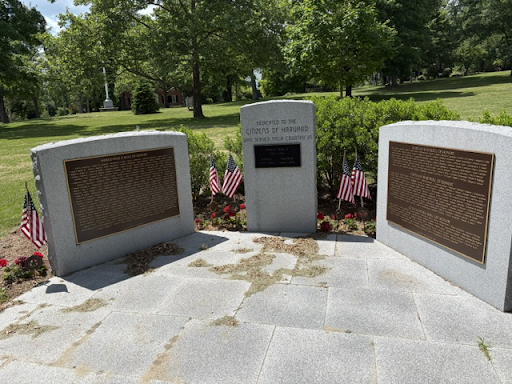
At first glance, Harvard’s Veterans Memorial appears to be a tribute to those who served in America’s modern wars. Looking more closely, I realized it tells a much more personal story. At the center stands the original memorial honoring the citizens of Harvard who served during World War II, the Korean War, and the Vietnam […]
General Store
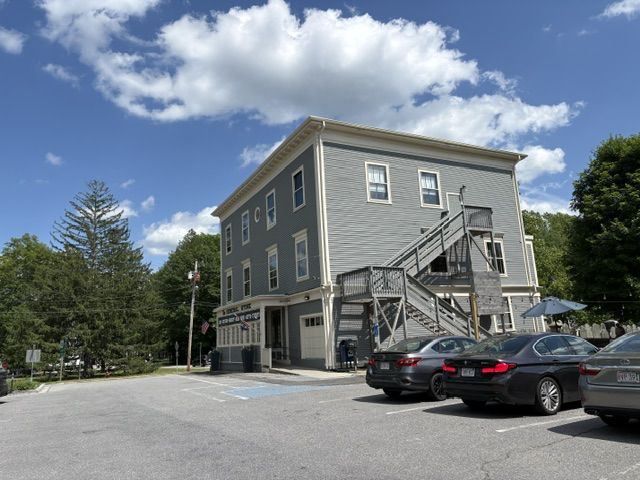
When Marty and I head out on a day trip to explore small New England towns, we look for a local place to have lunch. It gives us a chance to slow down, enjoy the community, and experience a place the way its residents do. While visiting Harvard, we found ourselves at the Harvard General […]

