The Great Elephant Migration
For several weeks in the summer of 2026, a walk down Commonwealth Avenue brought you face-to-face with elephants. A hundred life-size sculptures stood beneath the trees of the Commonwealth Avenue Mall, with calves tucked among the adults and the brick and stone façades of Back Bay behind them. From August 8 through September 13, anyone could wander through the herd as part of a free outdoor exhibition called The Great Elephant Migration.
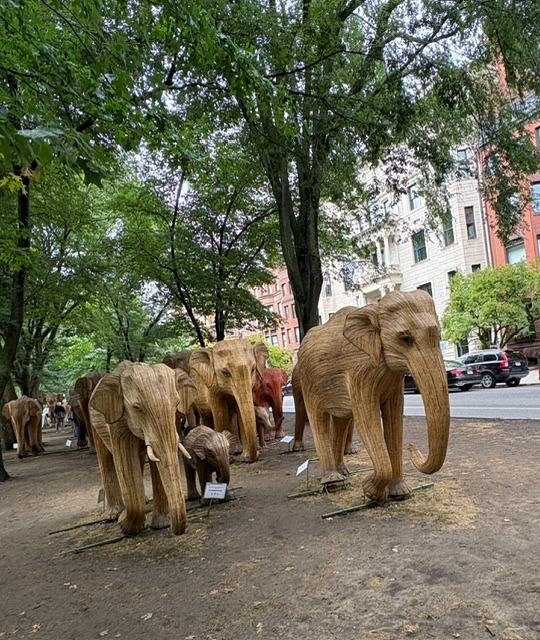
Each sculpture was modeled on a real wild elephant from the Nilgiri Hills of southern India, where people and elephants live in close proximity. The elephants are known individually to the people who live there, and the artists gave each sculpture its own size, posture, and features. Indigenous artisans working with The Real Elephant Collective made the herd using steel and stems of Lantana camara, an invasive plant that crowds out native vegetation in elephant habitat. A plant that poses a problem in the landscape became the material the artists used to tell its story.
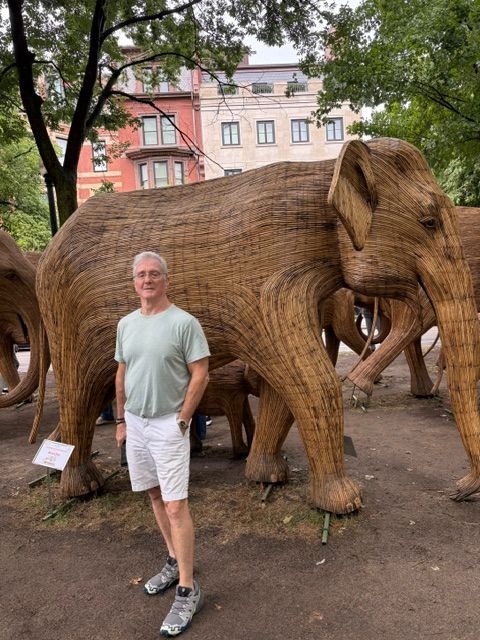
Boston was one stop on a journey that had already taken the herd to Newport, New York City, Miami, and Houston. The exhibition raises funds for conservation projects that help people and wildlife share the places they live. That idea took on a local meaning on Commonwealth Avenue. The mall is part of everyday life in Back Bay, a place people cross on their way to work or walk through on a summer afternoon. For a few weeks, that familiar route took them past full-grown elephants and calves, each representing an animal whose life unfolds alongside a human community half a world away.
Read More From Nancy
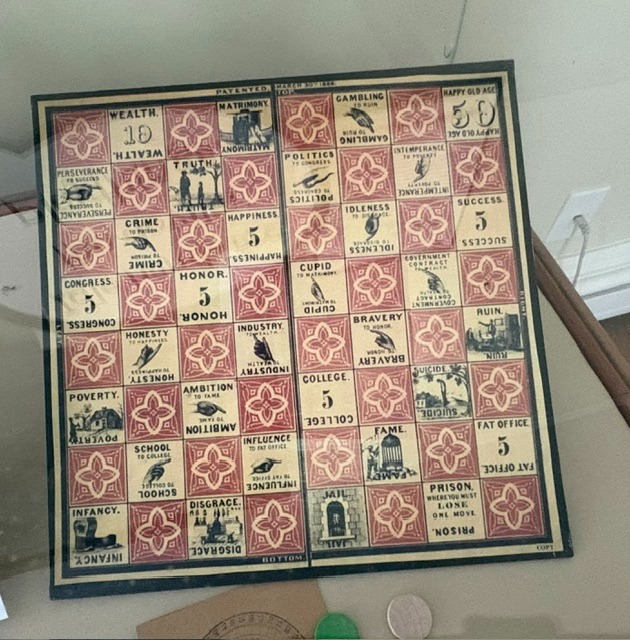
The Checkered Game of Life
A game board displayed at the Needham History Center & Museum turns the journey through life into a contest between opportunity, good conduct, and misfortune. Published by Milton Bradley in 1860, The Checkered Game of Life reveals what nineteenth-century Americans wanted their games to teach. Players began at Infancy and worked toward Happy Old Age. […]
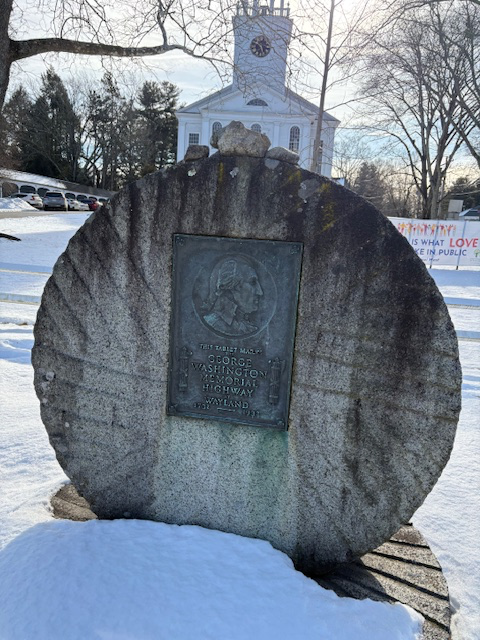
George Washington Marker
Driving through the town of Wayland, there is the round stone monument that sits along the roadside. Unlike grand statues that make historic events, this one is modest, a cylindrical stone pillar with a bronze marker identifying it as part of the George Washington Memorial Highway. The roadside marker reflects an interesting moment in American history when […]
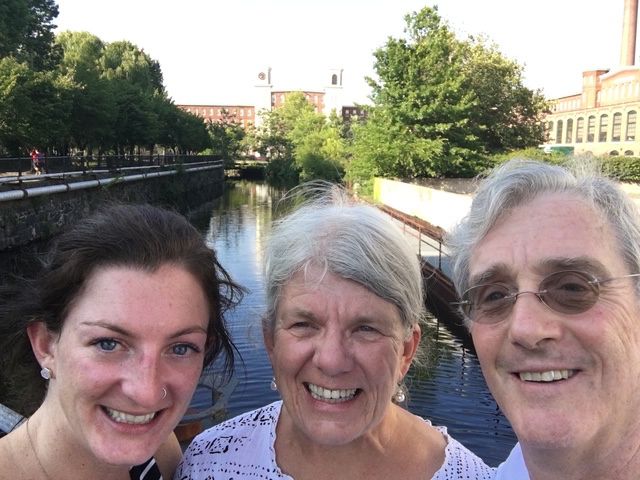
The Canals of Lowell
Walking through downtown Lowell, it is almost impossible not to encounter the canals. They pass beneath streets, alongside sidewalks and between the enormous brick mill buildings that still dominate parts of the city. On this day, we were simply walking through Lowell when we stopped along one of them for this photograph. The canals are […]

