The Eagle Steamer House
The brick Steamer House on Water Street recalls a turning point in Exeter’s firefighting history. Its broad arched entrances, tall upper windows and small rooftop tower distinguish it from neighboring commercial buildings. Behind those entrances once stood equipment purchased to give firefighters greater power against the fires threatening downtown.
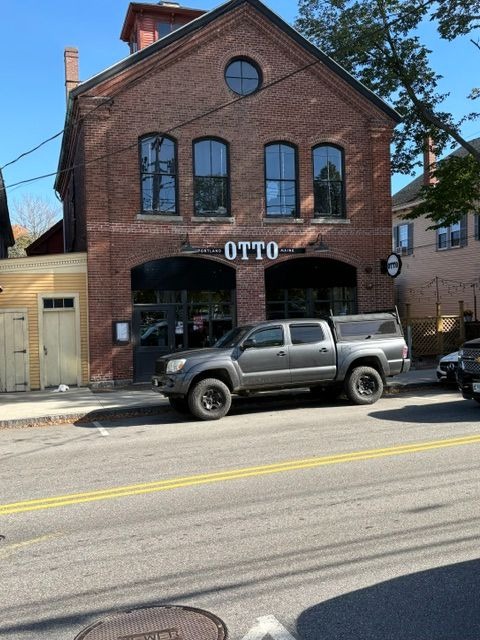
In 1873, Exeter purchased a steam fire engine from Manchester’s Amoskeag Company for $4,400. Named the Eagle, it replaced reliance on labor-intensive hand pumps. Horses hired from a local livery stable pulled the heavy apparatus, which initially occupied temporary quarters on Clifford Street.
Providing a permanent home proved contentious. Taxpayers rejected an additional appropriation during the financial uncertainty of 1873. A compromise followed in September 1874: the town would sell its Clifford Street property and help finance a brick engine house on Water Street, using land leased from the Exeter Manufacturing Company. Construction began within weeks.
The building also served the firefighters themselves. By 1894, its upstairs hall offered comfortable furnishings and a pool table for members of the Eagle Steamer company and their guests. The station combined emergency service with fellowship.
The Eagle answered its final fire in 1928. Sold for commercial use in 1950, the building later underwent restoration that revealed its former engine entrances. Its survival preserves a recognizable link to the horses, steam machinery and firefighters that once protected Exeter.
Read More From Nancy
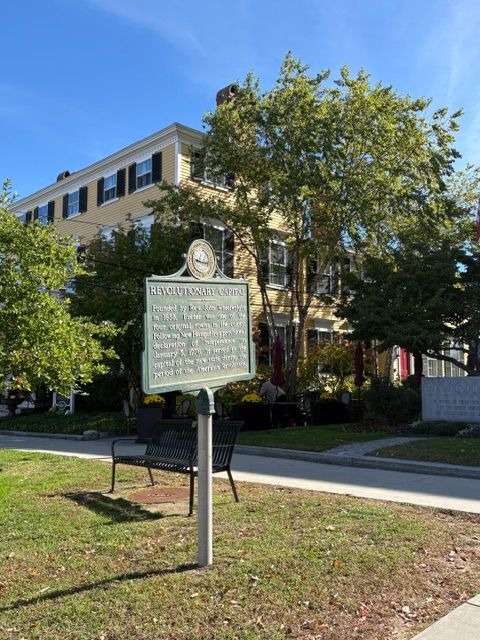
New Hampshire’s Revolutionary Capital
The “Revolutionary Capital” marker in downtown Exeter recalls a time when the town became the center of New Hampshire’s emerging government. As royal authority weakened, representatives gathered here to organize resistance, direct military support and establish a government that could function without a British governor. Exeter’s political importance grew in July 1774, when delegates met […]
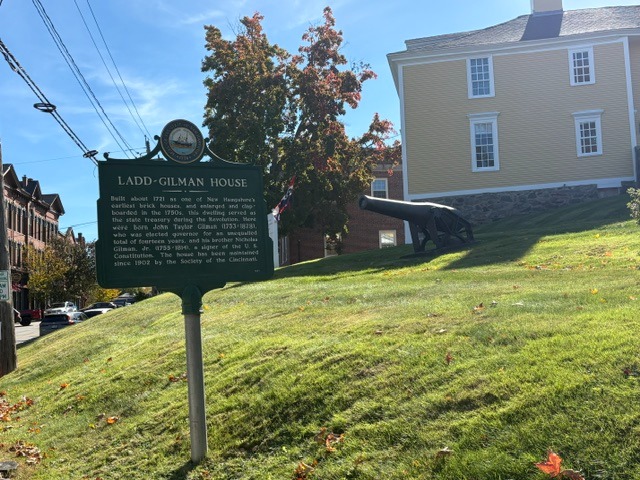
Ladd-Gilman House
Standing on a rise above the Squamscott River, the Ladd-Gilman House brings together the history of an Exeter family and the formation of a new state government. Behind its yellow clapboards is an early brick dwelling built around 1721 by Nathaniel Ladd. Daniel Gilman, a prominent Exeter merchant, purchased the property in 1747, beginning the […]
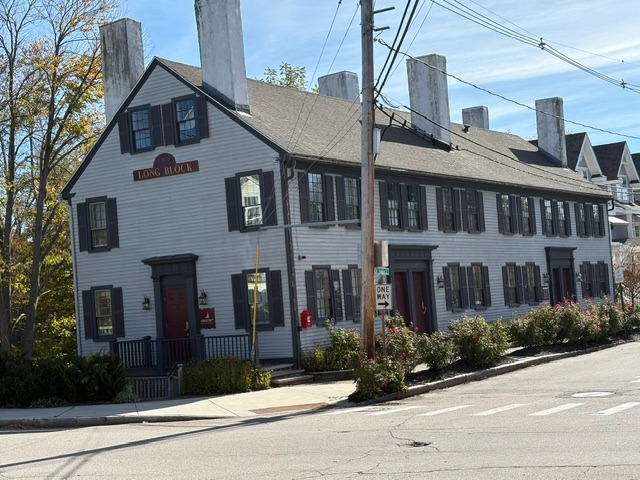
The Long Block: Housing Exeter’s Mill Workers
At the corner of Franklin and Water streets, the Long Block preserves a residential side of Exeter’s industrial history. Its extended wooden façade, repeated entrances and substantial chimneys distinguish it from a single-family house. Built around 1826 as a four-unit tenement, it provided homes for workers employed in nearby mills. The building occupies the site […]

