The Great Dam
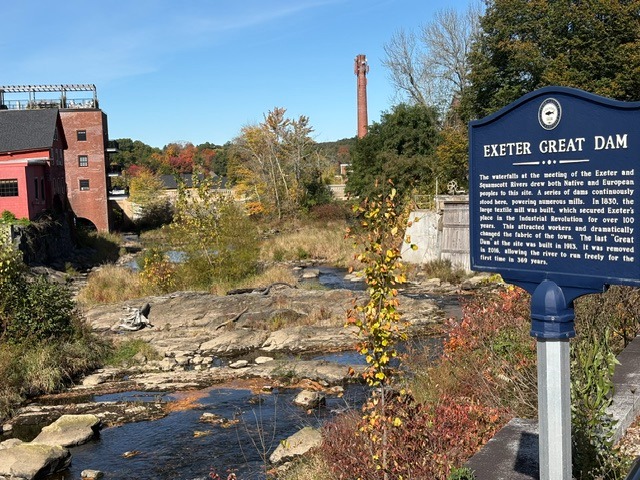
At the meeting of the freshwater Exeter River and the tidal Squamscott River, a rocky channel marks a place that helped shape the town’s development. For centuries, dams harnessed the river’s power here. The removal of the Great Dam in 2016 opened another chapter, restoring the river’s flow through a landscape long altered for industry.
The falls provided fishing opportunities for Indigenous people before European settlement. Settlers subsequently developed water-powered mills, and the river became an important source of mechanical energy. In 1830, the Exeter Manufacturing Company began operating its cotton mill, making large-scale textile production a major part of the local economy. The river connected Exeter’s natural geography with its growth as an industrial community.
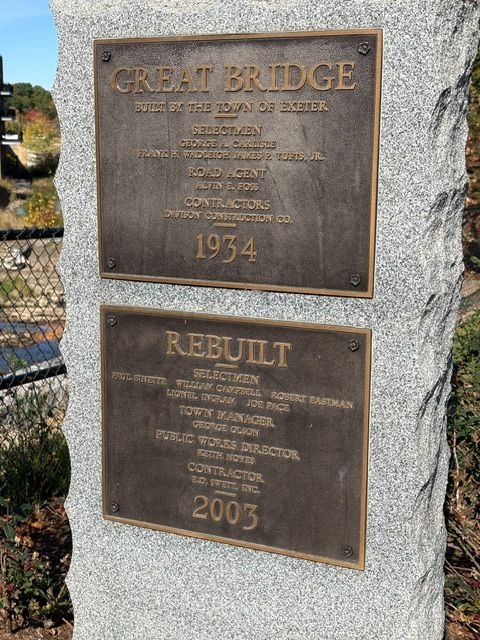
The final Great Dam, constructed in 1914, belonged to this long history of controlling water for human use. By the twenty-first century, however, the aging structure presented safety concerns and affected water quality and fish movement. The community faced a decision about whether to retain the dam or restore a more natural river system.
These ecological concerns had deep historical roots. Dams obstructed fish that moved between saltwater and freshwater spawning grounds. Nineteenth-century accounts described the disappearance of salmon from the river and noted that alewives continued to return despite the barriers. The same structures that supported manufacturing also disrupted an older source of food and seasonal abundance.
Removal in 2016 eliminated the Great Dam and its fish ladder, opening approximately eight miles of free-flowing river. The project improved passage for migratory fish and allowed sediment to move more naturally through the channel. It brought together public safety, water quality and habitat restoration in a substantial change to Exeter’s downtown waterfront.
The surviving mill buildings and exposed riverbed preserve evidence of both periods. This site tells a continuing story about how a community uses its river, and how those priorities change as industrial needs give way to new understandings of the river’s ecological value.
Read More From Nancy
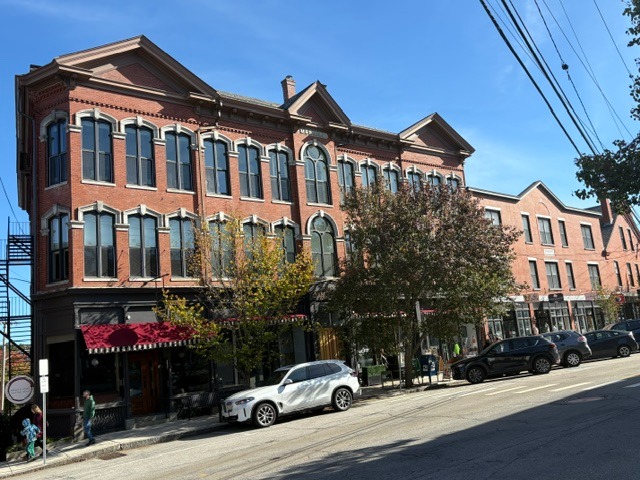
The Merrill Block: An Exeter Apothecary
The Merrill Block on Water Street preserves a chapter of Exeter’s history shaped by local enterprise, medicine and everyday commerce. Dating to the early 1870s, the substantial brick building is recognized in the town’s Waterfront Commercial Historic District nomination as one of its outstanding commercial buildings. Its name remains prominently displayed above the street. The […]
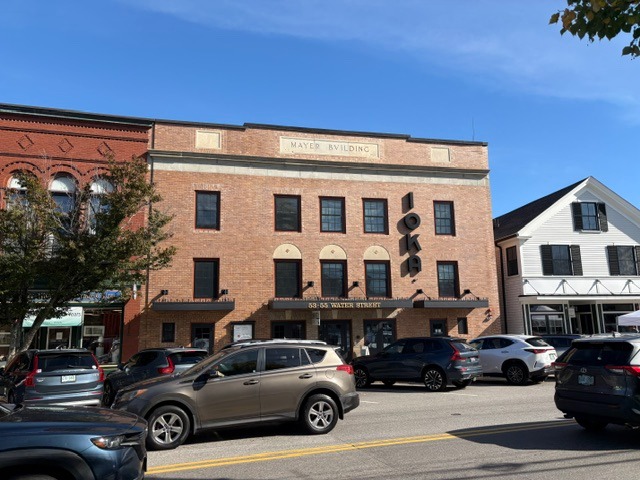
The Ioka Theatre and Mayer Building
The Mayer Building on Water Street preserves the setting of a new form of entertainment that arrived in Exeter during the early twentieth century. Built in 1915 for the Ioka Theatre, it brought a purpose-built moving-picture venue to the commercial heart of town. The building’s name and surviving IOKA lettering recall that original role. Judge […]
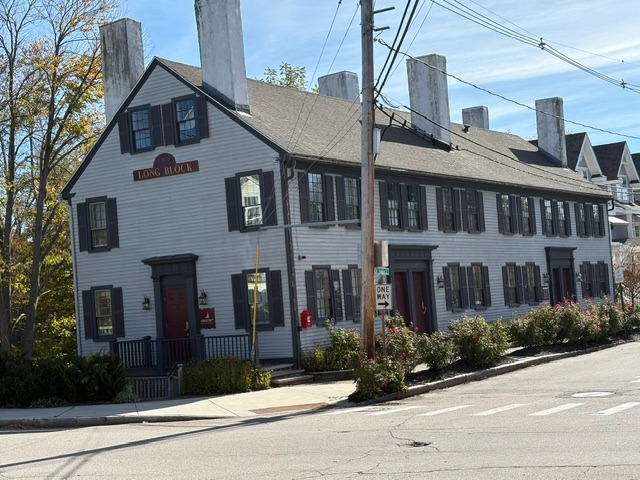
The Long Block: Housing Exeter’s Mill Workers
At the corner of Franklin and Water streets, the Long Block preserves a residential side of Exeter’s industrial history. Its extended wooden façade, repeated entrances and substantial chimneys distinguish it from a single-family house. Built around 1826 as a four-unit tenement, it provided homes for workers employed in nearby mills. The building occupies the site […]

