Swasey Parkway
Along the Squamscott River, Swasey Parkway preserves a landscape transformed through one resident’s generosity. Dedicated in November 1931, the parkway was a gift from inventor and industrialist Ambrose Swasey, who wanted to improve Exeter’s waterfront and create a welcoming public space near the town center.
This shoreline had once been a working part of Exeter’s maritime economy. Wharves, docks, and shipyards occupied the riverbank, connecting local businesses with coastal trade. Ships were built along the waterfront that later became the parkway, making the area a place of skilled labor and commercial activity long before it became a setting for recreation.
By the time Swasey proposed his improvements, part of the site was being used as the town dump. In 1929, he offered to turn it into an attractive riverfront parkway. The project reclaimed the land for public enjoyment, replacing an unsightly area with a designed landscape that opened views toward the river.
Landscape architect Warren H. Manning established the proposed roadway alignment, which the Olmsted Brothers firm largely followed when it continued the design work. Their involvement connected this small New Hampshire waterfront with a broader tradition of landscape planning that brought planted spaces, public access, and recreation into established communities.
Swasey’s gift included both the parkway and its land. Trees, benches, and open river views gave residents a place to pause beside the water, while the grounds became a setting for community gatherings. A pavilion completed in 2007 added another venue for concerts and public events.
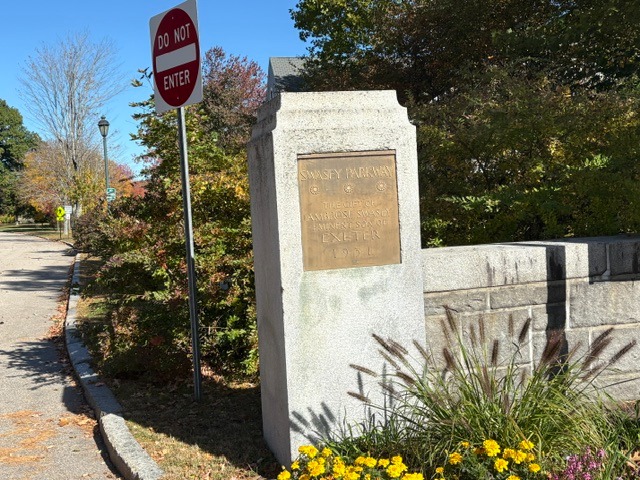
The granite entrance marker records the gift, but the parkway itself expresses its lasting purpose. A shoreline shaped by commerce and later neglect became a shared landscape, preserving Exeter’s connection to the Squamscott River while giving it a new place in everyday community life.
Read More From Nancy
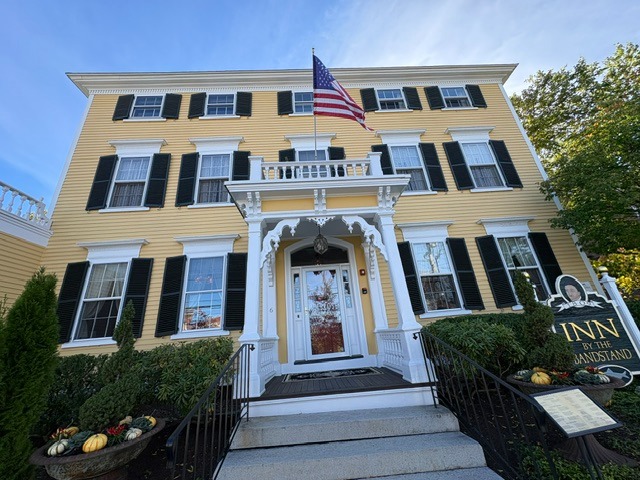
The Sullivan-Sleeper House: Inn by the Bandstand
Built in 1809, the Sullivan-Sleeper House stands on Front Street overlooking Exeter’s town center. Now known as the Inn by the Bandstand, it began as the family home of George Sullivan, a lawyer and statesman. Its three-story Federal-style form belongs to a group of neighboring houses that preserve the scale and character of early nineteenth-century […]
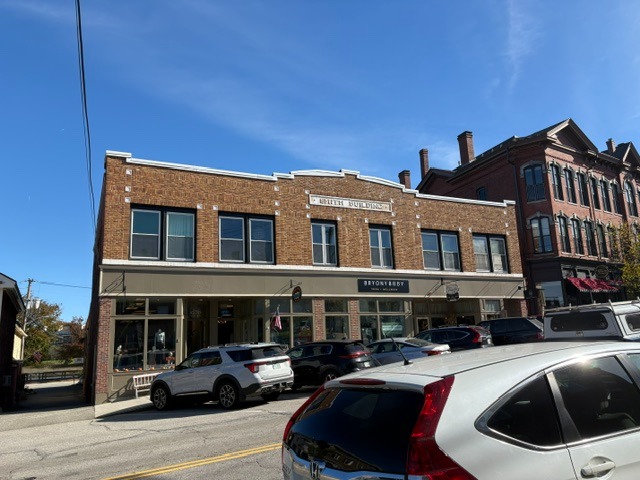
The Smith Building: Five-and-Ten on Water Street
On Water Street, the two-story brick Smith Building preserves a chapter in the changing commercial life of downtown Exeter. Its name remains above the storefronts, identifying a building whose opening introduced a new shopping experience to the town. In October 1915, the Smith Block welcomed a Woolworth’s five-and-ten-cent store. The arrival of Woolworth’s connected Exeter […]
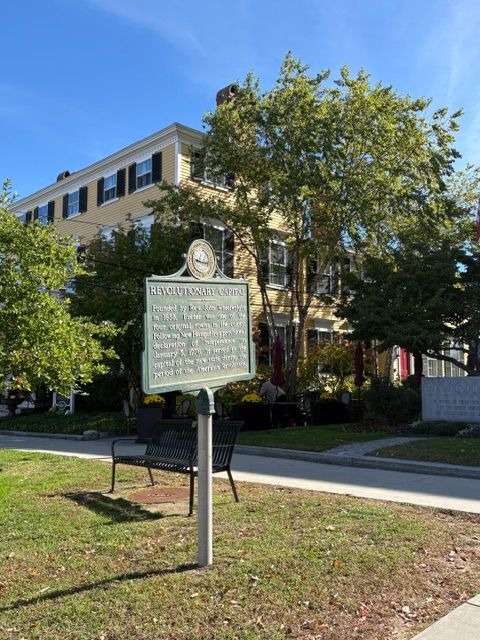
New Hampshire’s Revolutionary Capital
The “Revolutionary Capital” marker in downtown Exeter recalls a time when the town became the center of New Hampshire’s emerging government. As royal authority weakened, representatives gathered here to organize resistance, direct military support and establish a government that could function without a British governor. Exeter’s political importance grew in July 1774, when delegates met […]

