The Sullivan-Sleeper House: Inn by the Bandstand
Built in 1809, the Sullivan-Sleeper House stands on Front Street overlooking Exeter’s town center. Now known as the Inn by the Bandstand, it began as the family home of George Sullivan, a lawyer and statesman. Its three-story Federal-style form belongs to a group of neighboring houses that preserve the scale and character of early nineteenth-century Exeter.
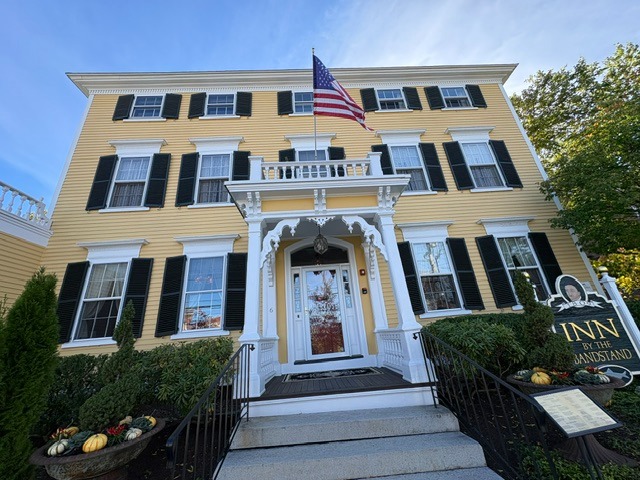
The house’s appearance evolved with successive owners. Its decorative Victorian entrance porch was added before 1885, introducing elaborate brackets and a balcony to the earlier façade. These additions illustrate how families adapted older homes to changing tastes while retaining their substantial original structures.
Otis Sleeper purchased the property in 1889. His jewelry business brought a commercial presence to the residence, and Sleeper and his son, Almon, operated their shop for decades. The combination of a family house and an attached storefront connected the property directly with the daily business of downtown Exeter.
By 1970, the house faced demolition. Mobil Oil, which owned the neighboring lot, planned to acquire the property and remove the building. The Exeter Historical Society intervened, securing the opportunity to purchase it. Restoration followed, and the house was converted into apartments and resold with preservation restrictions. Its threatened destruction helped prompt voters to establish Exeter’s historic district that same year.
Its later use as the Inn by the Bandstand continued the building’s long history of adaptation. The house survives because residents acted when its future was uncertain. Along Front Street, it preserves both an early Exeter residence and a tangible reminder of the local preservation effort that helped protect the surrounding town center.
Read More From Nancy
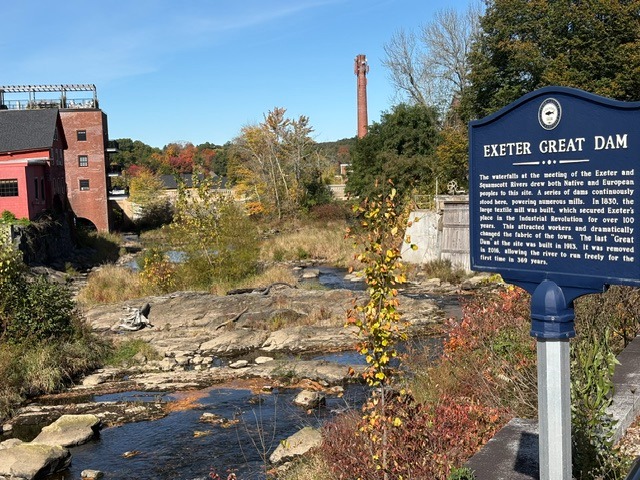
The Great Dam
At the meeting of the freshwater Exeter River and the tidal Squamscott River, a rocky channel marks a place that helped shape the town’s development. For centuries, dams harnessed the river’s power here. The removal of the Great Dam in 2016 opened another chapter, restoring the river’s flow through a landscape long altered for industry. […]
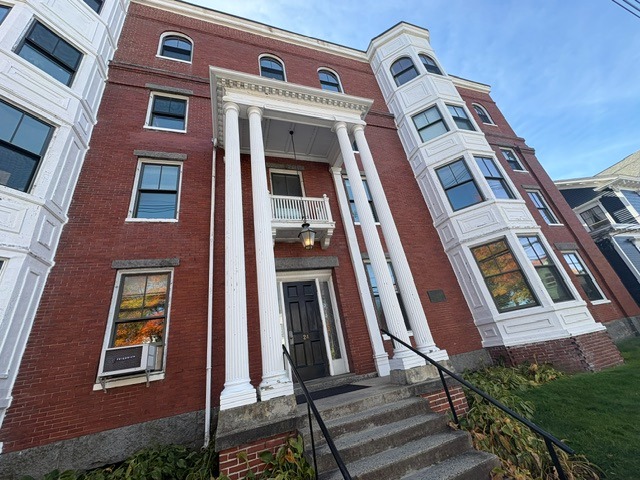
The Squamscott House
The substantial brick building at 24 Front Street has served Exeter as a hotel, student residence and place of political gathering. Known historically as the Squamscott House and later as Gorham Hall, it connects the town with the organizing efforts that preceded the emergence of the Republican Party. The present building dates to 1851. Abraham […]
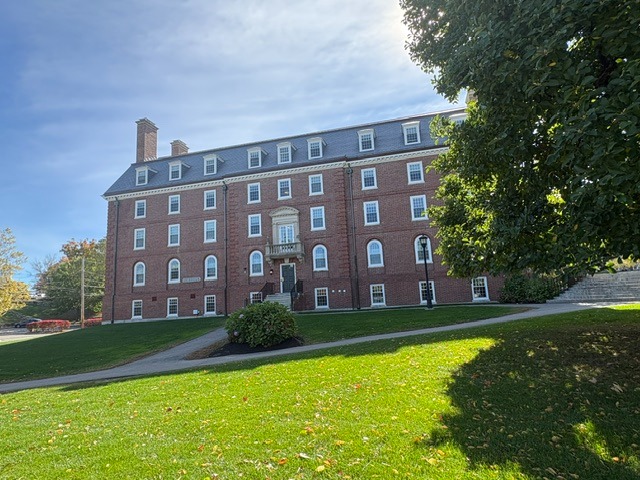
Phillips Exeter Academy
Founded in 1781 by John and Elizabeth Phillips, Phillips Exeter Academy emerged during the American Revolution, when the future of the country remained uncertain. Their gift established a school intended to unite intellectual development with moral responsibility. The relationship between goodness and knowledge became an enduring principle of the institution. The academy formally opened in […]

