Abraham Lincoln Speaks in New Hampshire
On March 3, 1860, Abraham Lincoln addressed a packed audience at Exeter Town Hall. He was not yet president or his party’s presidential nominee. His appearance came during an eastern speaking tour that brought his arguments about slavery and the nation’s future before new audiences. Exeter was the final stop in a series of four New Hampshire speeches.
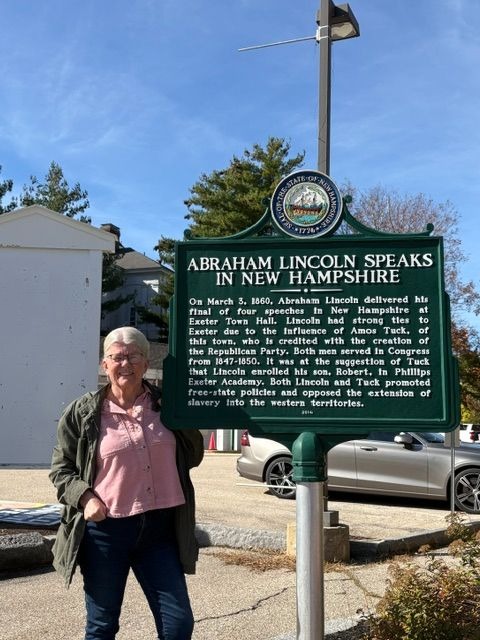
Lincoln’s connection to Exeter was also personal. His son Robert was studying at Phillips Exeter Academy, and the journey offered an opportunity to visit him. After speaking at Cooper Union in New York in late February, Lincoln extended his travels into New England, combining family time with political engagements.
The historical marker also recalls Lincoln’s friendship with Amos Tuck, an Exeter resident and former congressman who helped establish the Republican Party. Tuck encouraged Robert’s enrollment at the academy. Both men opposed the extension of slavery into the western territories, an issue central to the political divisions of 1860.
At the town hall, Lincoln defended Republican principles and urged his listeners to fulfill their political responsibilities despite criticism from opponents. The speech belonged to the period when he was gaining recognition beyond Illinois, several months before the Republican convention selected him as its presidential candidate.
Robert became involved in the campaign as well. He joined Exeter’s Wide Awakes, a political organization that supported his father’s election and held meetings at the town hall. Father and son thus participated in different ways in the political activity connecting Exeter with the approaching national election.
The marker preserves a moment before the presidency and Civil War transformed Lincoln’s place in history. In Exeter, he was a visiting father, a colleague of local political leaders, and a speaker making his case to the public. The surviving town hall connects that visit with the community that gathered to hear him.
Read More From Nancy
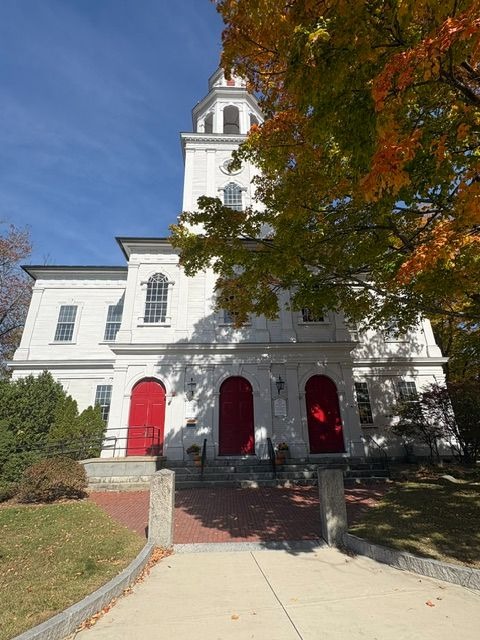
The Congregational Church
The Congregational Church on Front Street traces its beginnings to Exeter’s founding in 1638. Reverend John Wheelwright and his followers established both the congregation and the settlement after his expulsion from Massachusetts Bay Colony. Religious disagreement was therefore part of the community’s history from its beginning. The present meetinghouse dates to the late 1790s and […]
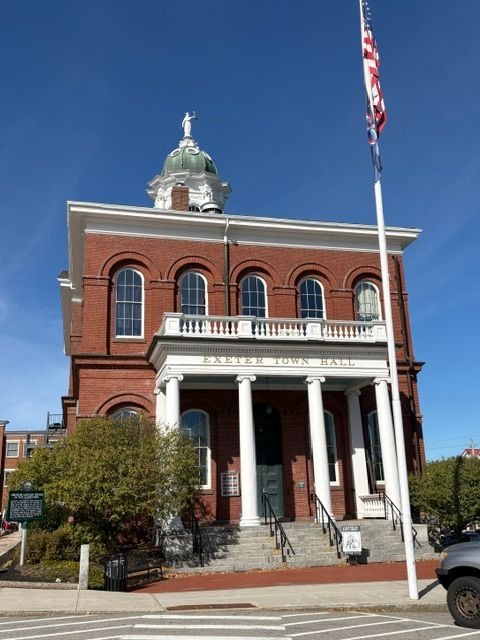
Exeter Town Hall
At the corner of Front and Water Streets, Exeter Town Hall has been a center of public life since 1855. Architect Arthur Gilman designed the red-brick building to accommodate town meetings, court proceedings, and community gatherings. Its prominent location and substantial architecture reflected the importance of these responsibilities within a growing New England town. The […]
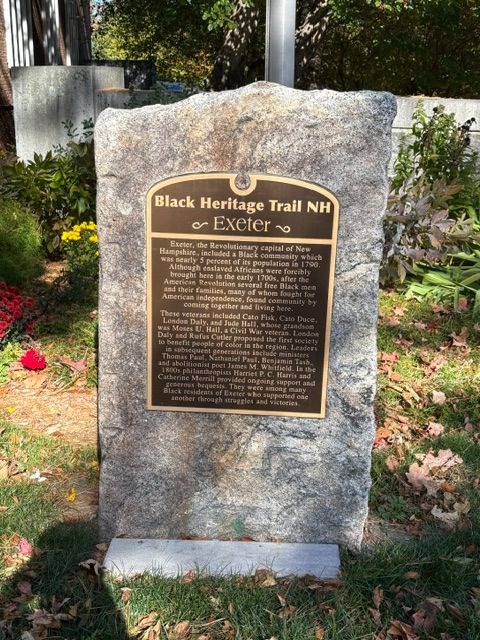
Exeter’s Black Heritage
Near the entrance to Swasey Parkway, a bronze marker honors Exeter’s early Black community and the Revolutionary War veterans who helped shape it. In the first federal census of 1790, Black residents constituted nearly five percent of Exeter’s population—the highest proportion recorded in any New Hampshire town. Their history connects military service, family life, commerce, […]

