The Liberty Bell
During our family visit to Philadelphia, we stopped to see the Liberty Bell, one of the most recognizable symbols of American freedom. For Erin, it was an opportunity to encounter an actual object connected with the history she was learning. Its size, inscription, and distinctive crack gave us a starting point for exploring how an ordinary working bell became a national symbol.
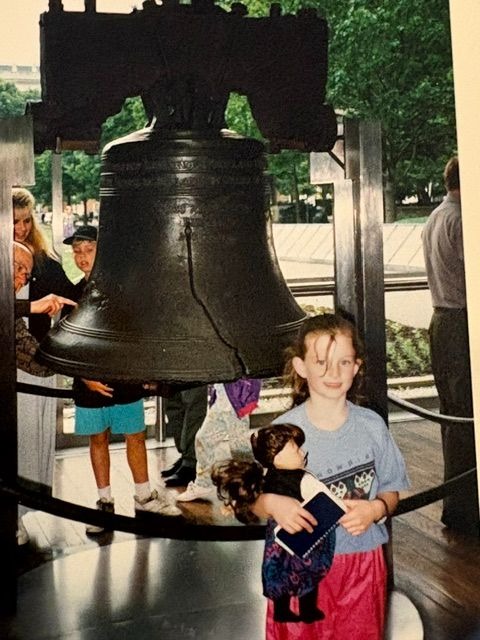
The Liberty Bell began as a practical part of civic life. Ordered from London in 1751 for the Pennsylvania State House, now Independence Hall, the original bell cracked during testing. Philadelphia metalworkers John Pass and John Stow recast it in 1753. It called lawmakers to their meetings and gathered townspeople to hear public announcements. Their names remain cast into its surface.
Around its upper edge are the words, “Proclaim Liberty Throughout All the Land Unto All the Inhabitants thereof,” drawn from the biblical book of Leviticus. That inscription eventually gave the bell a meaning far beyond its original purpose. In the 1830s, abolitionists adopted it as a symbol of their campaign against slavery and helped establish the name Liberty Bell. Later, advocates for women’s suffrage and civil rights also drew inspiration from its message.
Its famous crack tells another part of the story. In 1846, workers widened a narrow split in an attempt to restore the bell’s sound and prevent further damage. The repair failed when another crack developed during ringing for a celebration of George Washington’s birthday. The bell could no longer perform the work for which it had been made, but its significance continued to grow.
Visiting places like this was part of how we shared history with our daughters. Standing before the Liberty Bell connected reading and discussion with something tangible that had survived across generations. Its story also opened a larger question: what does liberty mean, and who is included in its promise? A bell that once summoned people to hear the news became a symbol for those seeking a fuller share of freedom.
Read More From Nancy
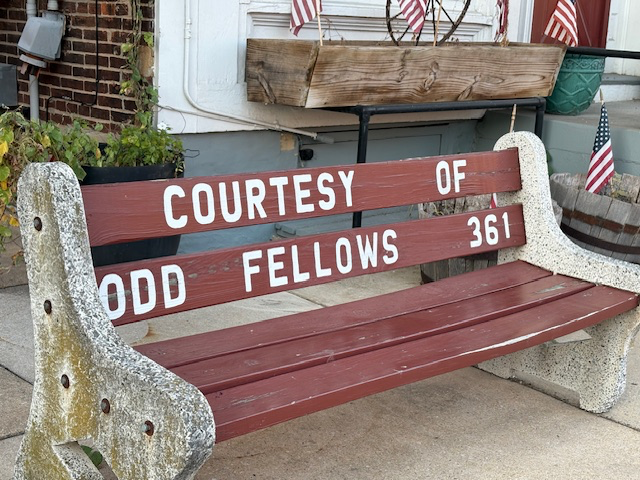
Odd Fellows
As we traveled through Lancaster County, PA, a simple bench caught my attention. I took this photo to remind myself to explore the Odd Fellows. Who were the Odd Fellows, why such an unusual name? My curiosity led me to explore more. The Independent Order of Odd Fellows is one of the oldest fraternal benefit […]
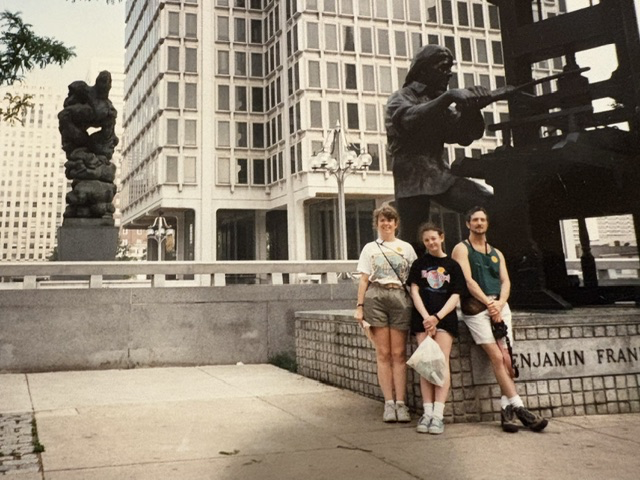
Benjamin Franklin, Craftsman
I like to think of Benjamin Franklin as a Bostonian. He was born in Boston in 1706, attended Boston Latin School and learned the printing trade in his brother’s shop. Yet it was Philadelphia, the city to which he moved as a young man, that became his adopted home and the place where he is […]
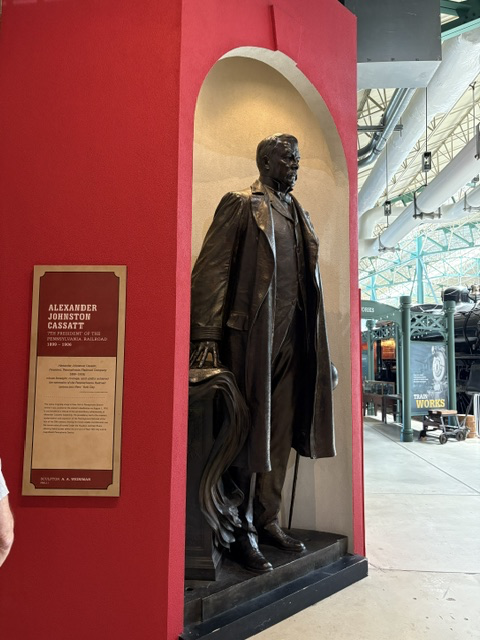
Alexander Johnston Cassatt
Among the objects preserved at the Railroad Museum of Pennsylvania is a bronze statue of Alexander Johnston Cassatt, the seventh president of the Pennsylvania Railroad. Cassatt led the company from 1899 until his death in 1906, during a period when the railroad was one of the largest and most powerful corporations in the United States. […]

