Leaman’s Place Covered Bridge
Leaman’s Place Covered Bridge carries a narrow country road across Pequea Creek in Lancaster County, Pennsylvania. Officially designated Pequea Bridge No. 4, it is also known as Eshelman’s Mill Covered Bridge and Paradise Bridge. Its location near farmland and small rural communities reflects the transportation network that once connected farms, mills and markets throughout the county.
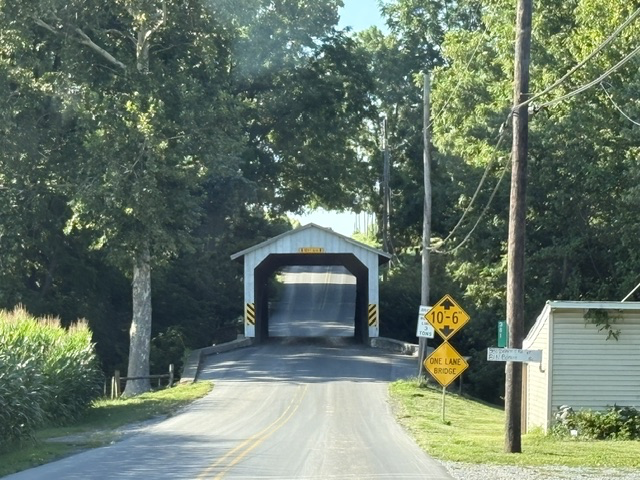
The first covered bridge at this location was constructed in 1845 by builder James C. Carpenter. Nearly fifty years later, Elias McMellen rebuilt the bridge in 1893. Although the structure has undergone later repairs and rehabilitation, its nineteenth-century design remains recognizable.
The bridge extends approximately 113 feet across Pequea Creek. Its wooden structure is supported by a double Burr arch truss, a design that combines a large wooden arch with a series of triangular trusses. The arch helps carry the weight across the span, while the trusses provide additional strength and stability. Steel hanger rods were later incorporated to reinforce the structure, and the roadway is supported by oak planking.
Covered bridges were enclosed primarily to protect their structural timbers. An uncovered wooden bridge was continually exposed to rain, snow and sunlight, causing the wood to decay more quickly. By placing a roof and walls around the load-bearing framework, builders extended the useful life of the bridge by many decades.
The enclosure also created a distinctive passage for travelers. Horses, wagons and pedestrians entered a shaded wooden corridor before emerging again into the surrounding countryside. Today, the bridge continues to carry one lane of modern traffic, preserving the experience of crossing the creek through a structure created for an earlier form of transportation.
The Leaman’s Place Covered Bridge is maintained by Lancaster County and stands along the boundary between Paradise and Leacock townships. It was listed on the National Register of Historic Places in 1980 as part of the historic collection of Lancaster County covered bridges and underwent a major rehabilitation in 2004.
Its continued use demonstrates the durability of the Burr arch design and the value placed on preserving the county’s rural transportation history. More than a century after its reconstruction, Leaman’s Place Covered Bridge remains both a functioning crossing and a surviving example of nineteenth-century bridge building.

Read More From Nancy
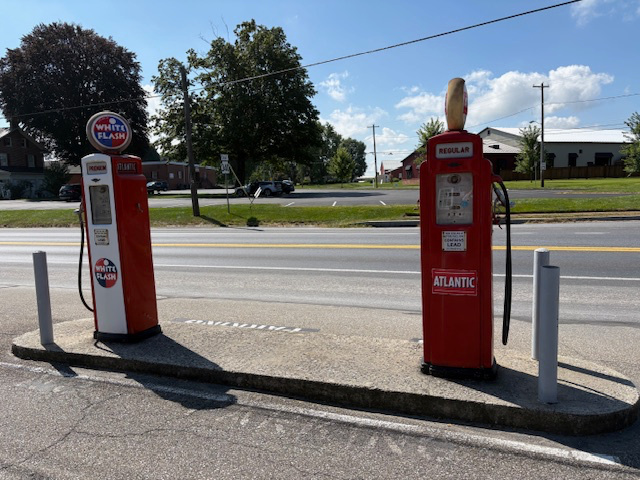
Leaded Gasoline
Curiosity is what drives exploration and it’s the spark that makes me stop, look around, and ask questions. If you’ve ever wondered about something as ordinary as the leaded gas pump, you’re touching on a fascinating (and troubling) piece of 20th-century history. In 1921, General Motors discovered adding lead to gasoline eliminated “knocking” and by […]
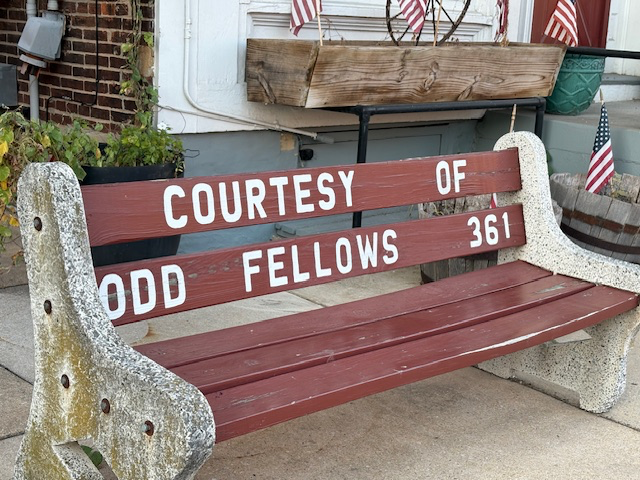
Odd Fellows
As we traveled through Lancaster County, PA, a simple bench caught my attention. I took this photo to remind myself to explore the Odd Fellows. Who were the Odd Fellows, why such an unusual name? My curiosity led me to explore more. The Independent Order of Odd Fellows is one of the oldest fraternal benefit […]
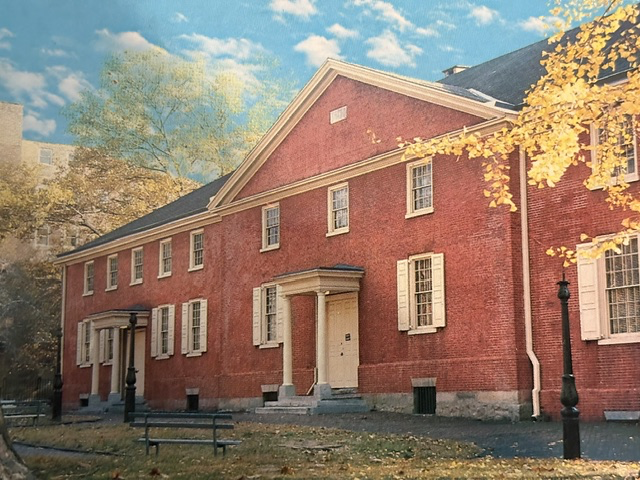
Arch Street Friends Meeting House
While visiting Philadelphia, I toured the Arch Street Friends Meeting House at Fourth and Arch Streets. It is one of the city’s most important surviving Quaker landmarks and remains an active place of worship more than two centuries after it was constructed. Quaker history is deeply connected to both Philadelphia and Pennsylvania. William Penn, who […]

