Alexander Johnston Cassatt
Among the objects preserved at the Railroad Museum of Pennsylvania is a bronze statue of Alexander Johnston Cassatt, the seventh president of the Pennsylvania Railroad. Cassatt led the company from 1899 until his death in 1906, during a period when the railroad was one of the largest and most powerful corporations in the United States.
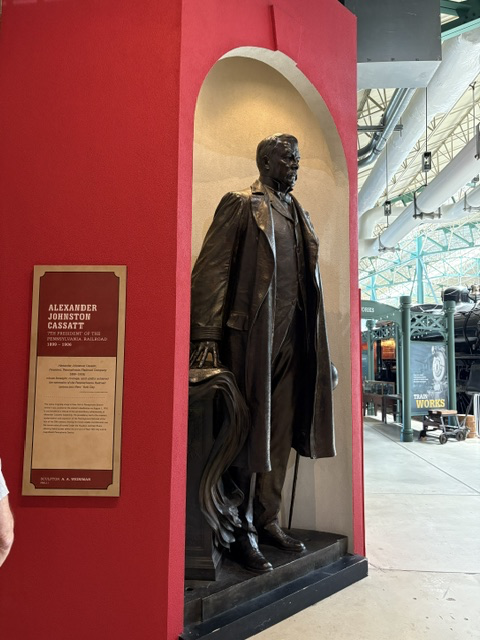
Cassatt began his railroad career as an engineer and advanced through a series of increasingly important positions. As president, he modernized the Pennsylvania Railroad and supported one of the most ambitious transportation projects of the era: extending its tracks beneath the Hudson River and into Manhattan. Until then, Pennsylvania Railroad passengers traveling to New York had to leave their trains in New Jersey and complete the journey by ferry.
The tunnels led to the construction of the original Pennsylvania Station, which opened in New York City in 1910. Designed by the architectural firm McKim, Mead & White, the monumental station became one of the great public buildings of the early twentieth century. Cassatt did not live to see its completion, but the project was largely the result of his vision and determination.
Sculptor Adolph A. Weinman created the statue as a memorial to Cassatt. It was installed in a niche within Pennsylvania Station when the terminal opened. When the station was demolished between 1963 and 1966, the statue was removed and preserved. Its survival is especially meaningful because so much of the original building was destroyed.
Alexander Cassatt was also the older brother of Mary Cassatt; the American painter celebrated for her work with the French Impressionists. While Mary made her mark in art, Alexander helped reshape American transportation. His statue now stands among the locomotives and railroad cars that represent the industry he helped advance, preserving both his legacy and a physical connection to the lost Pennsylvania Station.
Read More From Nancy
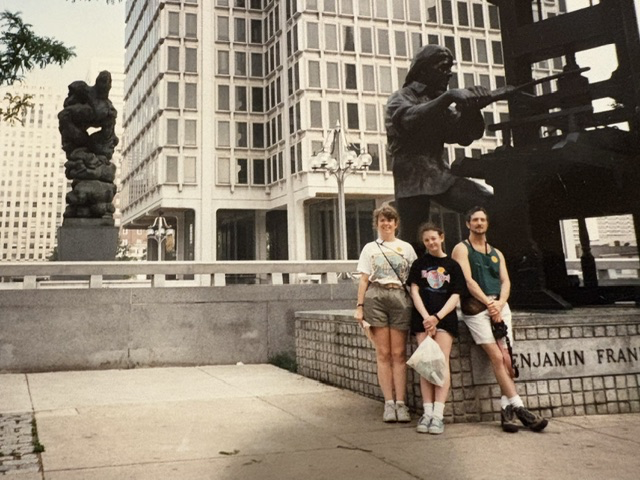
Benjamin Franklin, Craftsman
I like to think of Benjamin Franklin as a Bostonian. He was born in Boston in 1706, attended Boston Latin School and learned the printing trade in his brother’s shop. Yet it was Philadelphia, the city to which he moved as a young man, that became his adopted home and the place where he is […]
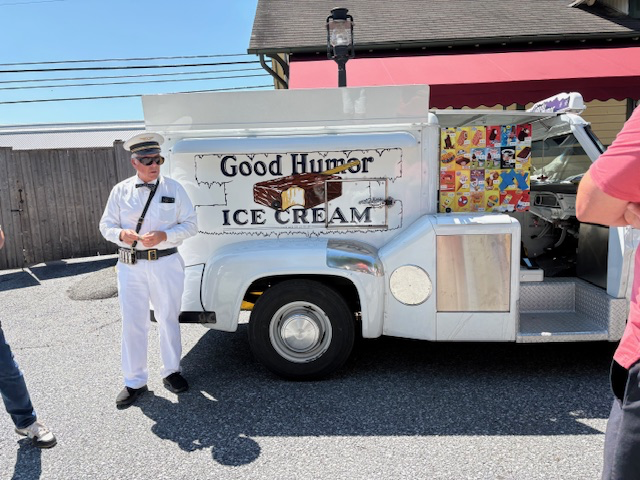
The Good Humor Truck
During our trip to Lancaster County Pennsylvania this summer, we rode the historic train in Strasburg. As part of their railroad grounds exhibition, was a Good Humor ice cream truck. It stood there as if it had rolled out of our 1950s neighborhood. The story of the Good Humor truck begins in Youngstown, Ohio […]
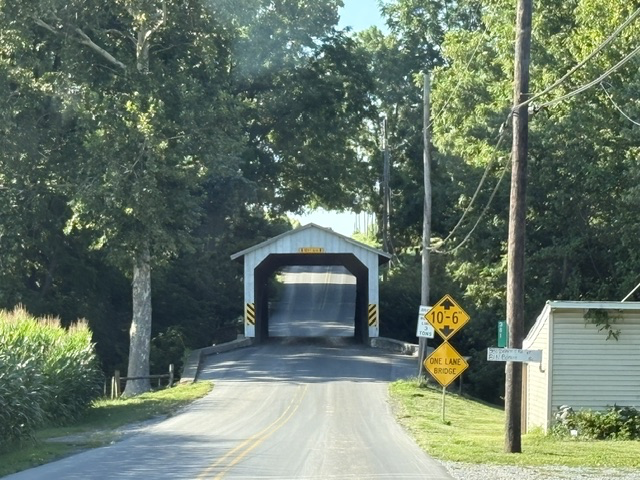
Leaman’s Place Covered Bridge
Leaman’s Place Covered Bridge carries a narrow country road across Pequea Creek in Lancaster County, Pennsylvania. Officially designated Pequea Bridge No. 4, it is also known as Eshelman’s Mill Covered Bridge and Paradise Bridge. Its location near farmland and small rural communities reflects the transportation network that once connected farms, mills and markets throughout the […]

