The Sirens’ Calling
At Queen’s Marque on Halifax’s waterfront, four sculpted figures stand on black granite bases, each oriented toward a different point of the compass. Created by Nova Scotia artist John Greer and installed in 2020, The Sirens’ Calling draws on ancient Greek sculpture and mythology to explore departure, return and the harbour’s role as a place of shelter.
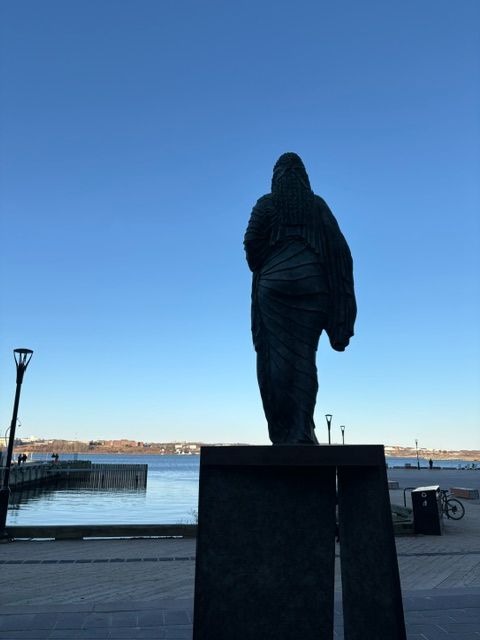
The figures reveal different forms as people move around them. Their backs have sculpted clothing and hairstyles derived from archaic Greek marble carvings. Their fronts are flat silhouettes of mirror-polished stainless steel, reflecting the surrounding sky, waterfront and people passing by. Each figure stands with its left foot slightly forward, suggesting a step held in suspension. The installation combines that possibility of movement with the stillness of figures firmly anchored to stone.
The title refers to the sirens of Homer’s Odyssey, whose irresistible song drew sailors toward danger. Greer uses that ancient association to consider the competing calls of the wider world and a safe harbour. In his explanation of the work, venturing outward represents engagement and discovery, while returning offers a place for reflection. The compass directions give these ideas a physical orientation within the waterfront landscape.
Greer’s connection to Halifax extends beyond this commission. He taught sculpture at the Nova Scotia College of Art and Design for twenty-six years, influencing generations of artists and the development of contemporary sculpture in Canada. In 2009, he received a Governor General’s Award in Visual and Media Arts recognizing his contribution. At Queen’s Marque, his figures place that artistic practice beside a harbour long associated with journeys, creating a work whose reflective surfaces continually incorporate its surroundings.

Read More From Nancy
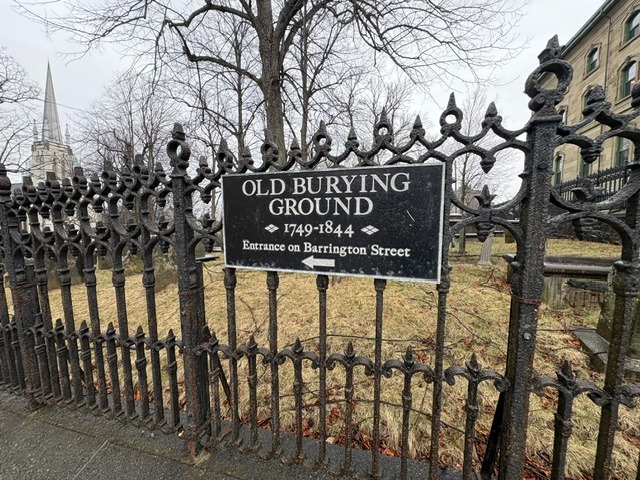
Old Burying Ground and Welsford-Parker Monument
Established in 1749, the same year Halifax was founded as a British settlement, the Old Burying Ground served the community until 1844. Originally located outside the fortified town, it became the resting place of people from different religious denominations. Today, its enclosed grounds preserve a chapter of early Halifax within the surrounding downtown streets. More […]
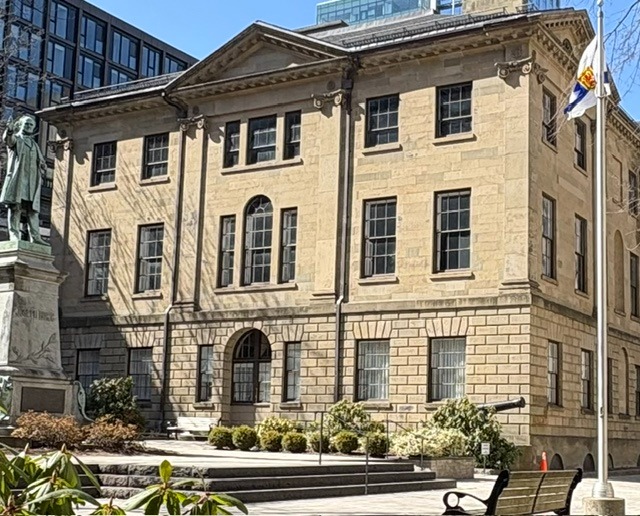
Province House
Province House has been the home of Nova Scotia’s legislature since its official opening on February 11, 1819. As Canada’s oldest legislative building, it preserves more than two centuries of parliamentary history within a structure still serving its original purpose. Its construction gave the province’s elected Assembly a permanent home after decades in temporary accommodations. […]
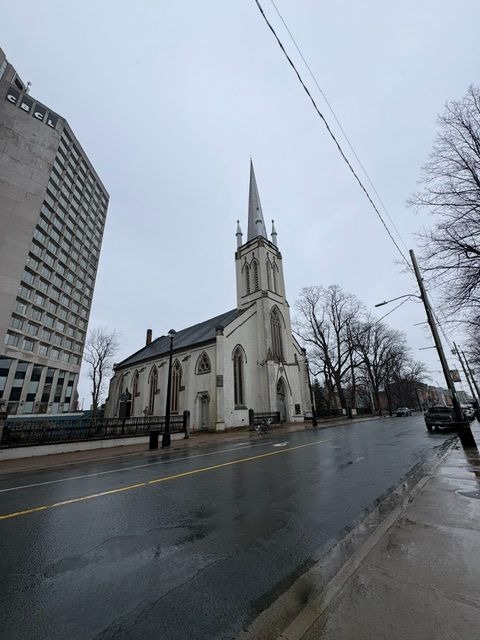
St. Matthew’s Church
On Barrington Street near Spring Garden Road, St. Matthew’s Church preserves the history of a congregation whose origins reach back to Halifax’s founding in 1749. Its tall spire, pointed windows and buttressed walls belong to a building completed in 1859, but the community that built it had already worshipped in the town for more than […]

