Province House
Province House has been the home of Nova Scotia’s legislature since its official opening on February 11, 1819. As Canada’s oldest legislative building, it preserves more than two centuries of parliamentary history within a structure still serving its original purpose. Its construction gave the province’s elected Assembly a permanent home after decades in temporary accommodations.
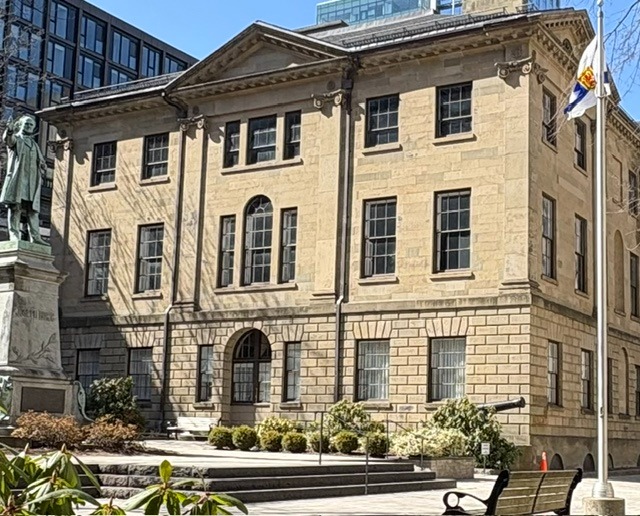
Construction began in 1811, following a design submitted by John Merrick, a Halifax painter and glazier. Master builder Richard Scott interpreted the plans and directed the work of the masons, carpenters, and laborers who brought the building into being. The eight-year project produced a carefully proportioned public building whose architectural character has endured.
The exterior is faced with sandstone quarried at Wallace, Nova Scotia. Its Palladian design draws on classical principles of symmetry, balance, and proportion. A heavily textured ground floor anchors the smoother stonework above, while tall pilasters, decorative capitals, and triangular pediments organize the façades. On the south side, an arched central window flanked by narrower windows creates a distinctive focal point. The exterior has changed remarkably little since 1819.
The building originally accommodated both legislative chambers and the Supreme Court of Nova Scotia. Its rooms witnessed significant legal and political events, including Joseph Howe’s 1835 libel trial and the establishment of responsible government in 1848. These events made Province House an important setting in the development of press freedom and parliamentary accountability in Canada.
Province House’s significance also rests in continuity. Generations of representatives have gathered here to debate legislation and the concerns of Nova Scotians. Its enduring use connects the province’s early parliamentary history with the ongoing work of government, giving the sandstone building a place in both Halifax’s historic landscape and its public life.

Read More From Nancy
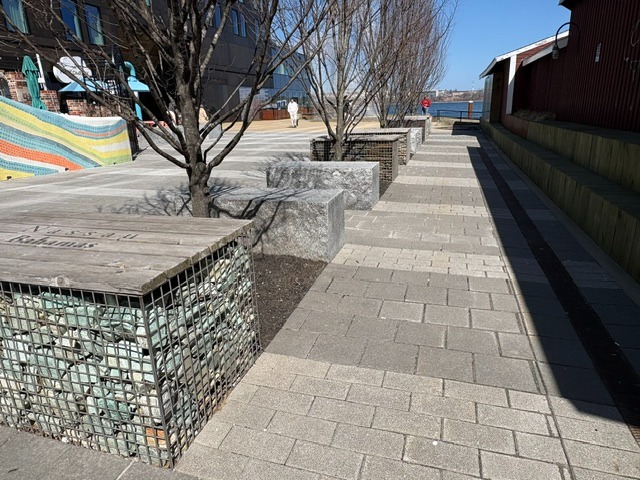
The Ballast Boxes
Along Halifax’s waterfront, stone-filled metal boxes topped with wooden seating recall an essential part of maritime trade. These ballast boxes turn a practical feature of the public landscape into a reminder of the weight that helped sailing ships travel safely across the ocean. A ship needed stability even when its hold carried little or no […]
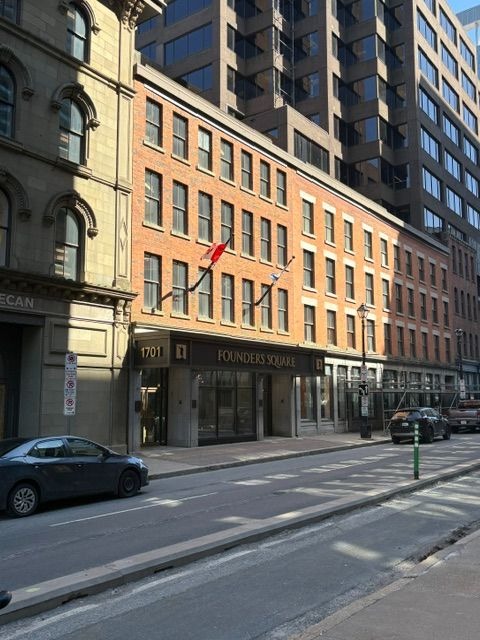
Founders Square
Along Hollis and Prince Streets in downtown Halifax, Founders Square preserves a row of nineteenth-century commercial façades within a development completed in 1986. The historic buildings associated with the complex date from 1816 to 1865, spanning decades when Halifax’s business district grew around the harbour and the provincial seat of government. Their surviving street fronts […]
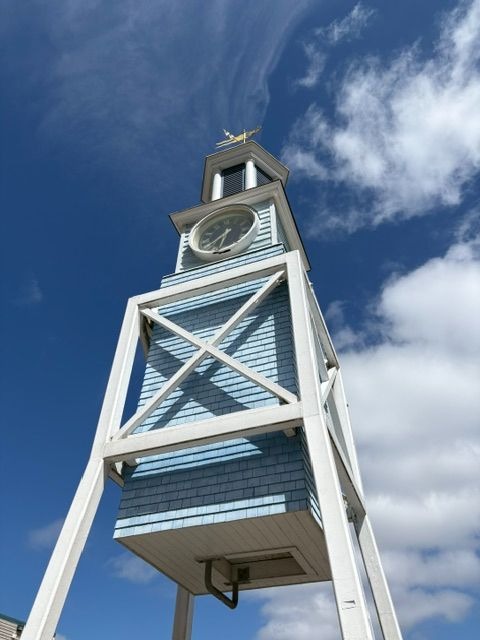
The Dockyard Clock
At Chebucto Landing on Halifax’s waterfront, the Dockyard Clock stands above the boardwalk in a blue-shingled tower supported by an open framework. Its public setting is relatively recent, but the timepiece dates to 1767. Made in London, England, it was installed in Halifax’s naval dockyard in 1772, where it served generations of sailors and civilian […]

