Unity Church
Unity Church rises above its lawn in North Easton with a slender stone spire, steep roofs, and pointed windows. Built in 1875, it was a gift from Oliver Ames II to the Unitarian Society of North Easton. The church reflects both the religious life of the community and the Ames family’s investment in craftsmanship, architecture, and art.
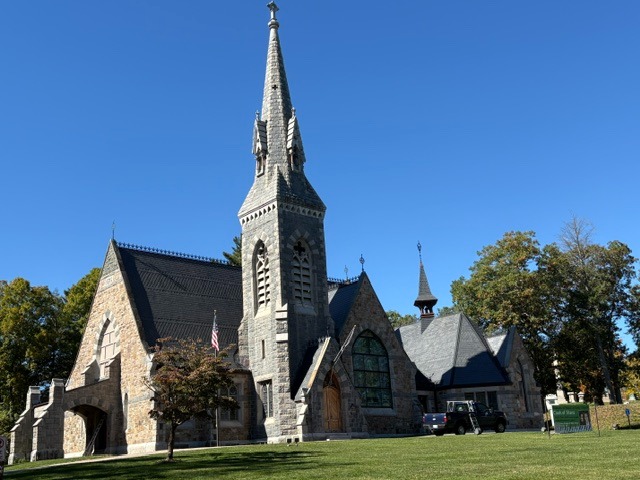
The architect was John Ames Mitchell, a nephew of the donor. Educated at Harvard and trained in architecture at the École des Beaux-Arts in Paris, Mitchell designed the church in the English Gothic Revival style. Its pointed arches, prominent tower, and sharply pitched rooflines draw upon medieval church architecture, interpreted for a nineteenth-century New England congregation.
The exterior combines rugged stone surfaces with carefully shaped architectural details. The tower draws the eye upward, while projecting gables and lower adjoining sections give the building a varied silhouette. Tall windows interrupt the masonry, bringing light into the interior. Across the façade, the contrast between substantial walls and narrow openings gives the church both solidity and vertical emphasis.
The interior evolved after the church’s dedication. Gothic Revival architect Henry Vaughan remodeled it in 1895, and an elaborate carved wooden frieze became part of the altar area. These additions enriched the original design, creating an interior shaped by successive contributions rather than a single moment of construction.
The church’s history brings together architecture, stained glass, woodcarving, and memorial giving. Each contribution served a place intended for worship and gathering, allowing artistic achievement to become part of community life. Its significance extends beyond the names of its benefactors and designers to the generations who have entered its doors.
Unity Church preserves a distinctive expression of nineteenth-century Easton. Its stone walls and rising spire give lasting form to the ambitions of its founders, while its interior artwork records relationships and memories carried forward through the congregation’s history.
Read More From Nancy
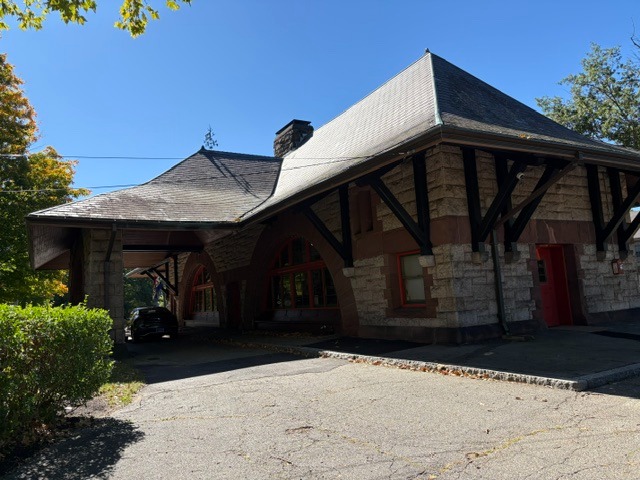
Old Colony Railroad Station
With its broad slate roof, deep overhanging eaves, and substantial stone walls, North Easton’s former railroad station gives a practical building a distinctive architectural presence. The dark timber brackets and rounded arches visible in our photographs reveal the care given to a place built for everyday arrivals and departures. Frederick Lothrop Ames commissioned the station […]
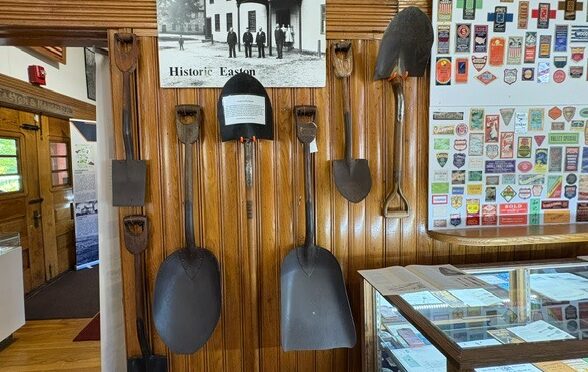
Ames Shovels
Displayed together in the Easton Historical Society Museum, the Ames shovels reveal how much variety can exist within an everyday tool. Some have broad, rounded blades, while others are narrower or nearly rectangular. Long wooden shafts and shorter handles with enclosed grips reflect different ways of lifting, digging, and moving materials. Their shapes invite a […]
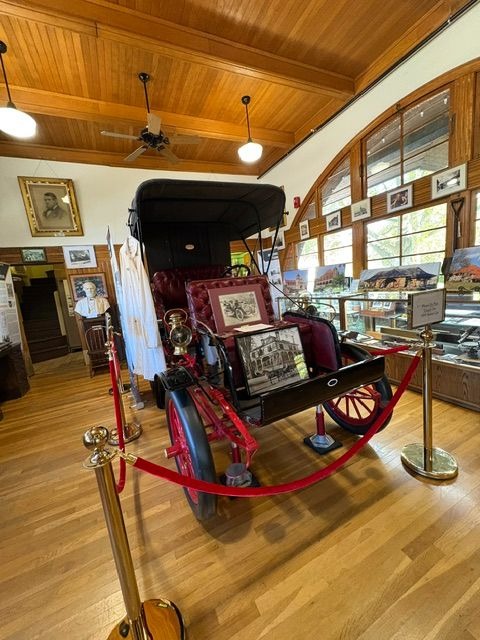
The Morse Runabout
With its tall wheels, upholstered seat, and overhead canopy, the Morse Runabout recalls a time when automobiles still resembled the horse-drawn vehicles they were beginning to replace. Preserved in the Easton Historical Society Museum, the car introduces a less familiar chapter of the town’s industrial history: its connection to early automobile manufacturing. The museum identifies […]

