Old Colony Railroad Station
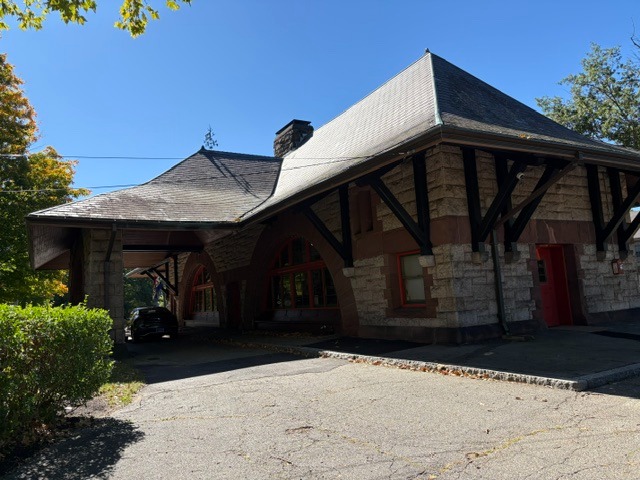
With its broad slate roof, deep overhanging eaves, and substantial stone walls, North Easton’s former railroad station gives a practical building a distinctive architectural presence. The dark timber brackets and rounded arches visible in our photographs reveal the care given to a place built for everyday arrivals and departures.
Frederick Lothrop Ames commissioned the station in 1881, selecting architect Henry Hobson Richardson to design it. Opened in 1883, the building brought Richardson’s architectural vision to the transportation network serving Easton. Its construction reflected the Ames family’s investment in the town and their belief that public buildings could combine usefulness with lasting beauty.
Richardson’s design emphasizes shelter and solidity. The roof extends well beyond the walls, creating covered spaces around the building, while rough stone contrasts with the darker woodwork and reddish trim. Although modest in size, the station has a strong identity, turning a familiar type of railroad building into a memorable part of the village.
Landscape architect Frederick Law Olmsted designed the surrounding grounds. A frequent collaborator of Richardson, he approached the setting as a complement to the architecture, using a simple landscape to connect the station with its natural surroundings. The partnership brought together two influential designers at a place where travelers encountered Easton.
The station remained in service until November 1959. Ten years later, the Ames family purchased the building and gave it to the Easton Historical Society. Restoration and its conversion into a museum provided a new purpose for a structure whose original transportation role had ended.
Today, the station houses the Easton Historical Society and Museum, preserving photographs, documents, and objects connected to the town’s past. A building once used to welcome travelers now welcomes people exploring local history and continuing its public role while preserving an important example of Richardson’s work.
Read More
Read More From Nancy
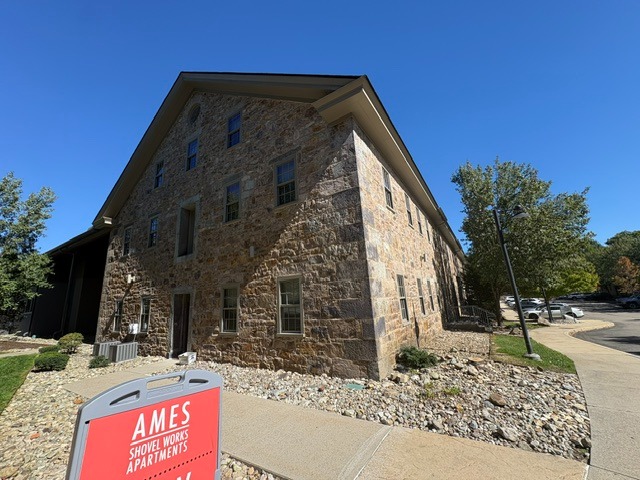
Ames Shovel Works
A shovel is a simple tool, but making thousands of strong, dependable shovels required skilled workers, specialized machinery, and a carefully organized factory. At the Ames Shovel Works in North Easton, the surviving stone buildings preserve the story of an industry that helped shape the town and supplied tools for projects far beyond Massachusetts. Oliver […]
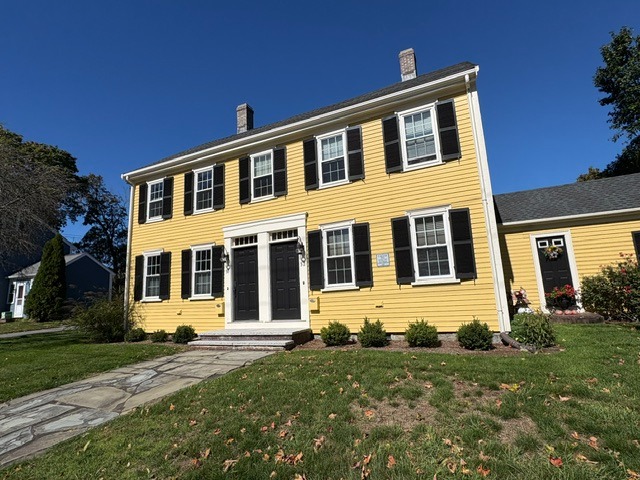
Oakes Ames House
The house at 25 Main Street began as the homestead of Oliver Ames, founder of the Ames shovel business. In 1813, he purchased the land and began building a substantial Federal-style residence near his manufacturing operations. Its size reflected the family’s growing prosperity and established a home that would accommodate several generations of the Ames […]
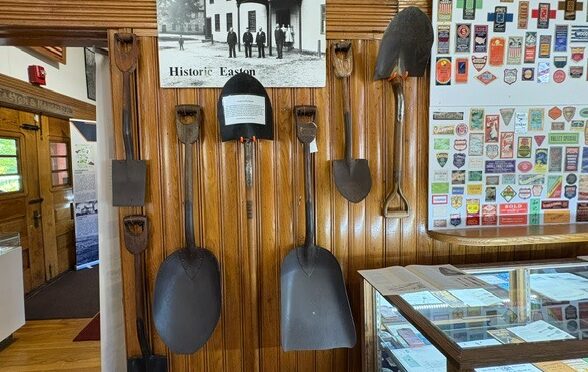
Ames Shovels
Displayed together in the Easton Historical Society Museum, the Ames shovels reveal how much variety can exist within an everyday tool. Some have broad, rounded blades, while others are narrower or nearly rectangular. Long wooden shafts and shorter handles with enclosed grips reflect different ways of lifting, digging, and moving materials. Their shapes invite a […]

