Oliver Ames Memorial
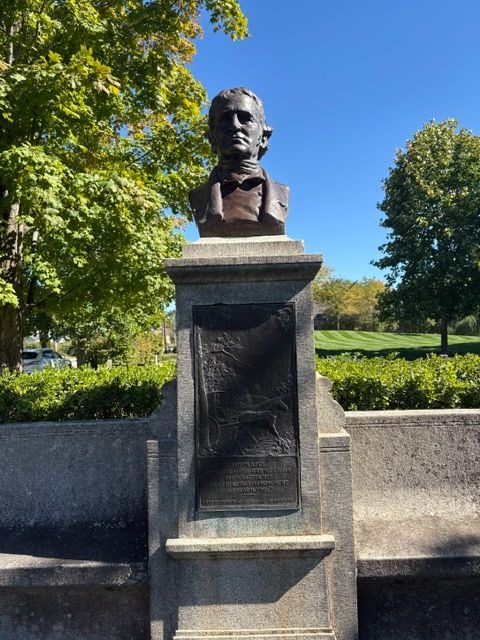
At the corner of Main and Oliver Streets in North Easton, a bronze bust rises above a granite pedestal framed by a curved stone bench. The memorial honors Oliver Ames Sr., the manufacturer whose shovel business helped transform Easton into an industrial town. Its inscription invites visitors to consider his legacy beyond the monument itself: “Would you behold his monument, look about you.”
In 1803, Ames purchased a forge, a nail-making shop, a dwelling, and land near the Shovel Shop Dam. He adapted the existing workshops to manufacture shovels and wooden handles, establishing the beginnings of a business that would grow far beyond its local market. Waterpower supported the early manufacturing operations, connecting the company’s development to Easton’s ponds and streams.
As production expanded, Ames added workshops and improved manufacturing methods. By 1837, his business employed 84 workers. In 1844, he transferred active management to his sons, Oakes and Oliver, while retaining an ownership interest. The firm became Oliver Ames & Sons, carrying his work into another generation.
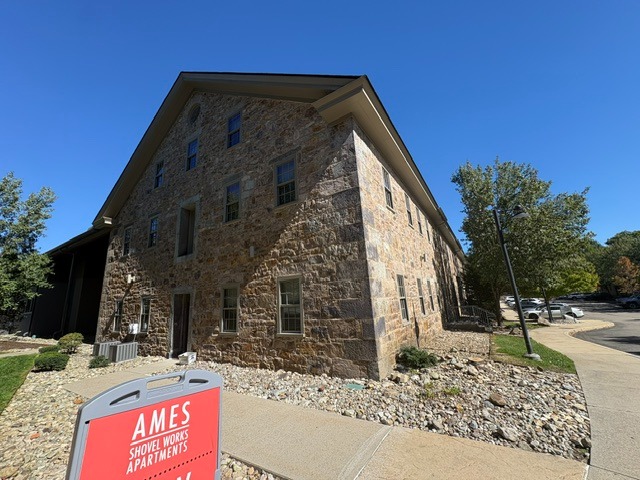
The company continued to grow through major changes. After a fire destroyed its wooden shops in 1852, manufacturing resumed in temporary buildings while permanent stone shops were constructed. Steam engines supplemented the waterpower on which the business had depended, and a railroad connection opened in 1855 to transport its products. These developments helped shape the industrial village surrounding the memorial.
The memorial was provided through a 1918 bequest from Ames’s granddaughter, Sarah Emily Witherell. Its combination of portrait, inscription, and seating creates a place to pause within the community his enterprise helped build.
The words on the pedestal give the monument its particular meaning. Ames’s legacy encompasses the workplaces, livelihoods, and generations of family involvement that influenced Easton’s development. The invitation to “look about you” directs attention outward, making the surrounding village part of the remembrance.
Read More From Nancy
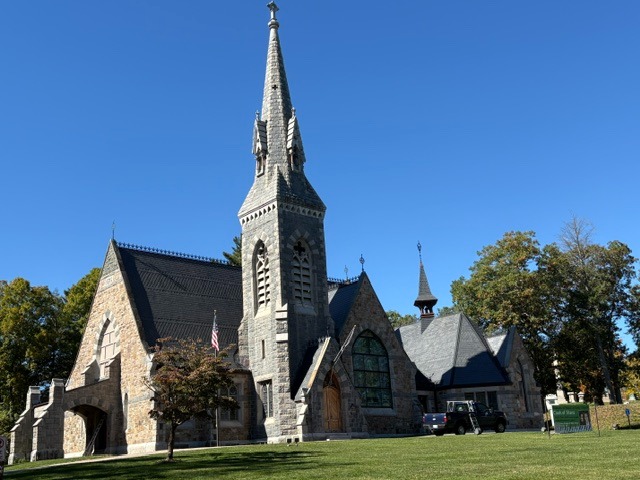
Unity Church
Unity Church rises above its lawn in North Easton with a slender stone spire, steep roofs, and pointed windows. Built in 1875, it was a gift from Oliver Ames II to the Unitarian Society of North Easton. The church reflects both the religious life of the community and the Ames family’s investment in craftsmanship, architecture, […]
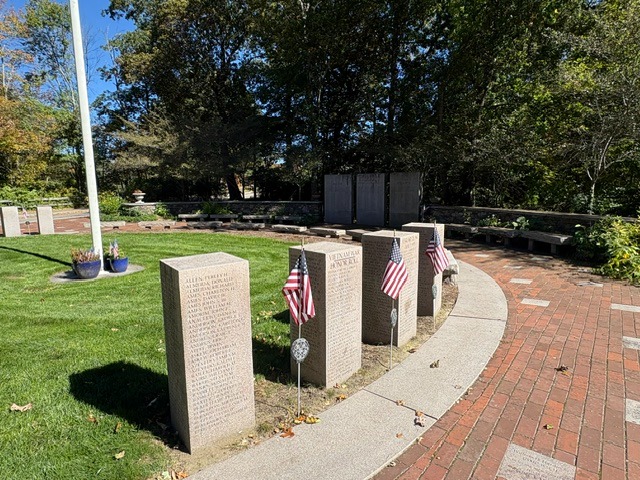
Veterans Memorial Park
Veterans Memorial Park in North Easton brings military remembrance into a quiet public setting. Granite monuments, American flags, brick paths, and benches surround an open lawn, creating a place where visitors can pause and consider the service of people connected to the town. The inscriptions give that remembrance a personal dimension. Rather than referring only […]
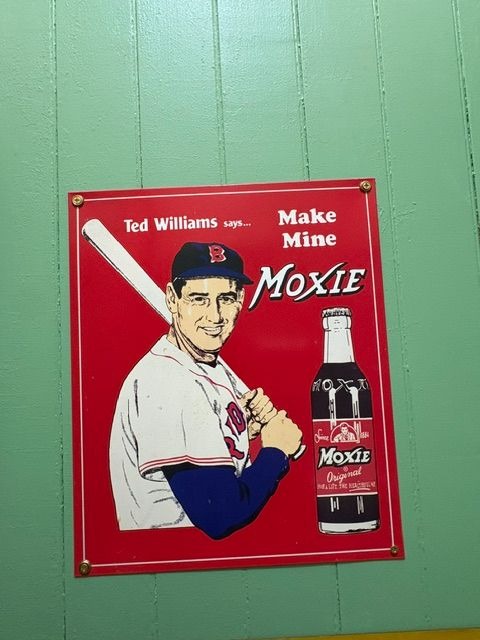
Ted Williams and Moxie
“Make Mine Moxie,” declares the advertisement featuring Boston Red Sox player Ted Williams. With a bat resting on his shoulder and a bottle beside him, Williams lends a familiar sporting face to a distinctly New England beverage. Preserved as a museum display in Easton, the image connects baseball, advertising, and the history of an unusual […]

