Shovel Shop Pond
Shovel Shop Pond helped power the industry that shaped North Easton. Its water supplied the original Ames shovel works, making this small pond part of a manufacturing operation whose products would travel far beyond Massachusetts. The wooded shoreline now presents a quiet setting, but the pond’s history is closely tied to machinery, metalworking, and the daily demands of production.
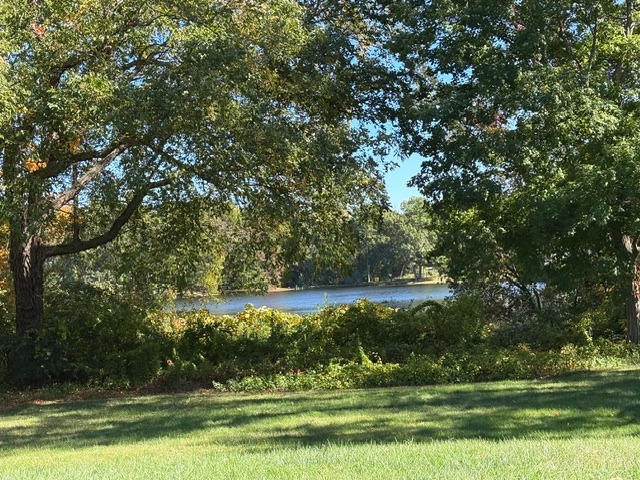
In 1803, Oliver Ames purchased a forge, a nail-making shop, a dwelling, and land near the Shovel Shop Dam. The existing waterpower made the location valuable. By establishing his shovel business here, Ames connected the company’s beginnings to a resource already used for local manufacturing. In 1826, he added a stone shop at the pond’s dam as the enterprise expanded.
Waterpower depended on both flowing water and the ability to store it. A dam held water above the working machinery, allowing its controlled release to provide mechanical power. The pond therefore served a practical purpose: it was a reservoir of energy for the factory. Its usefulness also depended on the larger Queset watershed. In 1825, Ames joined other owners of water privileges along the Queset in enlarging the Long Pond dam to conserve additional water for their operations.
That dependence placed manufacturing within the rhythms of the local landscape. Rainfall, available storage, and the movement of water downstream mattered to the operation of the shops. The company’s investment in dams shows that expanding production required attention to the water supply as well as to tools, workers, and factory space.
Today, trees and vegetation soften the pond’s edges, and open water remains visible between the banks. Its industrial role is less immediately apparent than its natural setting. Yet Shovel Shop Pond preserves an essential part of North Easton’s history: the connection between a local waterway and the growth of the Ames shovel business. Before that business became nationally known, its work depended on the power available here.
Read More From Nancy
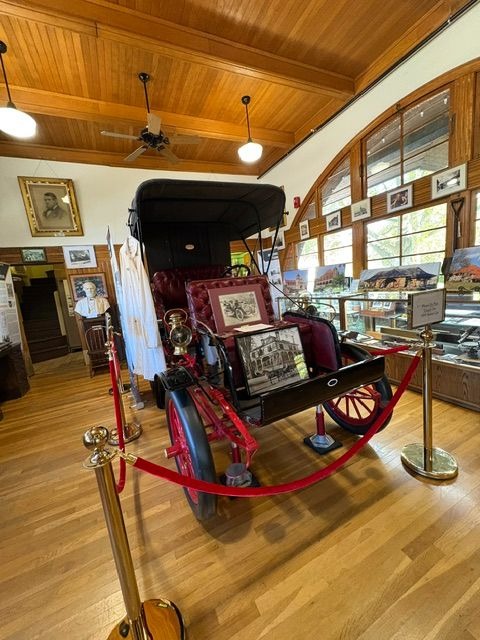
The Morse Runabout
With its tall wheels, upholstered seat, and overhead canopy, the Morse Runabout recalls a time when automobiles still resembled the horse-drawn vehicles they were beginning to replace. Preserved in the Easton Historical Society Museum, the car introduces a less familiar chapter of the town’s industrial history: its connection to early automobile manufacturing. The museum identifies […]
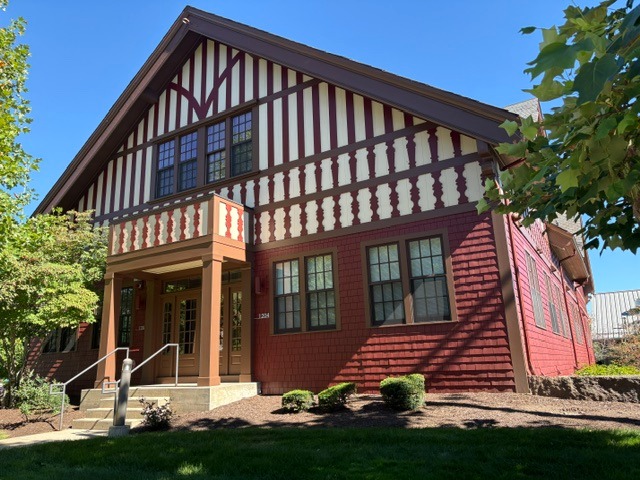
Ames Shovel Works Stables
The red-shingled building at the Ames Shovel Works tells a story of the transportation and administrative work that supported Easton’s best-known industry. Dating to about 1897, it originally included stables for horses used to move raw materials around the factory grounds. Its decorative gables and contrasting trim gave an essential working building a distinctive architectural […]
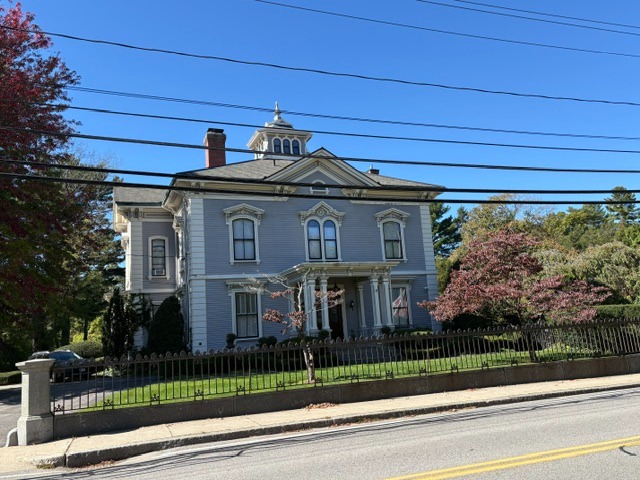
Unity Close
Unity Close, at 23 Main Street, was built in 1862 for Oliver Ames Jr. and his wife, Sarah Lothrop Ames. Designed by Boston architect George Snell, the house reflects the prosperity of the Ames family during the expansion of its shovel manufacturing business. Its location near the company’s operations kept the family home closely connected […]

