Old Colony Railroad Station
With its broad slate roof, deep overhanging eaves, and substantial stone walls, North Easton’s former railroad station gives a practical building a distinctive architectural presence. The dark timber brackets and rounded arches visible in our photographs reveal the care given to a place built for everyday arrivals and departures.
Frederick Lothrop Ames commissioned the station in 1881, selecting architect Henry Hobson Richardson to design it. Opened in 1883, the building brought Richardson’s architectural vision to the transportation network serving Easton. Its construction reflected the Ames family’s investment in the town and their belief that public buildings could combine usefulness with lasting beauty.
Richardson’s design emphasizes shelter and solidity. The roof extends well beyond the walls, creating covered spaces around the building, while rough stone contrasts with the darker woodwork and reddish trim. Although modest in size, the station has a strong identity, turning a familiar type of railroad building into a memorable part of the village.
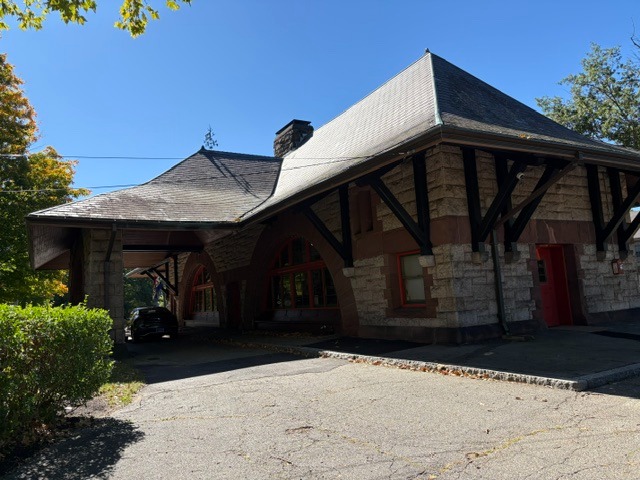
Landscape architect Frederick Law Olmsted designed the surrounding grounds. A frequent collaborator of Richardson, he approached the setting as a complement to the architecture, using a simple landscape to connect the station with its natural surroundings. The partnership brought together two influential designers at a place where travelers encountered Easton.
The station remained in service until November 1959. Ten years later, the Ames family purchased the building and gave it to the Easton Historical Society. Restoration and its conversion into a museum provided a new purpose for a structure whose original transportation role had ended.
Today, the station houses the Easton Historical Society and Museum, preserving photographs, documents, and objects connected to the town’s past. A building once used to welcome travelers now welcomes people exploring local history and continuing its public role while preserving an important example of Richardson’s work.
Read More
Read More From Nancy
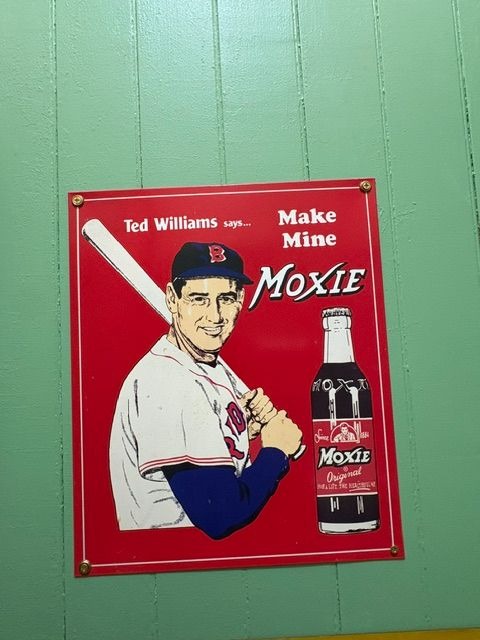
Ted Williams and Moxie
“Make Mine Moxie,” declares the advertisement featuring Boston Red Sox player Ted Williams. With a bat resting on his shoulder and a bottle beside him, Williams lends a familiar sporting face to a distinctly New England beverage. Preserved as a museum display in Easton, the image connects baseball, advertising, and the history of an unusual […]
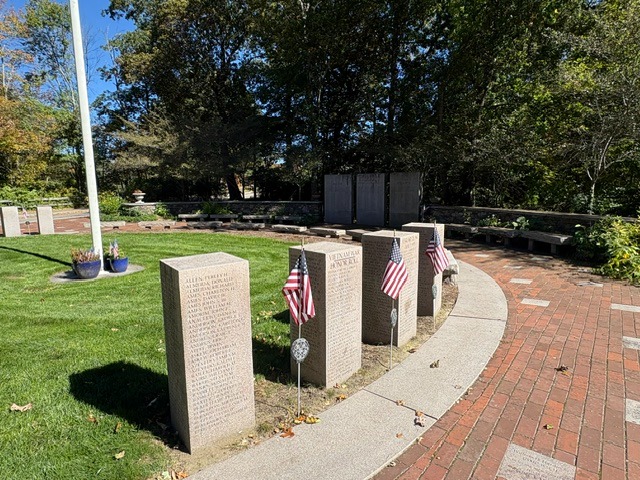
Veterans Memorial Park
Veterans Memorial Park in North Easton brings military remembrance into a quiet public setting. Granite monuments, American flags, brick paths, and benches surround an open lawn, creating a place where visitors can pause and consider the service of people connected to the town. The inscriptions give that remembrance a personal dimension. Rather than referring only […]
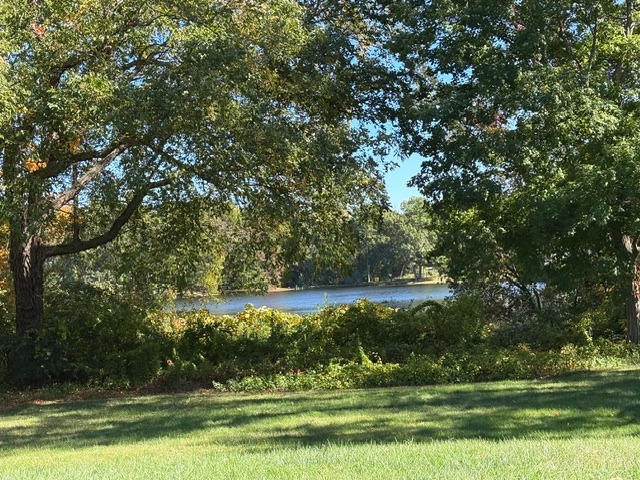
Shovel Shop Pond
Shovel Shop Pond helped power the industry that shaped North Easton. Its water supplied the original Ames shovel works, making this small pond part of a manufacturing operation whose products would travel far beyond Massachusetts. The wooded shoreline now presents a quiet setting, but the pond’s history is closely tied to machinery, metalworking, and the […]

