The Former North Easton Savings Bank and Post Office
The stone building at 66 Main Street preserves a chapter of North Easton’s everyday commercial history. Its substantial masonry, red-tiled roof, and broad entrance arch give it a commanding presence along the street. Behind that carefully designed exterior were services that connected residents with both their local economy and the wider world.
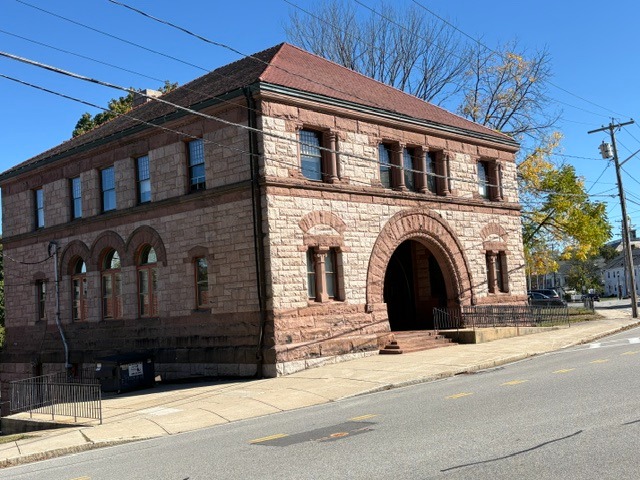
The Easton Historical Society records that North Easton Savings Bank moved into the building in 1904, sharing space with the post office. The two institutions brought different kinds of daily business under one roof: banking provided a place to manage savings, while the post office handled the correspondence through which people maintained personal relationships and conducted business.
The architecture reflects the Richardsonian Romanesque tradition. Accounts of North Easton’s historic district attribute the building to Henry Hobson Richardson’s office. Its rough-faced stone, contrasting reddish trim, and deeply recessed entrance express the solidity associated with that style.
The large entrance arch is the most prominent feature of the façade. Bands of stone frame the opening, creating a sheltered approach from the sidewalk. Above it, groups of rectangular windows give the upper story a regular rhythm. Along the side, rounded arches over the lower windows continue the architectural theme, while horizontal bands of reddish stone tie the elevations together.
The building’s position close to the sidewalk places it directly within the working life of Main Street. Unlike a residence set behind a broad lawn, it was designed to meet the street and accommodate people arriving on ordinary errands. Its architecture gave those practical activities a substantial and dignified setting.
A bank and post office also served as points of connection within a manufacturing community. Wages, savings, business correspondence, and family letters formed part of the life surrounding the factories. The building helps preserve that broader history, reminding us that an industrial town depended on services as well as production.
The former bank and post office remains a physical record of those connections. Its stone walls and arched entrance preserve the character of a place where public services and private transactions became part of North Easton’s daily routine.
Read More From Nancy
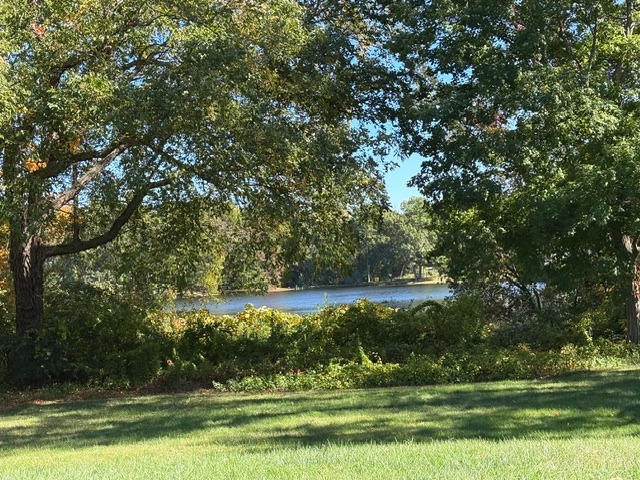
Shovel Shop Pond
Shovel Shop Pond helped power the industry that shaped North Easton. Its water supplied the original Ames shovel works, making this small pond part of a manufacturing operation whose products would travel far beyond Massachusetts. The wooded shoreline now presents a quiet setting, but the pond’s history is closely tied to machinery, metalworking, and the […]
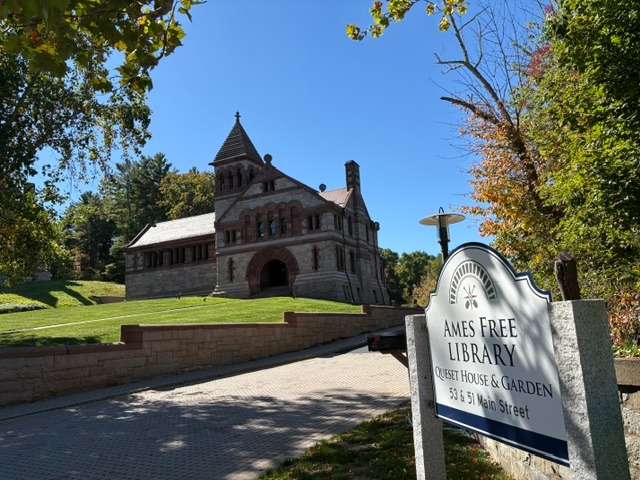
Ames Free Library
The Ames Free Library began with a gift intended to make books and learning available to the people of Easton. In his will, manufacturer and railroad investor Oliver Ames II left $50,000 for the construction and support of a library. Part of that bequest was reserved as a permanent fund to purchase books and maintain […]
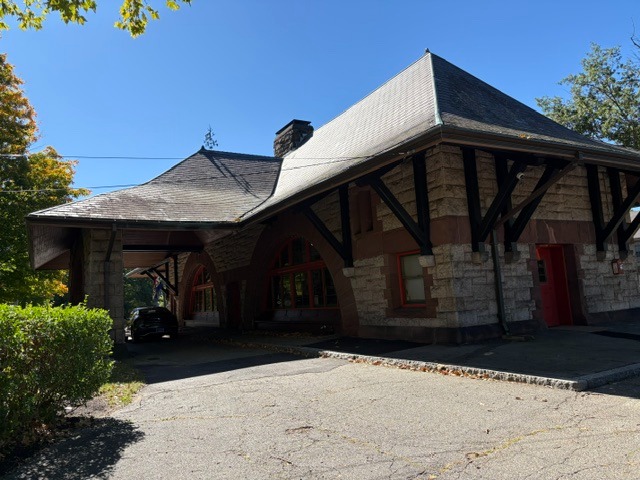
Old Colony Railroad Station
With its broad slate roof, deep overhanging eaves, and substantial stone walls, North Easton’s former railroad station gives a practical building a distinctive architectural presence. The dark timber brackets and rounded arches visible in our photographs reveal the care given to a place built for everyday arrivals and departures. Frederick Lothrop Ames commissioned the station […]

