Dr. Joseph Warren
Among the memorial plaques along Paul Revere Mall is one honoring Dr. Joseph Warren, a physician whose work placed him at the center of Boston’s growing resistance to British rule. His name may be less familiar than those of Paul Revere or Samuel Adams, but his leadership helped shape the events that brought Massachusetts into the American Revolution.
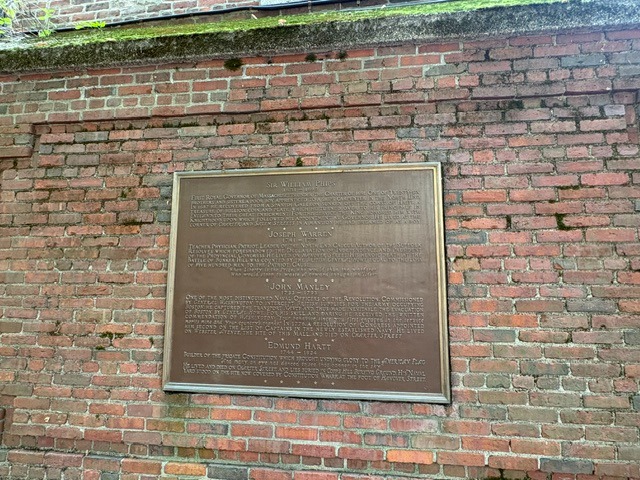
Born in Roxbury in 1741, Warren attended Harvard before training as a physician. During Boston’s smallpox epidemic of 1764, he remained in the town to care for patients and operated an inoculation clinic. His medical practice brought him into contact with people across Boston, while his political convictions connected him with leaders of the patriot movement. In 1774, he drafted the Suffolk Resolves, rejecting the measures Britain had imposed on Massachusetts following the Boston Tea Party.
On the evening of April 18, 1775, Warren dispatched Paul Revere and William Dawes to warn Samuel Adams and John Hancock in Lexington of approaching British troops. Their journeys formed part of a wider alarm that helped prepare the countryside for the fighting at Lexington and Concord the following day. Behind the familiar story of the riders was Warren’s work gathering information and organizing a response.
Less than two months later, Warren faced the British himself. Although recently appointed a major general, he joined the defenders on Breed’s Hill as a volunteer rather than assuming command. On June 17, 1775, during the battle remembered as Bunker Hill, he was killed as the British made their final assault. He was thirty-four years old.
His death was also a personal loss to the families he had cared for. Warren was the Adams family’s physician, and John Quincy Adams later remembered that he had saved an injured finger from amputation. Abigail Adams’s letters to her husband convey her grief at the death of their friend and her recognition of his courage. These memories bring the doctor into view alongside the Revolutionary leader.
Warren’s connection with Revere continued after his death. When his remains were recovered from a common grave months later, Revere identified him by dental work he had previously made for him, an early example of identification through dental evidence.
Stopping at Warren’s plaque adds another person to the history surrounding Paul Revere Mall: a doctor who treated Boston’s families, helped organize its resistance, and died before seeing the independence toward which he had worked.
Read More From Nancy
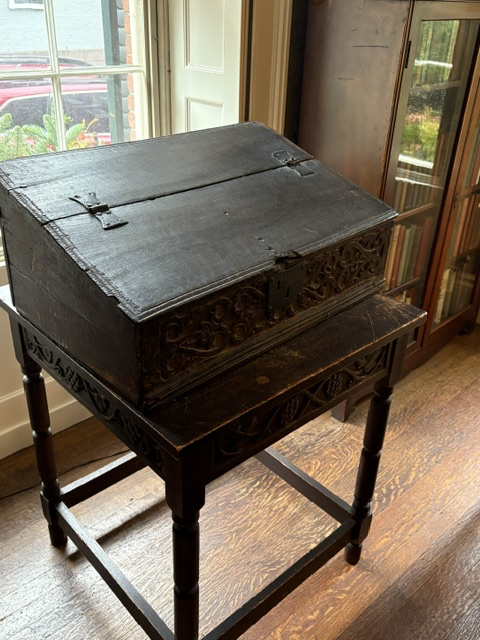
Bible Box
While touring the Nichols House Museum in Boston, one piece in Dr. Arthur Nichols’ office immediately caught my attention. Resting on its stand was a beautifully carved oak Bible box, a reminder that even a physician’s office could contain objects that reflected an appreciation for history and craftsmanship. Although often called a “Bible box,” this […]
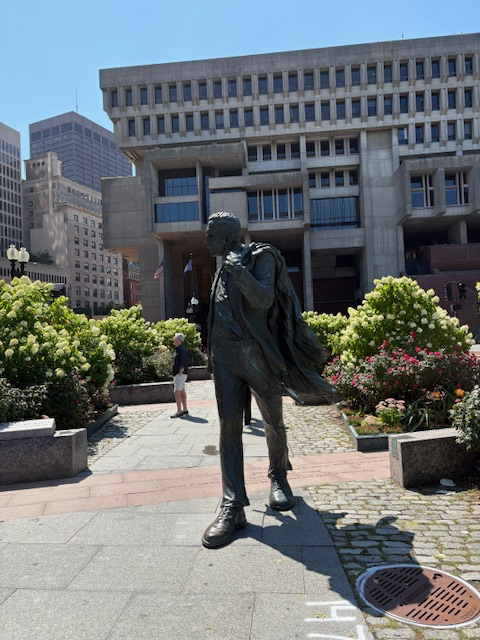
Mayor Kevin White
Walking near Faneuil Hall, it is easy to focus on the history you expect to find: Revolutionary sites, early American stories, the familiar markers of the city’s beginnings. Just beyond that, is a figure that is hard to ignore: the life size bronze statue of Kevin H. White. Located at street level and captured mid-stride, the sculpture immediately […]
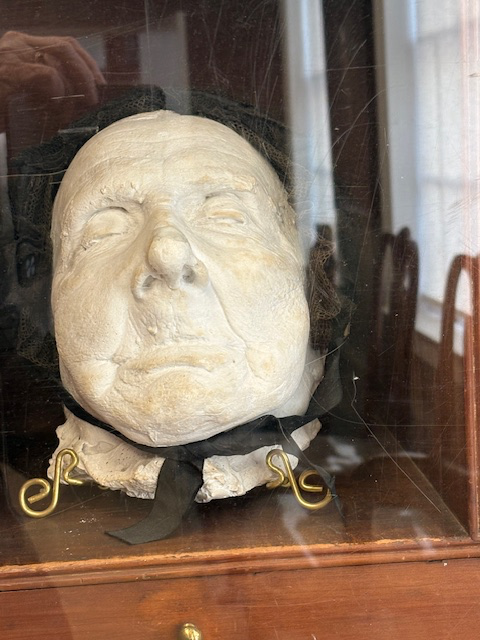
Death Mask
In the Dedham History Museum, is this death mask. An intimate impression of a person’s face taken shortly after death. The practice of creating death masks has a long history. In ancient Egypt, masks were place with the dead, though they were often idealized. In ancient Rome, families preserved wax masks of ancestors as a way to honor lineage […]

