Edmund Hartt at Copp’s Hill Burying Ground
The monument to Edmund Hartt at Copp’s Hill Burying Ground connects this historic cemetery to Boston’s shipbuilding waterfront. Hartt owned the North End shipyard where the USS Constitution was built, helping provide the setting and skilled labor for one of the young United States Navy’s most ambitious projects. His memorial preserves the name of a craftsman whose work became part of the nation’s maritime history.
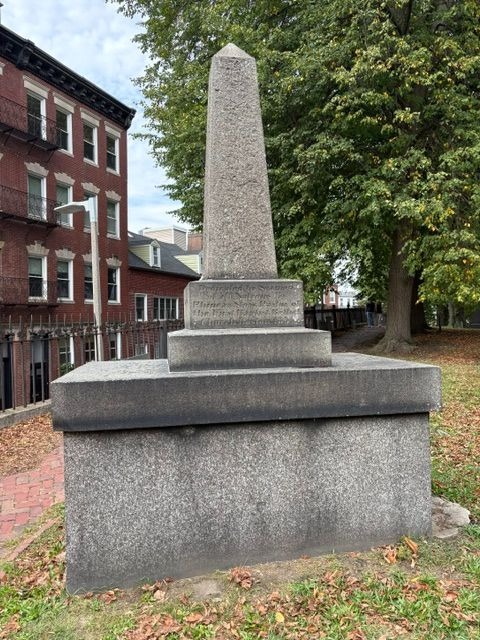
Building Constitution required several kinds of expertise. Joshua Humphreys designed the frigate, and naval constructor George Claghorn directed its construction at Hartt’s yard. Although Hartt is often remembered simply as the ship’s builder, the vessel emerged from a coordinated effort involving designers, supervisors, shipwrights, and numerous suppliers. The yard became a place where plans were translated into a substantial wooden warship.
Much of that work depended on hand tools and experienced judgment. Shipwrights used specialized axes to shape the timbers, while adzes reduced and smoothed their surfaces. Each piece had to fit within a structure that would withstand the weight of guns, the strain of sails, and the movement of the sea. The ship’s construction reflects the accumulated knowledge of people who understood wood, tools, and the demands placed on a working vessel.
On October 21, 1797, Constitution finally entered Boston Harbor after two unsuccessful launch attempts the previous month. Launching the hull was a major achievement, but considerable work remained. Interior carpentry, masts, rigging, armament, provisions, and recruitment still had to be completed before the ship could begin its service. Constitution departed Boston on its first operational voyage on July 22, 1798, nine months after its launch.
The frigate later gained lasting fame during the War of 1812, when its victories against British warships helped establish the reputation associated with “Old Ironsides.” Behind that celebrated history stood the earlier work at Hartt’s shipyard—the labor that made the ship’s service possible.
Read More From Nancy
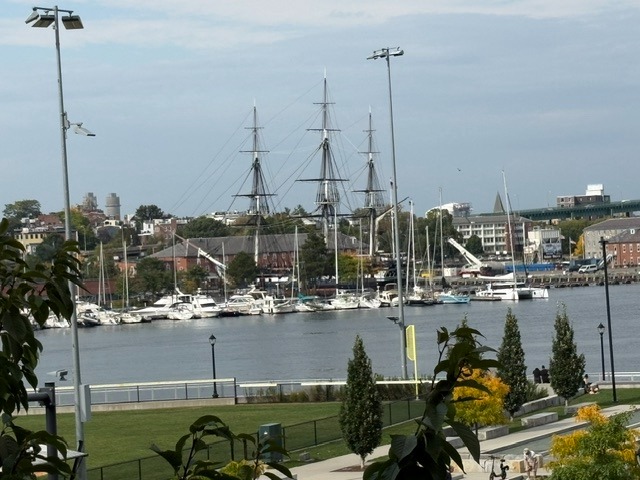
USS Constitution: Old Ironsides
Looking across the harbor during our walk through Boston’s North End, we could see the tall masts of USS Constitution at the Charlestown Navy Yard. From this distance, the ship connects the modern waterfront with the era when wooden sailing vessels carried the nation’s commerce and defended its interests at sea. Constitution was launched on […]
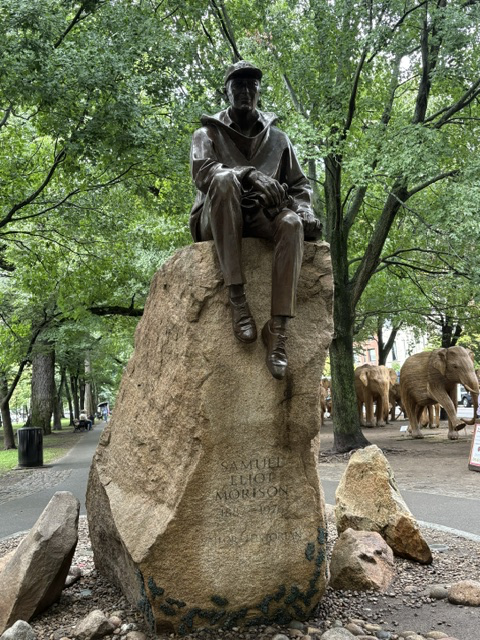
Samuel Eliot Morison Memorial
Walking along the Commonwealth Avenue Mall reveals a series of monuments honoring people connected to Boston and the wider world. Among them is a particularly distinctive sculpture of Samuel Eliot Morison. Rather than placing him formally on his feet or astride a horse, sculptor Penelope Jencks portrayed him as a sailor seated on an enormous […]
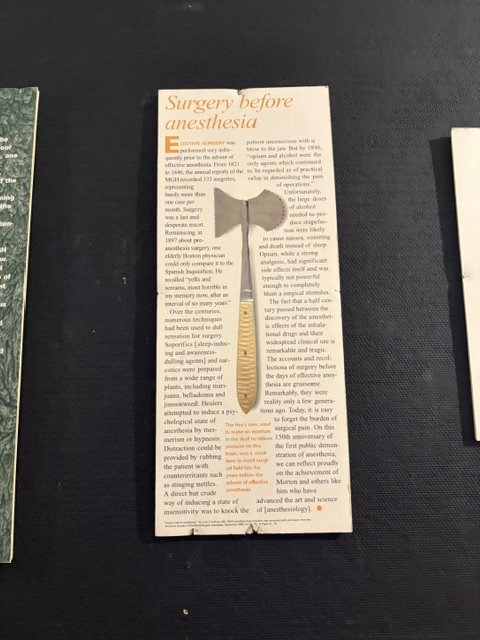
Surgery Before Anesthesia
Among the small historical displays in Massachusetts General Hospital’s Bulfinch Building, this one caught my attention because it asks us to imagine something that is almost incomprehensible today: undergoing surgery while fully conscious and able to feel what was happening. Before reliable surgical anesthesia became available in the nineteenth century, physicians had surprisingly few ways […]

