Casa de la Vila
In the historic heart of Sitges, Casa de la Vila stands on ground that once belonged to the town’s medieval castle. Its three arched entrances, stone balcony, decorative shields, and raised central façade give it a commanding presence in the square. Although its architecture recalls an earlier age, the building was created in the late nineteenth century as the town’s municipal headquarters.
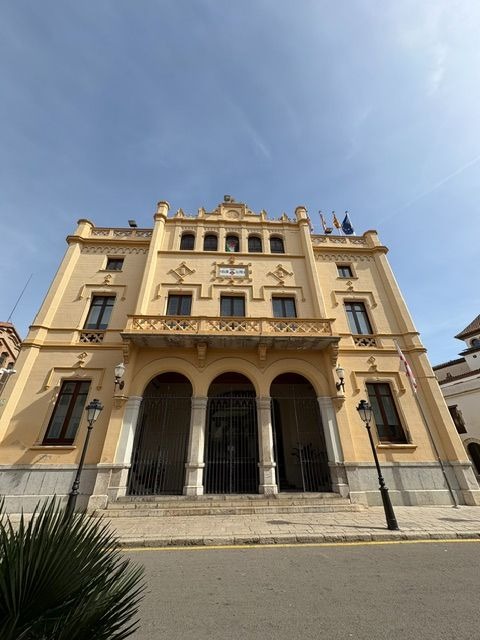
Designed by architect Salvador Vinyals i Sabaté, the Town Hall opened in 1889. Its style draws on the Gothic traditions of Catalan civic architecture, particularly the arcaded entrances and ornamental stonework associated with medieval public buildings. These historical references suited a new seat of local government built on the site of an old castle.
The connection to the castle is more than symbolic. Portions of its supporting walls and foundations were incorporated into the Town Hall, preserving something of the earlier structure within the new building. The site therefore connects two different forms of authority: the fortified residence that once occupied the hill and the municipal government that succeeded it.
Plans for a new town hall had been discussed for years before construction began in August 1888. The building was inaugurated on August 24, 1889, and that year appears in a medallion near the top of the central façade. Above the main balcony, a decorative tile panel carries the words “Casa de la Vila” and the town’s coat of arms, identifying the building as the house of the municipality.
There is also a specific connection here to Sitges’ Americanos, residents who returned after pursuing opportunities in the Americas. Bartomeu Blay, one of these returning emigrants, paid for the iron gates at the principal entrance. Another benefactor, Artur Misas, funded the façade’s stucco finish. Their contributions helped shape a public building whose appearance expressed the town’s civic ambitions.
Casa de la Vila offers a different chapter of Sitges from its beaches and seaside church. Here, the town’s history is found in the transformation of the castle site, the deliberate revival of older architectural traditions, and the contributions of people who helped build its municipal home. Looking closely at the entrance and the date above it reveals a nineteenth-century building with roots reaching much further into the past.
Read More From Nancy
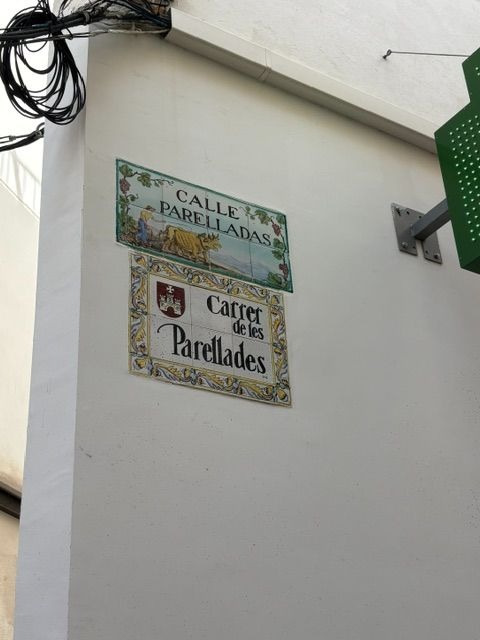
A Street Name Rooted in the Soil
Along Carrer de les Parellades in Sitges, a ceramic street sign offers a clue to the meaning of an old name. Its scene of a farmer guiding two oxen through a field recalls a time when land was measured by the labor required to cultivate it. A parellada was an agricultural measure associated with the […]
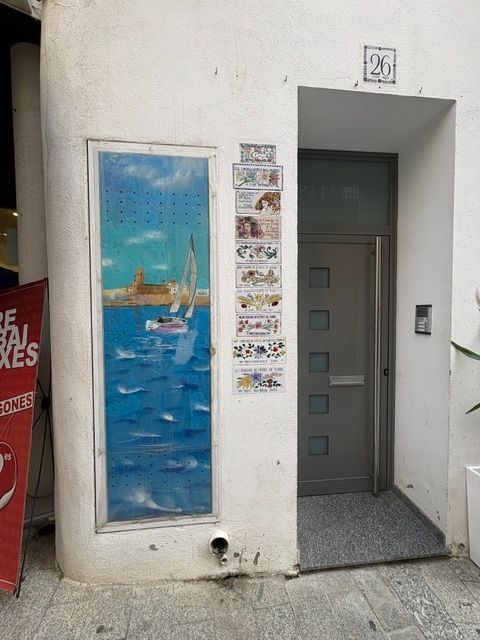
Flower Carpets of Corpus Christi
In Sitges, some works of art are made to last only a few hours. Each year for Corpus Christi, residents cover sections of the streets with elaborate carpets of flowers. Petals, whole blossoms and greenery form patterns across the pavement, transforming familiar routes into colorful displays before the evening religious procession passes over them. The […]
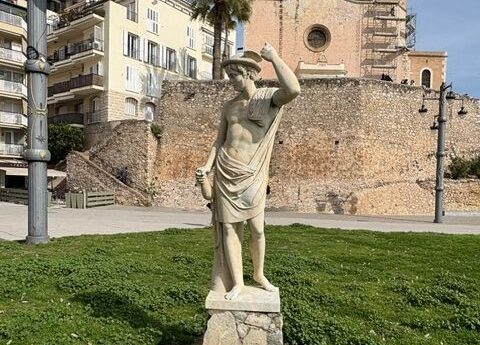
Apollo at La Fragata
Below the Church of Sant Bartomeu i Santa Tecla, a small classical figure stands in the gardens of La Fragata. With one arm raised above his head and drapery falling across his body, Apollo occupies a quiet patch of green between the historic town and its waterfront. His presence adds another layer to Sitges, where […]

