The Monument to Joan Güell i Ferrer
On a landscaped strip along Barcelona’s Gran Via, a stone figure stands above the surrounding traffic and pedestrians. Beneath him, carved figures and symbols decorate a tall pedestal. The monument honors Joan Güell i Ferrer, a nineteenth-century industrialist whose story connects Barcelona’s textile factories, political life, and one of its most familiar family names.
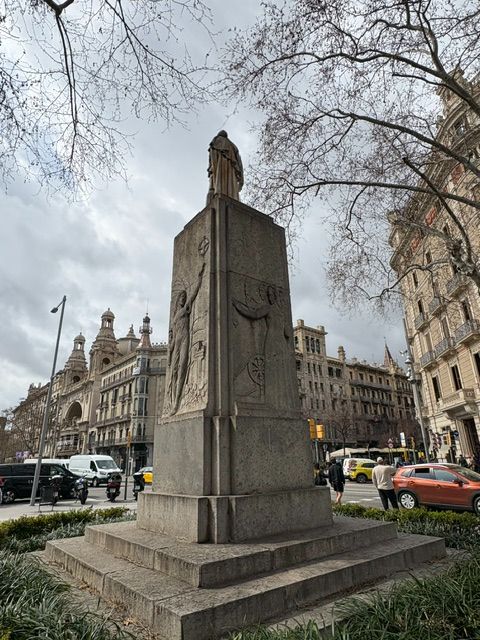
Born in 1800 in Torredembarra, Güell became an important textile manufacturer and founded the Vapor Vell factory in Barcelona’s Sants district. He also entered public life, serving as a city councilor, deputy, and senator. A strong advocate of protectionism, he supported policies intended to defend domestic manufacturing from foreign competition. These activities made him an influential figure during Catalonia’s industrial expansion.
The Güell name also connects this monument to Antoni Gaudí. Joan’s son, Eusebi Güell, became the architect’s influential patron, supporting projects that would become central to Barcelona’s architectural identity. The man commemorated here was the father of that better-known patron, placing the monument within a family history that links industry with art and architecture.
Barcelona inaugurated the original monument in 1888, the year of its Universal Exposition. Architect Joan Martorell designed the pedestal, and sculptor Rossend Nobas created the statue of Güell. Other artists contributed figures representing agriculture, art, maritime activity, and industry. Together, they presented the industrialist within a broader celebration of the work and enterprise associated with the city’s prosperity.
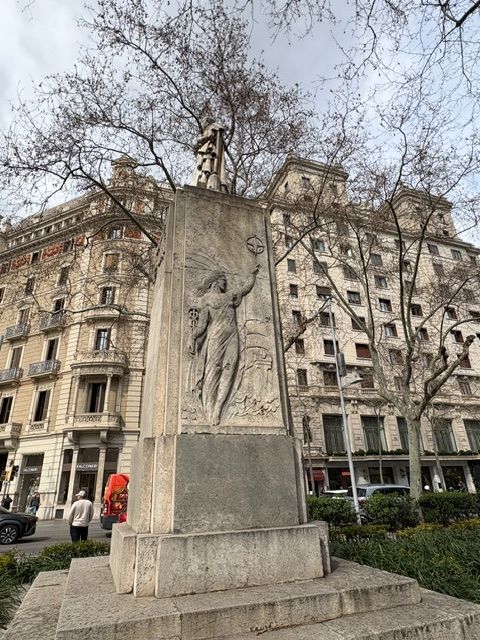
But the monument we encountered was not the complete nineteenth-century original. In 1936, during the Spanish Civil War, the statue was pulled down and the monument destroyed. Reconstruction took place in the 1940s. Sculptor Frederic Marès recreated Güell’s figure, closely following the appearance of the earlier statue, while the pedestal received an entirely new design. Its history therefore includes both the confidence of industrial Barcelona and the upheaval that later swept through the city.
From a distance, attention goes to the man standing at the top. Closer inspection reveals the activities the city chose to place beneath him: manufacturing, trade, and connections across the sea. The pedestal helps explain why he was honored and how Barcelona represented its economic identity.
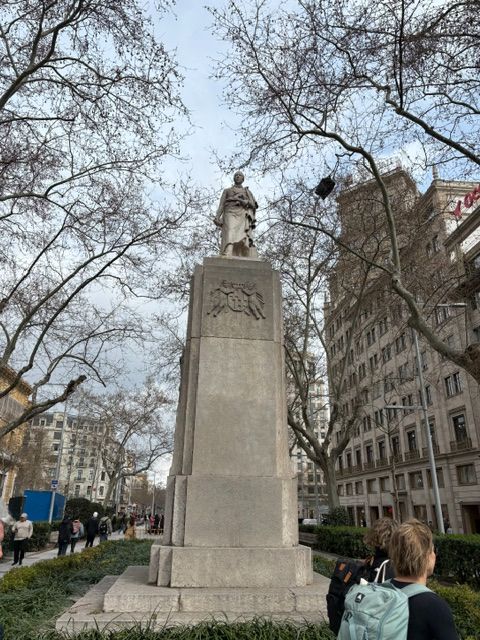
Our stop became another reminder of how much a public monument can hold. Here was a textile manufacturer, the father of Gaudí’s patron, and a memorial that had been destroyed and rebuilt. Amid the movement of an ordinary Barcelona street, those different chapters remained available to anyone curious enough to pause to.
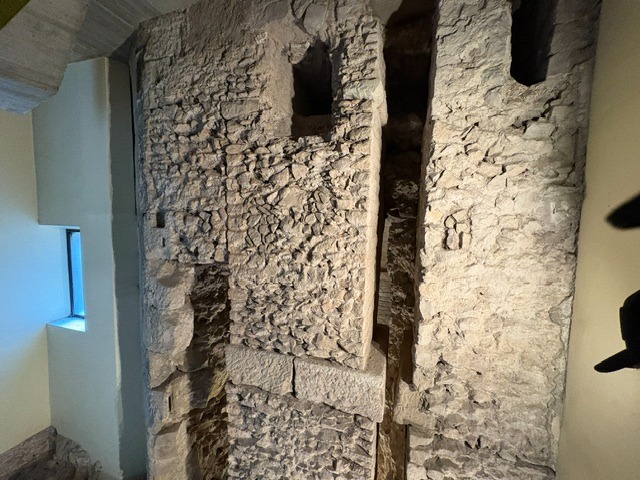
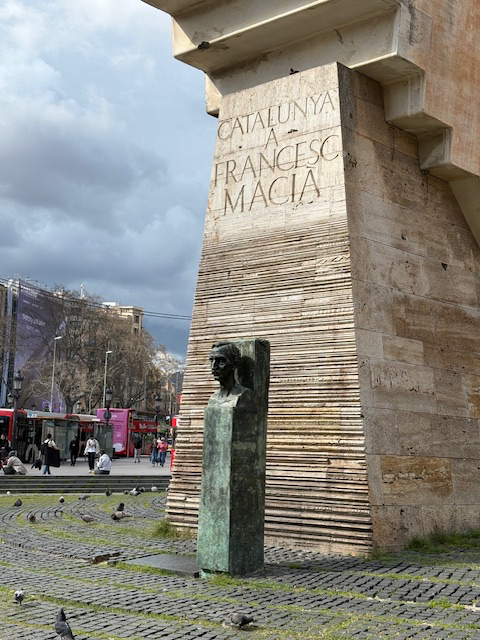
Read More From Nancy
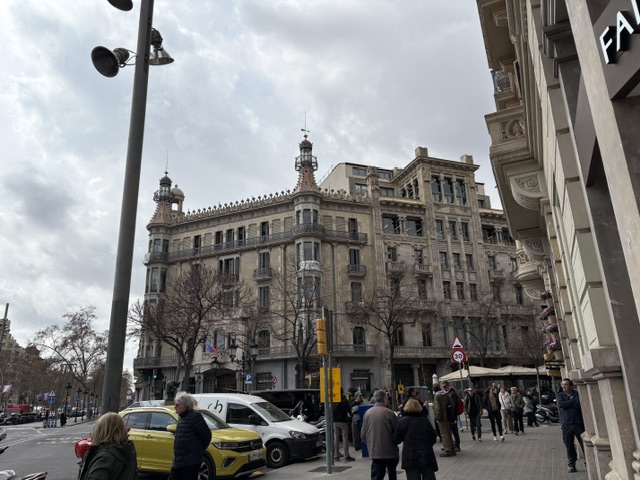
Cases Rocamora
Walking along Passeig de Gràcia, we noticed a building whose slender turrets and reddish roofs gave it an almost castle-like appearance. Rows of balconies stretched along the stone façade, while projecting windows and carved ornament added detail above the busy sidewalk. These were the Cases Rocamora, a group of residences that reflect the ambitions of […]
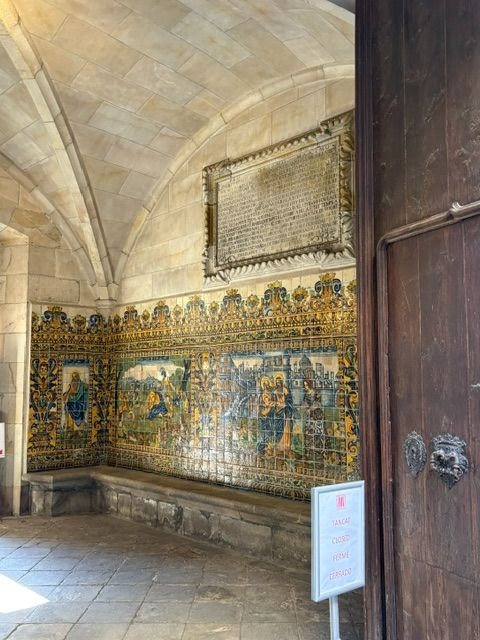
Casa de Convalescència
At the old Casa de Convalescència on Carrer del Carme, colorful ceramic panels line a stone-vaulted entrance. Their scenes and ornamental borders belong to a building created for a particular stage of medical care: the period when patients no longer needed hospital treatment but were not yet strong enough to return to everyday life. The […]
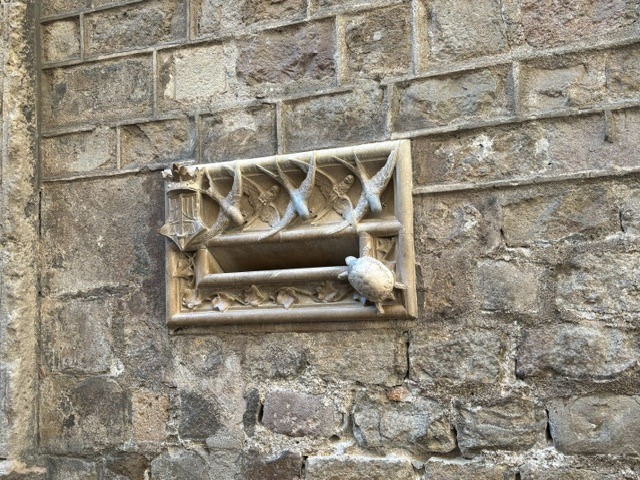
The Mailbox at Casa de l’Ardiaca
Beside the entrance to Casa de l’Ardiaca, a marble mailbox brings an unexpected detail to the streets of Barcelona’s Gothic Quarter. Birds spread their wings above curling ivy, while a tortoise rests below. Created for a lawyers’ association, its decoration has long been interpreted as a commentary on the workings of justice. The Barcelona Bar […]

