The George A. Arms Block
Walking through downtown Greenfield, I noticed a tall brick building whose decoration became more apparent the longer I looked. Rows of arched windows rise above the storefronts, and an elaborate band of brickwork crowns the façade. Between the upper floors, faded painted lettering preserves the name of George A. Arms. It is a reminder that these downtown buildings often carry the identities of the people whose businesses helped shape them.
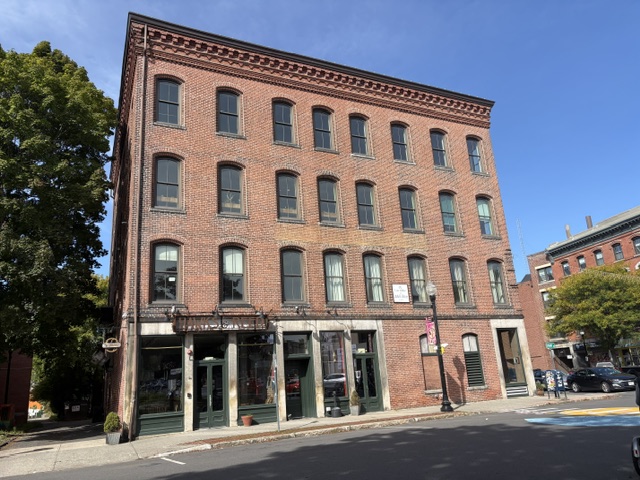
George Arms built this commercial block in 1876 to accommodate his expanding business. He was a fuel wholesaler dealing in anthracite and bituminous coal. The building stands at 287–291 Main Street, at a prominent downtown intersection where its size and corner position made it a visible part of Greenfield’s commercial life.
His occupation opens a window onto the practical needs of a nineteenth-century community. Coal merchants supplied a fuel that people depended upon for heat and that businesses used to sustain their operations. Behind the handsome façade was an enterprise connected to the everyday work of keeping homes, shops, and industry running. A commercial building like this represented both a merchant’s investment and the demand that supported his business.
The architecture gives that investment a lasting presence. Four stories of red brick create a broad, orderly façade, with repeated windows bringing rhythm to the upper floors. Their gently arched tops soften the otherwise rectangular composition. At street level, large storefront openings establish a direct relationship with the sidewalk, allowing the building to participate in the daily movement of customers and pedestrians.
The most elaborate decoration appears along the roofline. Projecting courses of brick form a corbeled cornice, creating patterns and shadows without relying on a different building material. Greenfield’s historic walking guide notes its Queen Anne detailing, copper drains, and flat roof. The surviving painted George A. Arms Block sign is another important feature: the building itself became a surface for announcing its identity to the street.
That faded lettering iThe Arms Block tells its story through these surviving details. Its height, storefronts, ornament, and painted name speak to the ambition behind a substantial downtown business building. For me, it was another reason to look beyond the entrances along Main Street. Above the changing shops, the older town remains visible, in brick, in craftsmanship, and in a merchant’s name that has endured. interested me as much as the decorative brickwork. Business signs usually change as occupants come and go, but a name painted high on a wall can outlast the enterprise that placed it there. It offers a small piece of evidence connecting today’s streetscape with an earlier generation of merchants.
Read More From Nancy
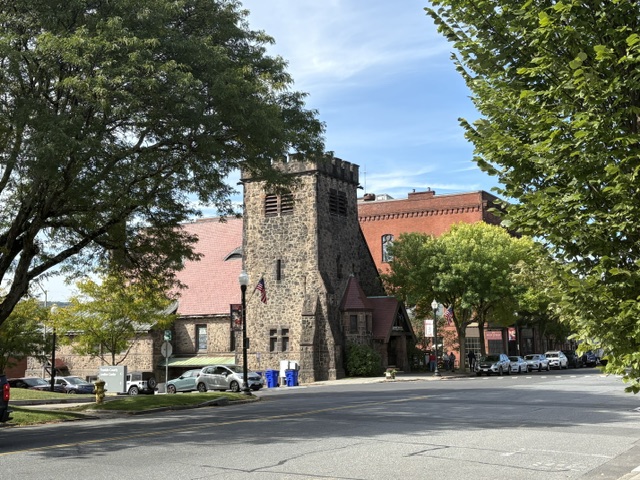
All Souls Church
Walking along Main Street in Greenfield, I noticed a stone church whose square, battlemented tower gave it an almost castle-like appearance. Its rough stone walls and steep roof stood apart from the neighboring brick commercial buildings. Learning more about All Souls Church revealed a history that extended beyond its architecture, connecting religious independence with efforts […]
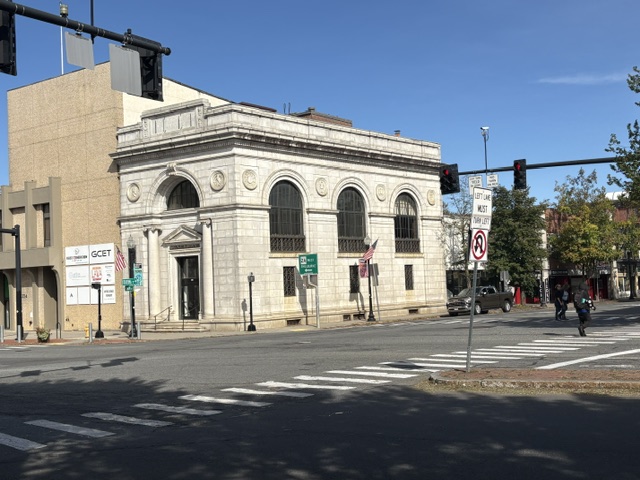
Franklin Savings Bank
Walking through downtown Greenfield, I was drawn to a granite building at the corner of Main and Federal Streets. Its tall arched windows, carefully framed entrance, and circular carvings gave it a distinctive presence among the neighboring storefronts. Learning that it had been a bank helped explain its substantial appearance. Looking more closely revealed an […]
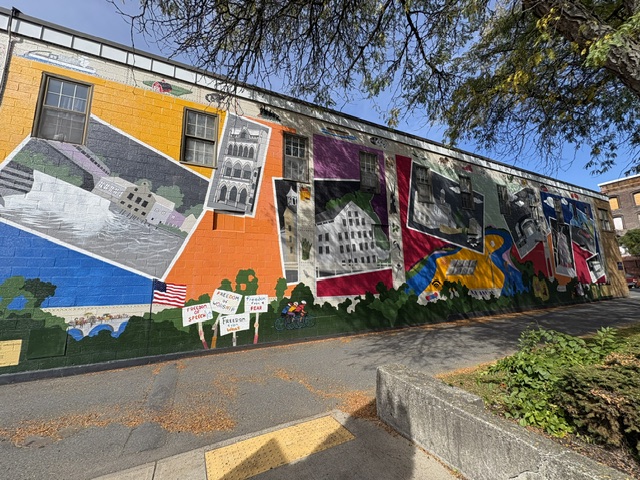
A Place for Remembrance
While walking through downtown Greenfield, I discovered a place where the activity of Main Street gives way to remembrance. Between the buildings, Veterans Mall brings together bronze sculpture, memorial plaques, benches, and a colorful mural. My curiosity drew me toward the details: the figures worked into the bronze, the names of local people who died […]

