Old Ritz
While we were staying at the Cotton House in Barcelona, Marty and I visited the nearby hotel still remembered as the Ritz. Now called El Palace Barcelona, it offered another opportunity to step inside the city’s history. Its grand interior caught our attention, but learning what had happened within these walls made the visit much more interesting.
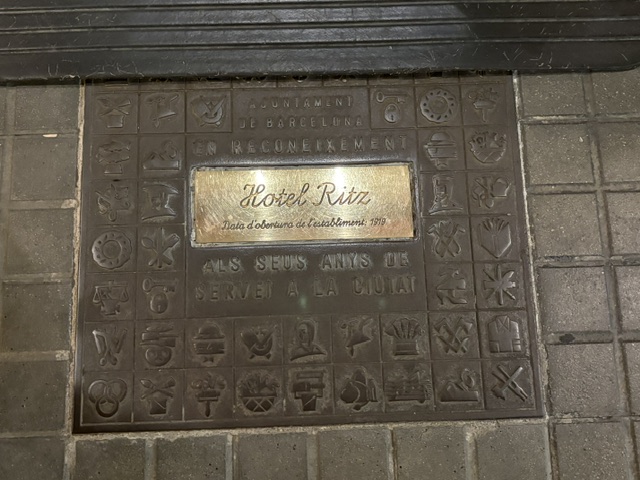
The hotel opened in 1919, bringing the Ritz tradition of luxury hospitality to Barcelona. Its creation reflected the ambitions of a city expanding its international reputation through commerce, culture, and travel. A decade later, Barcelona’s 1929 International Exposition brought visitors from around the world, and the Ritz was part of the city’s welcome.
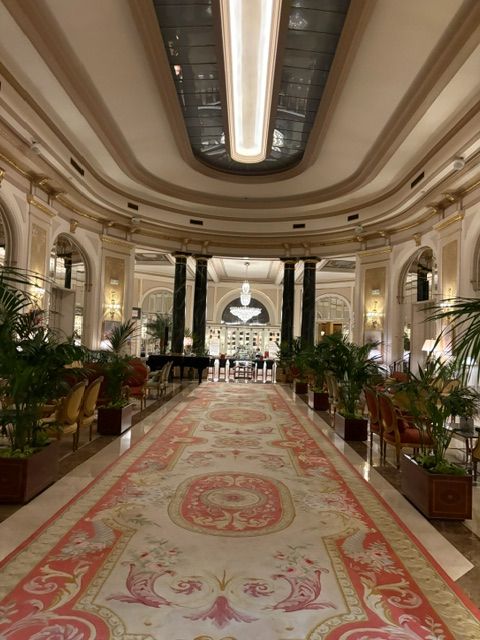
Inside, the long salon carries the elegance associated with the great European hotels of that era. Chandeliers hang above seating arranged for conversation, while dark columns contrast with cream walls and elaborate gilded decoration. The patterned carpet draws the eye through the room, and palms soften its formal appearance. It is easy to imagine how such a setting encouraged guests to linger, turning a hotel into a gathering place as well as somewhere to stay.
Yet the building’s history includes a dramatic interruption to that comfortable world. During the Spanish Civil War, workers took control of the hotel in July 1936 and renamed it Hotel Gastronómico No. 1. Its basement became a bomb shelter, and guest rooms were adapted for a Red Cross hospital. Spaces created for luxury suddenly served people seeking protection and medical care.
The hotel also became closely connected with the arts. Salvador Dalí stayed here for extended periods, and Joan Miró visited to converse with other intellectuals. Josephine Baker performed at the hotel’s celebrated Parrilla del Ritz. These connections give its ornate rooms a human history: painters, performers, and thinkers used them as places to meet, work, and exchange ideas.
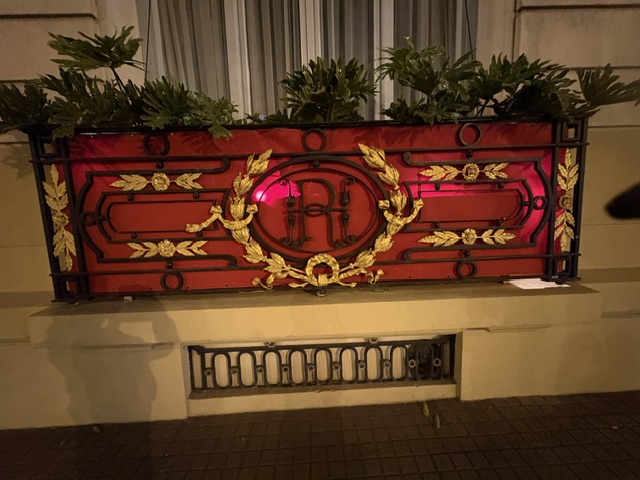
Outside, the old Ritz identity remains visible in decorative details bearing the hotel’s monogram. A pavement plaque from Barcelona’s city government also recognizes Hotel Ritz and its years of service to the city. Together, these reminders connect the present hotel with the name generations of visitors knew.
Our visit began with curiosity about a beautiful building near where we were staying. It led us into a story that reached from grand hospitality to wartime refuge and artistic life. That is one of the pleasures of exploring Barcelona: an entrance that first attracts you for its elegance can open onto a much larger history.

Read More From Nancy
The Sailor in Stone
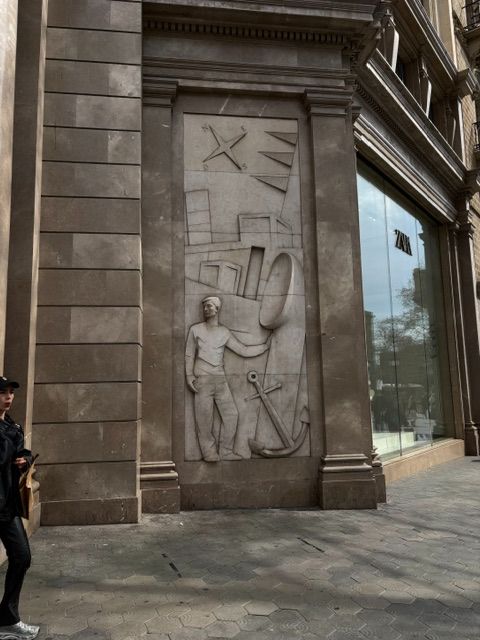
Walking through Barcelona, I noticed a carved stone panel beside a storefront entrance. A sailor stood next to a large anchor, with the outline of a ship rising behind him and a star above. The relief was incorporated into the building itself, an architectural detail that could easily be overlooked while passing the shop windows. […]
The Ancient Synagogue
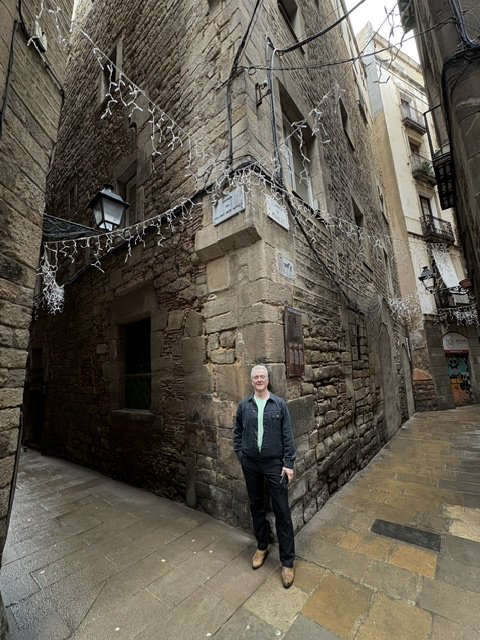
While exploring Barcelona, one of the places we specifically wanted to visit was the Ancient Synagogue in the heart of the city’s medieval Jewish Quarter. Tucked away on a narrow stone street in El Call, it is easy to miss if you don’t know it is there. Standing before this modest building, it is difficult […]
Casa Dolors Calm
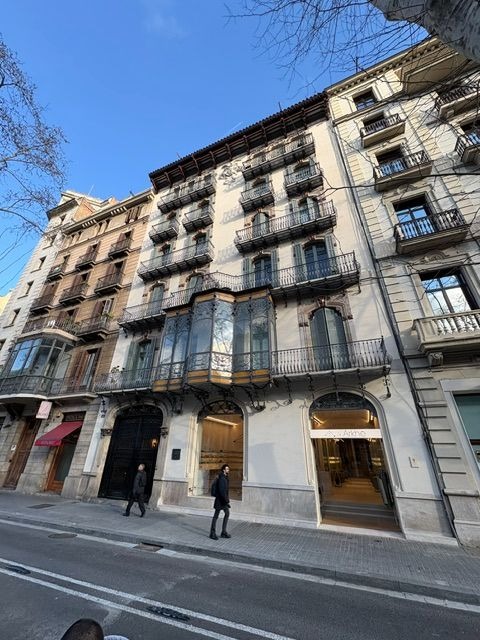
At 54 Rambla de Catalunya, Casa Dolors Calm reveals how an existing building could be transformed through architecture and decorative craftsmanship. Its projecting wooden bay windows give the façade a distinctive character, bringing together glass, patterned woodwork, and ornamental details. The original house was constructed in 1879 by master builder Josep Déu i Busquets. Between […]

