Music and the Road to Freedom
Once I knew Greenfield’s sidewalk art existed, I went looking for more. The next mural introduced me to John Putnam, shown holding a violin beneath the words “Putnam’s Band.” Musical notes curve through the artwork, inviting a closer look at a man whose story connects the town’s musical life with its history of resistance to slavery.
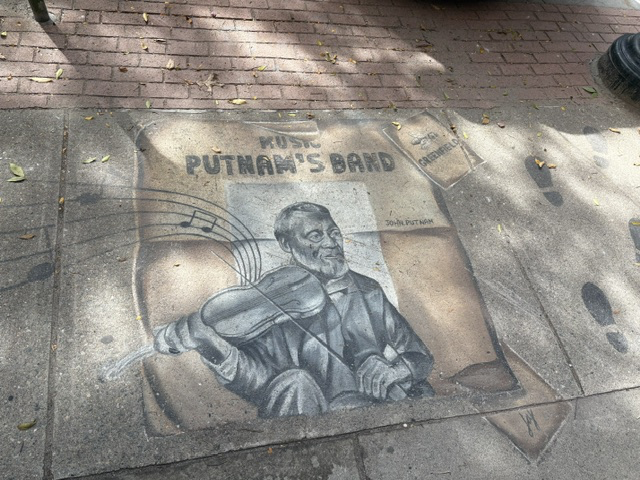
Putnam, who lived from about 1817 to 1895, made his living in Greenfield as a barber, musician, bandleader, and dance prompter—the person who called out the movements at social dances. By 1875, he had assembled Putnam’s Orchestra, which performed at dances and musical events throughout the area. His work placed him at the center of community life, both in his barbershop and wherever people gathered to hear music and dance.
The violin in the mural brings that musical career into focus. It is easy to imagine history through wars, laws, and public speeches, but music also tells us how people lived. Putnam helped provide the entertainment for evenings when neighbors came together, making his talent part of the region’s everyday social life.
His story also carries a quieter and more difficult chapter. Family accounts remember Putnam as active in the Underground Railroad, helping people escaping slavery. The Pocumtuck Valley Memorial Association notes that his barbershop could have provided opportunities to make connections and exchange information. These accounts preserve an important tradition about his life, although the surviving evidence does not establish every detail.
One story concerns a tunnel said to have connected the basement of a house associated with Putnam to nearby railroad tracks. A tunnel was uncovered when the house was demolished in the 1970s. However, historians have not found documentation definitively establishing that Putnam occupied the property when the tunnel might have been used. That distinction leaves room to recognize the family’s account while acknowledging what remains uncertain.
The mural is part of Greenfield’s Abolitionist and Underground Railroad Downtown Art Walk. It returns Putnam’s name and likeness to the streets where he lived and worked, giving passersby a reason to learn about him.
I had started looking for another painted square on the sidewalk. What I found was a person whose work brought people together, and whose family remembered him helping others toward freedom. The mural gave me his name; following the story helped me understand why Greenfield remembers him.
Read More From Nancy
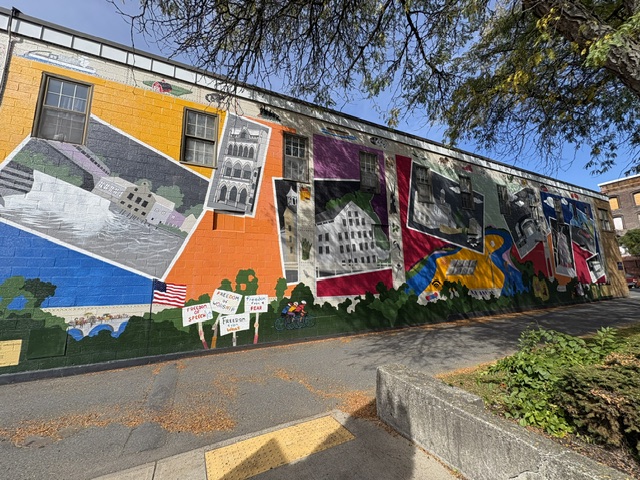
A Place for Remembrance
While walking through downtown Greenfield, I discovered a place where the activity of Main Street gives way to remembrance. Between the buildings, Veterans Mall brings together bronze sculpture, memorial plaques, benches, and a colorful mural. My curiosity drew me toward the details: the figures worked into the bronze, the names of local people who died […]
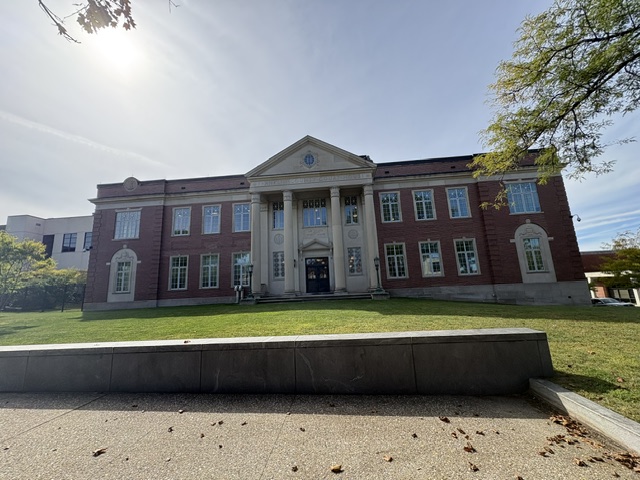
Franklin County Courthouse
Walking along Main Street in Greenfield, I stopped to look at the Franklin County Courthouse. Its red brick walls and tall, pale columns gave it a commanding presence, but its most interesting story was how the community had preserved this historic building while adapting it to the demands of a modern justice system. Built in […]
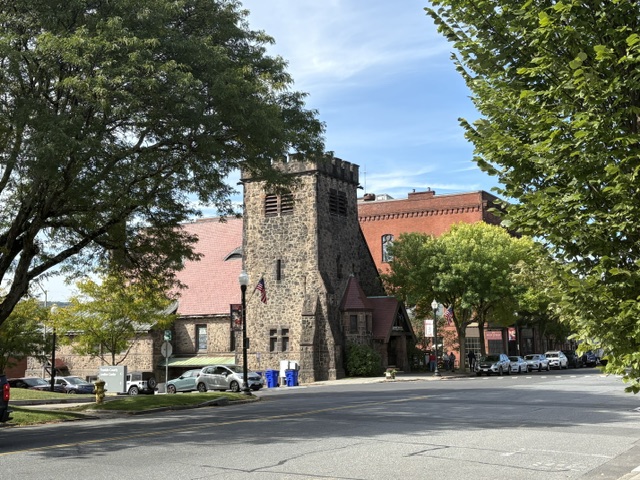
All Souls Church
Walking along Main Street in Greenfield, I noticed a stone church whose square, battlemented tower gave it an almost castle-like appearance. Its rough stone walls and steep roof stood apart from the neighboring brick commercial buildings. Learning more about All Souls Church revealed a history that extended beyond its architecture, connecting religious independence with efforts […]

