From Telegraph to Teletype
The development of telegraphy transformed long-distance communication. Instead of waiting days or weeks for a written message to travel by ship, train or horseback, information could be transmitted across wires almost instantly.
In 1844, Samuel Morse publicly demonstrated an electric telegraph connection between Washington, D.C., and Baltimore. Messages were translated into patterns of dots and dashes known as Morse code. Telegraph lines spread rapidly, and the completion of the first transcontinental telegraph line in 1861 connected the eastern and western United States.
Sending and receiving Morse code required trained operators. Each message had to be carefully interpreted and written or typed before it could be delivered. Telegraph offices became important communication centers where people sent business instructions, family news and announcements of births, deaths and other significant events.
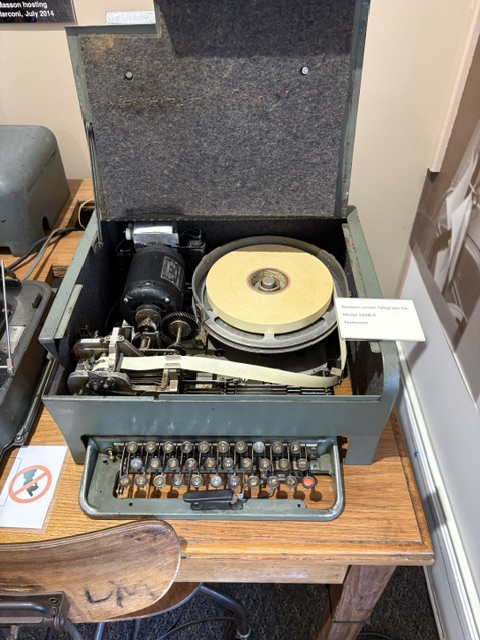
By the 1920s, teletype equipment began changing this process. An operator could type a message on a keyboard, and the machine converted each character into electrical signals. At the receiving location, another machine automatically printed the message. This reduced the need to copy every message by hand and allowed information to move more rapidly through expanding communications networks.
Companies such as RCA connected teletype systems with radio and telegraph services. A message received from a ship by Chatham Radio could therefore be transferred into the land-based network and forwarded to its final destination. The surviving equipment marks an important transition from communication based entirely upon Morse code to systems in which messages could be typed, transmitted and printed automatically.
Read More From Nancy
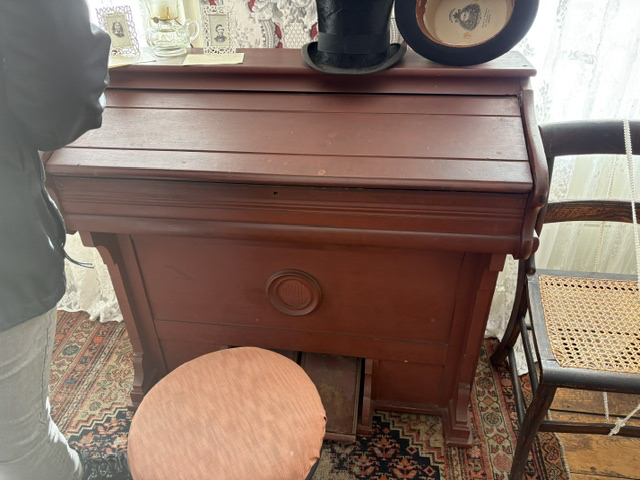
The Melodeon
I found this small wooden instrument in the Wayland History Museum. At first, it could easily be mistaken for a small upright piano, but it is actually a melodeon, or reed organ, made by Mason & Hamlin. The melodeon became a popular way of bringing keyboard music into American homes during the nineteenth century. Unlike […]
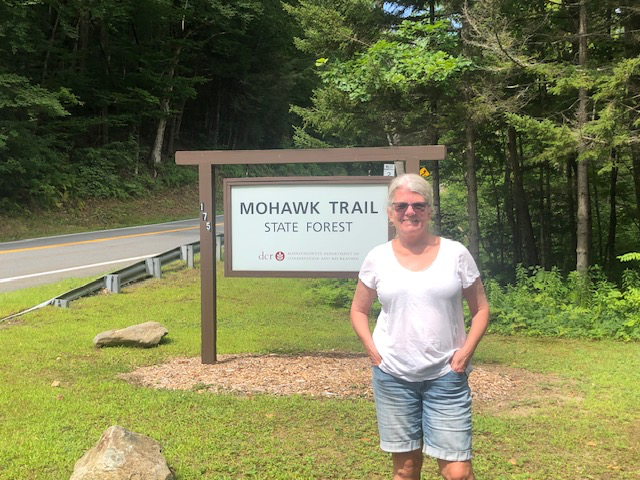
Mohawk Trail State Forest
While driving the Mohawk Trail across Massachusetts, we stopped at Mohawk Trail State Forest. The forest was not our final destination, but it offered us an opportunity to pause within the landscape through which this historic route passes. Long before automobiles crossed the Berkshire Hills, Indigenous peoples traveled through this region along pathways connecting the […]

Make Way for the Ducklings
Walking through the Boston Public Gardens, there is a familiar and beloved sight: a line of small bronze ducks following closely behind their mother. Most locals recognize them as characters from the classic children’s book “Make Way for Ducklings” by Robert McCloskey. These statues were created by sculptor Nancy Schon and installed in 1987 as a […]

