Home Front Artifacts
During World War II, the war effort extended far beyond the battlefields of Europe and the Pacific. In towns throughout the United States, ordinary citizens were asked to remain alert, conserve essential supplies, raise money and contribute whatever they could to support the country. Two artifacts preserved at the Marconi-RCA Wireless Museum: the Chatham Warning Center logbook and a War Savings Bond booklet show how these national responsibilities became part of everyday life in Chatham.
Because of its coastal location, Chatham was considered vulnerable to possible enemy activity. Local plane spotters watched the skies and listened for reports of unfamiliar aircraft. Their observations and incoming messages were relayed to the Chatham Warning Center, which operated from the Main Street School.
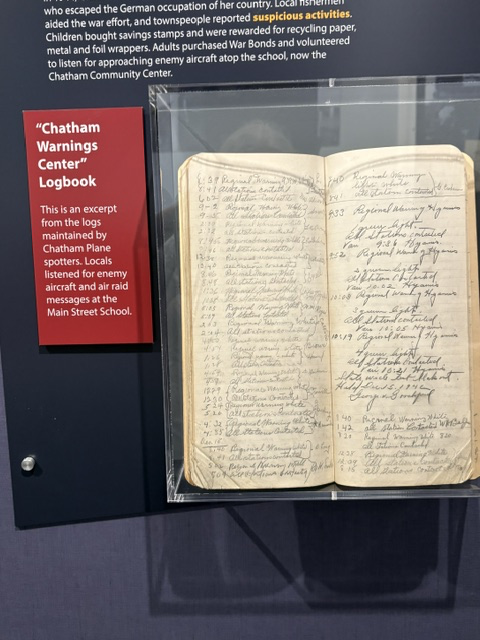
The center’s handwritten logbook recorded these reports as they were received. Each entry represented a moment when a local volunteer observed, listened and passed along information that might have been important to the community’s defense. The pages document a largely unseen form of wartime service performed by residents who remained at home but accepted responsibility for watching over their town.
Chatham families also supported the war financially. Adults and children could purchase savings stamps in small denominations and place them in specially designed booklets. Once a booklet contained the required value in stamps, it could be exchanged for a United States War Bond. The money helped the federal government pay for military equipment, supplies and other wartime needs.
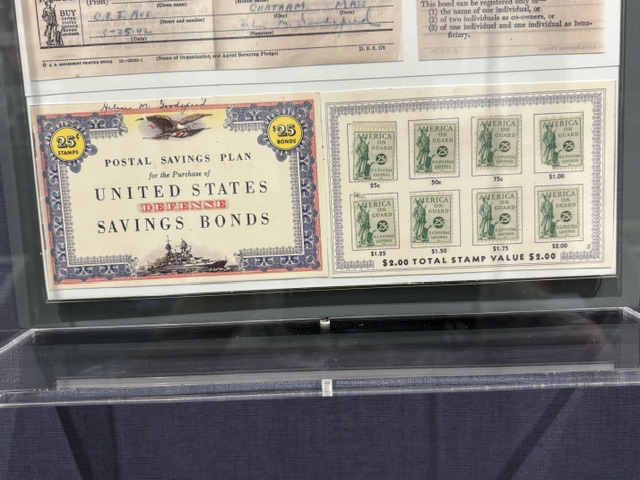
Purchasing stamps allowed nearly everyone to participate, even those who could not afford to buy a complete bond at one time. Children were encouraged to save their coins, add stamps to their booklets and understand that their individual contributions were part of a much larger national effort.
The logbook and savings booklet record two different forms of service. One represents vigilance: the responsibility of watching and reporting. The other represents sacrifice: setting aside personal money to support the country. Together, they preserve the story of how the people of Chatham participated in World War II from the home front.
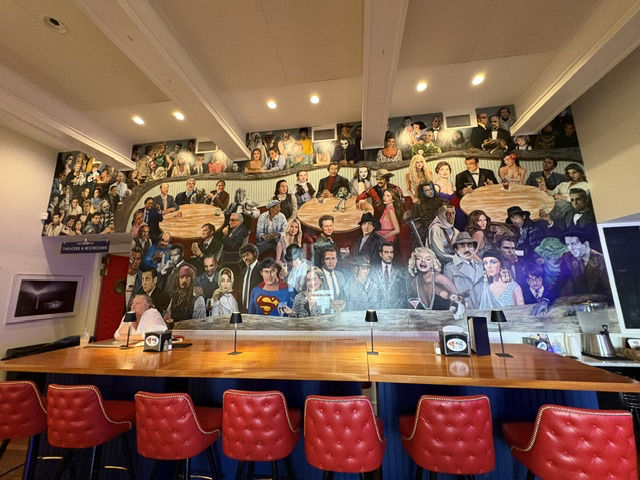
Read More From Nancy
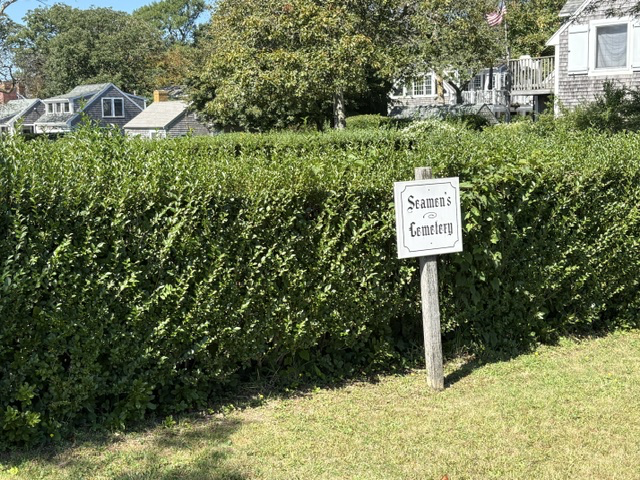
Seamen’s Cemetery
Near Chatham Lighthouse, a small burial ground enclosed by carefully trimmed hedges preserves one of the town’s lesser-known connections to the sea. Known as the Seamen’s Cemetery, it contains the remains of sailors whose bodies were recovered from the waters and beaches around Chatham. Chatham occupies the southeastern “elbow” of Cape Cod, where shifting shoals, […]
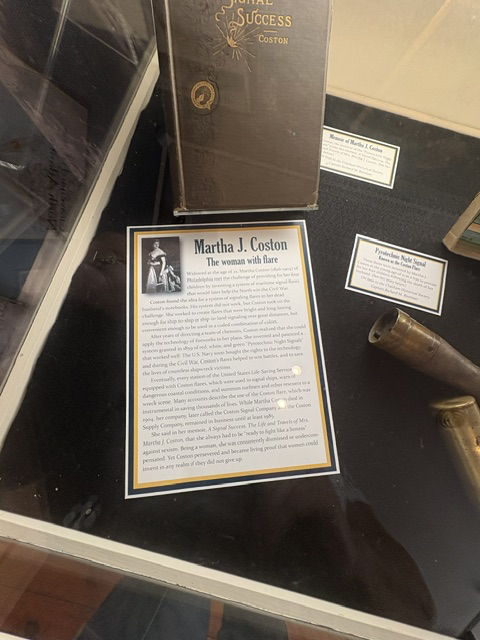
Martha J. Coston and the Signals That Saved Lives
Before radio, ships traveling at night had few reliable ways to communicate with one another or with people on shore. Flags could not be seen in darkness, and lanterns lacked the brightness and distinctive patterns needed to carry clear messages across long distances. Martha J. Coston helped solve this problem by developing a system of […]
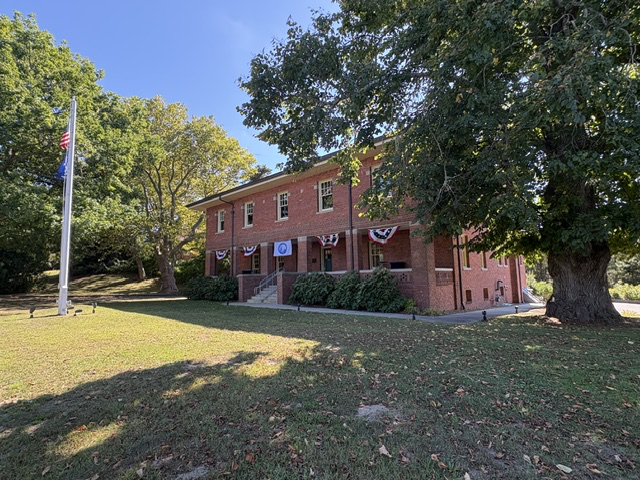
Hotel Nautilus
The building known as Hotel Nautilus was constructed in 1914 as part of the Marconi Wireless Telegraph Company of America’s receiving station in Chatham. Although its name suggests a traditional hotel, its original purpose was to provide housing for the unmarried employees who worked at the station. The Chatham facility was designed as more than […]

