Island of San Michele
While traveling by boat from Venice to Murano, we passed the island of San Michele. Surrounded by the waters of the Venetian Lagoon, its long brick walls, historic buildings and solitary bell tower gave it the appearance of a quiet city separated from the activity of Venice.
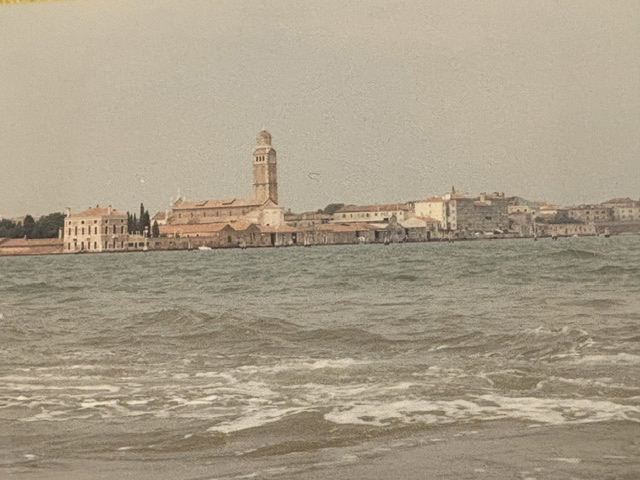
San Michele is the principal cemetery of Venice. It was originally composed of two neighboring islands: San Michele and San Cristoforo della Pace. After Napoleon’s 1804 Edict of Saint-Cloud prohibited burials within populated areas and churches for public-health reasons, Venice needed to establish a burial ground outside the city.
The island of San Cristoforo was selected for the new cemetery in 1807, and its first section was completed in 1813. As additional space became necessary, burials expanded onto San Michele. The canal separating the two islands was filled between 1835 and 1839, joining them into the single island visible today.
Several of San Michele’s most prominent buildings predate the cemetery. Its brick bell tower was constructed in 1456, while the Church of San Michele in Isola was built between 1468 and 1477. Designed by Mauro Codussi, the church is considered one of the earliest examples of Renaissance architecture in Venice. The island also preserves a former monastery, cloisters and several chapels.
Generations of Venetians have been buried on San Michele, along with several internationally known writers, artists and composers. Among them are composer Igor Stravinsky, ballet impresario Sergei Diaghilev and poet Ezra Pound. Separate sections of the cemetery reflect Catholic, Orthodox and Protestant traditions.
We did not visit the island but passed close to it as our boat continued toward Murano. Seeing San Michele from the water offered another view of Venice’s distinctive relationship with the lagoon. Even the city’s cemetery occupies its own island, reached by boat and set apart from everyday life by the surrounding water.
Read More From Nancy
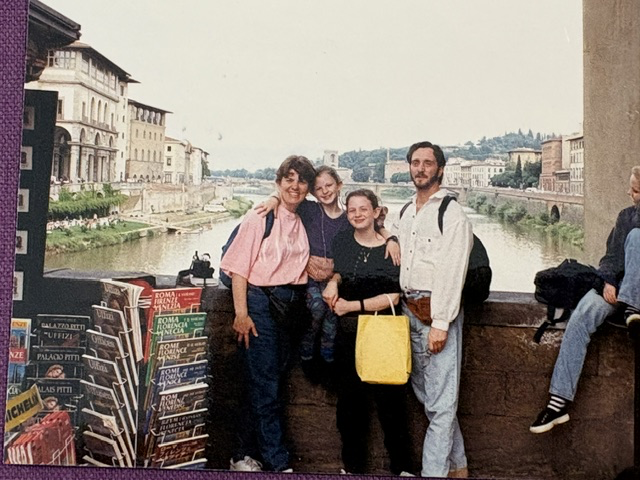
The Ponte Vecchio
Some places become woven so completely into the identity of a city that it is impossible to imagine one without the other. In Florence, that place is the Ponte Vecchio. Spanning the Arno River for nearly seven centuries, this remarkable bridge is the heart of the city, connecting not only its two banks but also […]
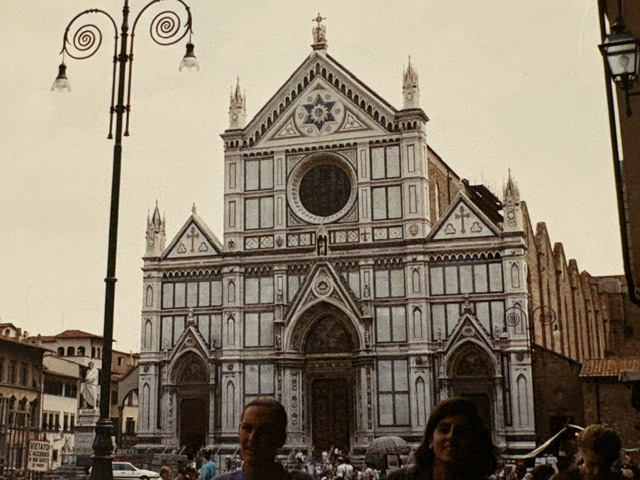
Giotto’s Campanile
Giotto’s Campanile rises beside the Cathedral of Santa Maria del Fiore as one of Florence’s most recognizable architectural landmarks. Although it forms part of the cathedral complex, the bell tower stands as a separate structure with its own design and construction history. Work began in 1334 under Giotto di Bondone, already celebrated as one of […]
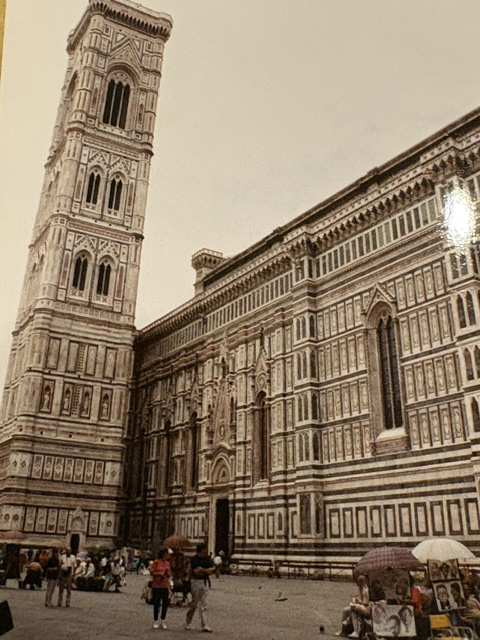
Cathedral of Santa Maria del Fiore
The Cathedral of Santa Maria del Fiore stands at the religious and historic center of Florence. Commonly known as the Duomo, it was created to replace the earlier Cathedral of Santa Reparata, which had become too small for the city’s growing population and increasing importance. Construction began in 1296 under architect Arnolfo di Cambio. The […]

