Natick’s Act of Incorporation
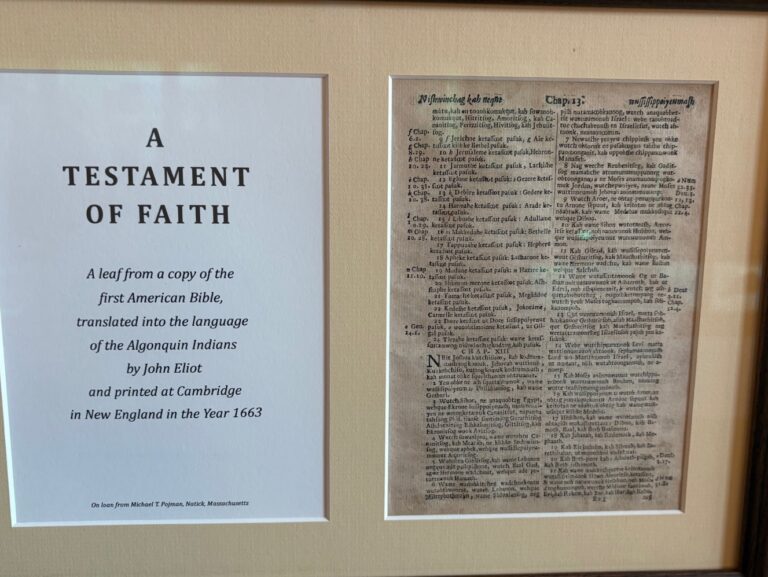
Natick’s history began long before it became an incorporated Massachusetts town. In 1651, the missionary John Eliot and a group of Indigenous Christian converts established Natick as one of New England’s first “Praying Towns.” The community developed its own systems of worship, government and agriculture while also enduring increasing colonial control, the loss of land and the devastating consequences of King Philip’s War.
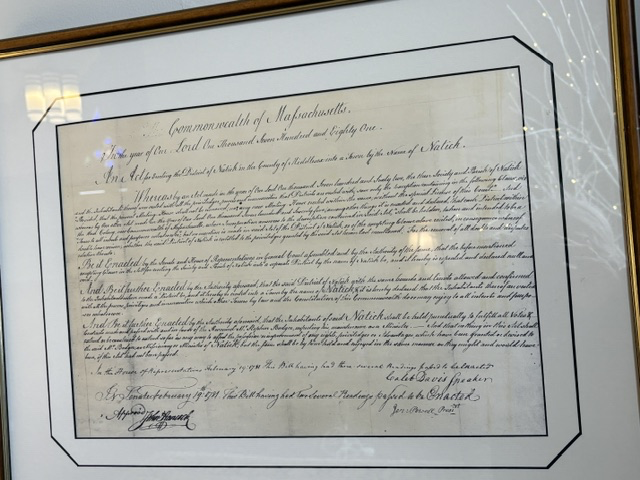
More than a century later, during the closing years of the American Revolution, the Commonwealth of Massachusetts formally incorporated Natick as a town. The act was approved on February 19, 1781, only months after the Massachusetts Constitution had taken effect. The document therefore belongs not only to Natick’s history but also to the formative period in which Massachusetts was creating a new state government following American independence.
The act declared that the inhabitants of Natick would constitute a town by the name of Natick. Incorporation provided the community with the legal powers granted to other Massachusetts towns, including the authority to hold town meetings, elect officers, raise money through taxation, manage public responsibilities and make decisions concerning local affairs. It transformed Natick from a community governed under earlier colonial arrangements into a formally recognized municipality within the new Commonwealth.
The document bears the names of several important Massachusetts leaders. John Hancock, remembered for his prominent signature on the Declaration of Independence, was serving as the first governor under the new Massachusetts Constitution. Jeremiah Powell was president of the Massachusetts Senate, and Caleb Davis was speaker of the House of Representatives. Their approval placed Natick’s incorporation within the wider development of representative government in the newly independent state.
The date of incorporation did not mark the beginning of Natick. Rather, it established a new legal identity for a place whose history already extended back approximately 130 years. The distinction between settlement and incorporation is important: one represents the gradual creation of a community, while the other records the moment when the government formally recognized that community’s municipal authority.


Read More From Nancy
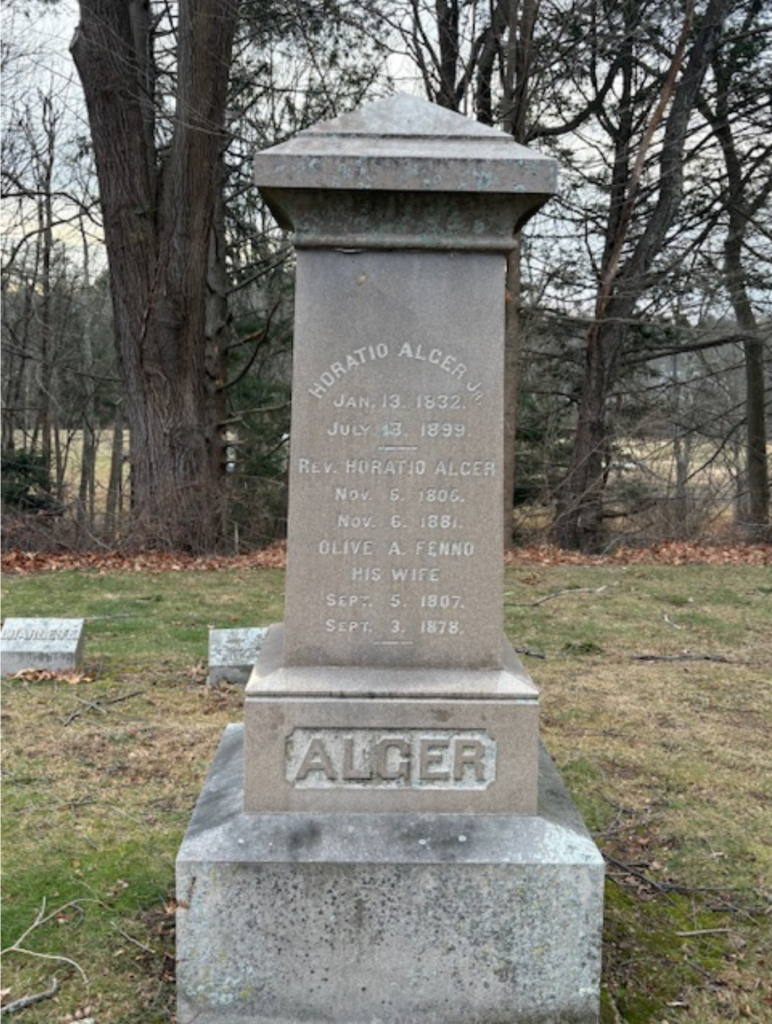
Horatio Alger’s Gravesite
This gravesite marks the Alger family plot in Glenwood Cemetery in Natick, the final resting place of Horatio Alger, Jr, one of the most read American authors of the late 19th century. Alger was born in 1832 and grew up in Natick, where his father, Rev. Horatio Alger Sr. served as pastor of the First Congregational […]
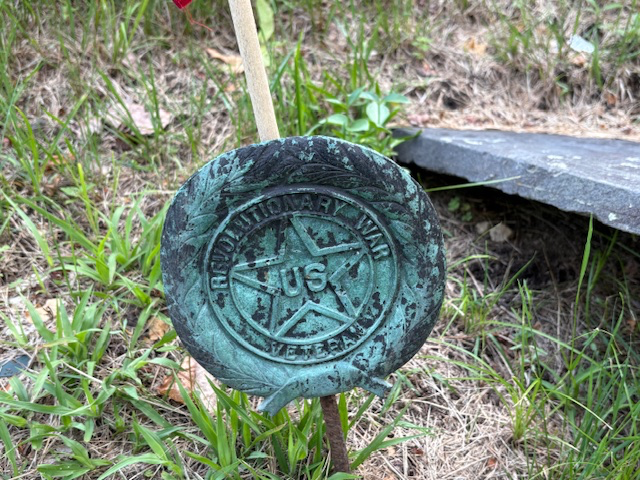
Revolutionary War Medallion
I enjoy wandering through old cemeteries and to the small symbols that mark the lives of people who came before us. Among the most powerful markers are the medallions places at the graves of Revolutionary War veterans, each one a reminder of the earliest defenders of our young nation resting beneath New England’s grass. As I explored these burying […]

Odd Fellow Building – 1887
In downtown Natick, there is this brick building marked “Odd Fellow Building – 1887”. This building was purposely built as the home of the local lodge of the Independent Order of Odd Fellows, one of the most influential fraternal organizations in 19th century America. Completed in 1887, the building was designed from the outset to serve two […]

