Highland Cemetery
Highland Cemetery began as a small colonial burying ground on land belonging to Nathaniel Chickering. Dating to 1729, it was established when Dover was still part of Dedham and consisted of scattered farms connected by narrow roads and footpaths. Chickering later formally gave the original tract to the community, ensuring that local families would have a shared place to bury and remember their dead.
The oldest section contains slate gravestones from the eighteenth century, many carved with winged skulls, cherubs and other symbols commonly used in colonial New England. Their weathered inscriptions preserve the names of the families who shaped Dover’s early religious, agricultural and civic life. Small markers beside larger stones also recall how frequently children died during a time when disease and limited medical care made childhood especially uncertain.
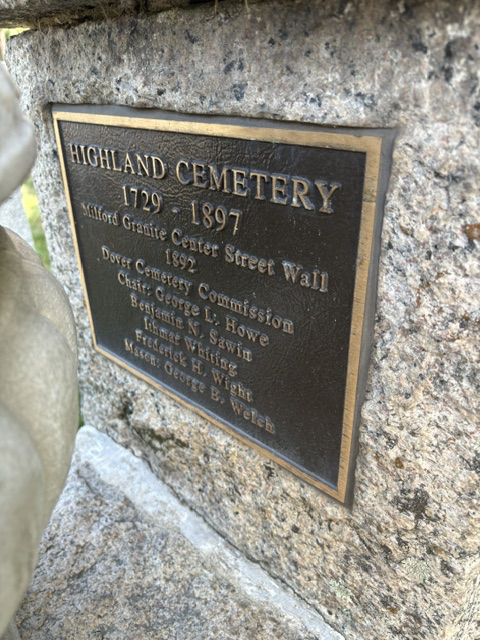
As Dover grew, the cemetery expanded beyond its original boundaries. Its granite wall along Centre Street was constructed in 1892, replacing the earlier enclosure and giving the burial ground a more formal entrance. Family plots, iron fences and later marble and granite monuments reflect the changing ways in which successive generations commemorated their loved ones.
Highland Cemetery remains more than a collection of old gravestones. It is a record of the people who lived, worked, worshiped and raised families in Dover across nearly three centuries. Its stones preserve individual stories while collectively revealing the growth of a community from a rural colonial settlement into the town it is today.
Read More From Nancy
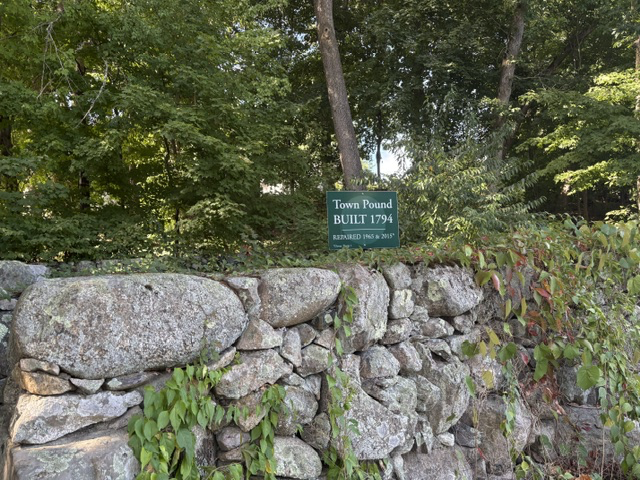
Town Pound
Dover’s Town Pound was built in 1794, when farming shaped nearly every part of community life. Families depended upon cattle, pigs, sheep and other animals for food, labor and income. Before the pound was constructed, cattle and swine were generally permitted to roam, creating problems when they wandered onto neighboring farms or damaged fields and […]
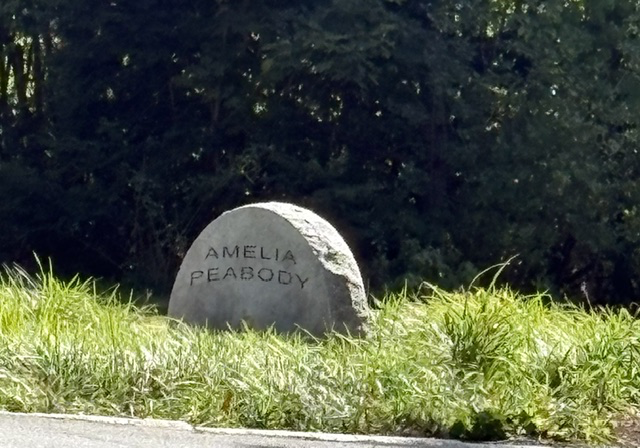
Amelia Peabody
Amelia Peabody was born into a prominent Boston family in 1890, but she created a life that extended far beyond the social expectations placed upon a woman of her background. Although she did not attend college, she studied sculpture in Boston, New York and Paris. Her work included portraits, human figures and animals created in […]
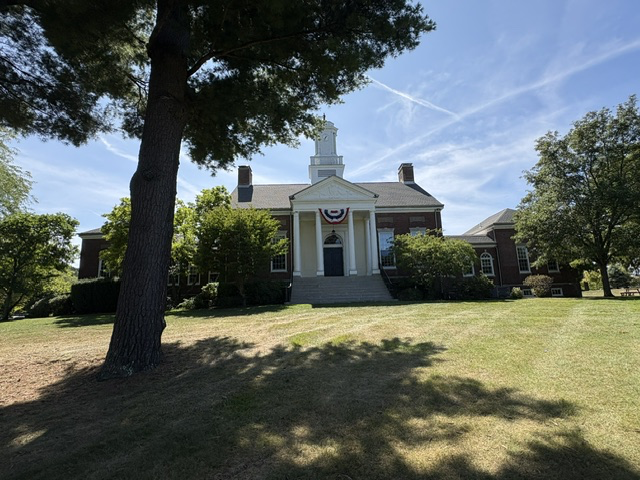
The Dover Town House
The Dover Town House was constructed during the 1920s to provide the growing community with a central place for municipal government and public gatherings. Designed by the Boston architectural firm of Kilham, Hopkins & Greeley, the building reflects the Colonial and Federal Revival styles popular for civic architecture during this period. Its red-brick exterior, white […]

