The Dover Town House
The Dover Town House was constructed during the 1920s to provide the growing community with a central place for municipal government and public gatherings. Designed by the Boston architectural firm of Kilham, Hopkins & Greeley, the building reflects the Colonial and Federal Revival styles popular for civic architecture during this period. Its red-brick exterior, white classical details, arched windows, formal entrances and cupola were intended to recall the architecture of early New England.
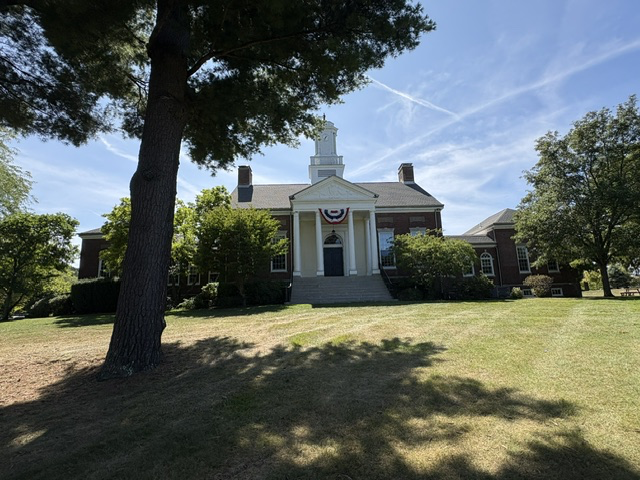
The Town House became the center of Dover’s civic life. Town offices occupied portions of the building, while its Great Hall provided a gathering place for elections, public meetings, ceremonies and community events. Its design joined the practical work of local government with a larger space in which residents could gather and participate in the affairs of the town.
Dover continues to govern itself through an open Town Meeting, a tradition in which registered voters meet to debate and vote on local budgets, bylaws and other community matters. This form of direct participation has deep roots in New England and gives the Town House a purpose extending beyond its offices. It is a place where residents take an active role in shaping the future of their community.
For more than a century, the Dover Town House has stood at the center of local government and public life. Its architecture recalls the town’s New England heritage, while its continued use reflects Dover’s enduring traditions of civic participation, shared responsibility and community involvement.
Read More From Nancy
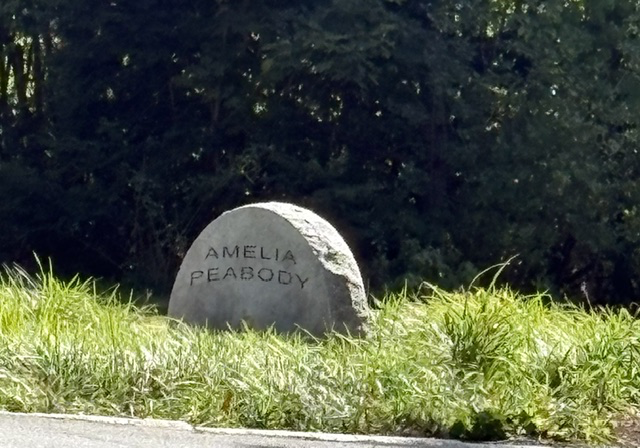
Amelia Peabody
Amelia Peabody was born into a prominent Boston family in 1890, but she created a life that extended far beyond the social expectations placed upon a woman of her background. Although she did not attend college, she studied sculpture in Boston, New York and Paris. Her work included portraits, human figures and animals created in […]
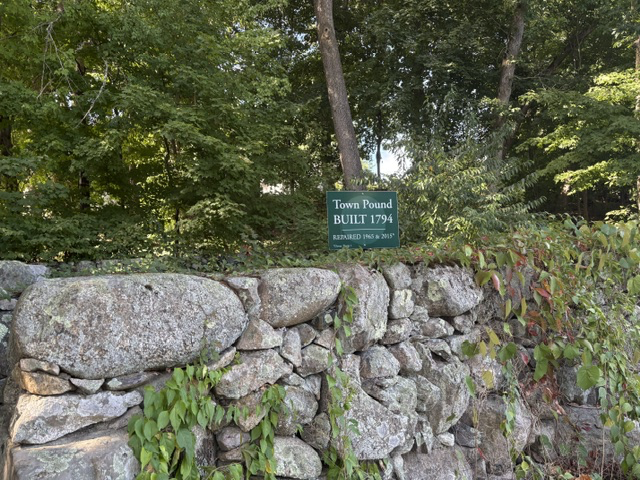
Town Pound
Dover’s Town Pound was built in 1794, when farming shaped nearly every part of community life. Families depended upon cattle, pigs, sheep and other animals for food, labor and income. Before the pound was constructed, cattle and swine were generally permitted to roam, creating problems when they wandered onto neighboring farms or damaged fields and […]
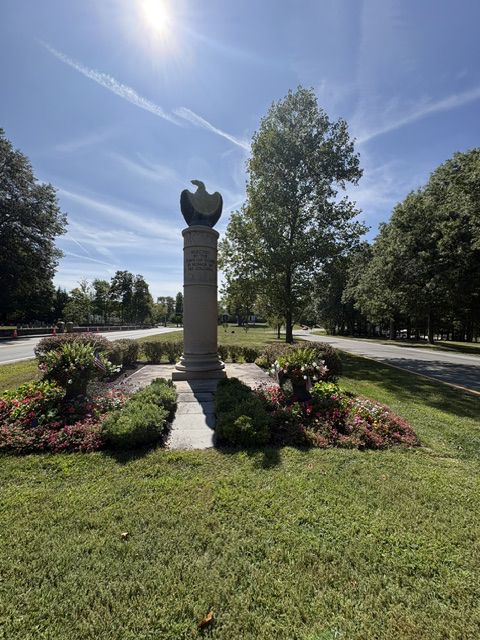
Dover Soldiers’ Monument
The idea of creating a soldiers’ monument in Dover began soon after the Civil War. As early as 1875, Civil War veteran Ansel K. Tisdale advocated for a permanent memorial. The effort continued through the work of other residents, and a portion of the town’s annual Memorial Day appropriation was eventually set aside to establish […]

