Dover Soldiers’ Monument
The idea of creating a soldiers’ monument in Dover began soon after the Civil War. As early as 1875, Civil War veteran Ansel K. Tisdale advocated for a permanent memorial. The effort continued through the work of other residents, and a portion of the town’s annual Memorial Day appropriation was eventually set aside to establish a monument fund.
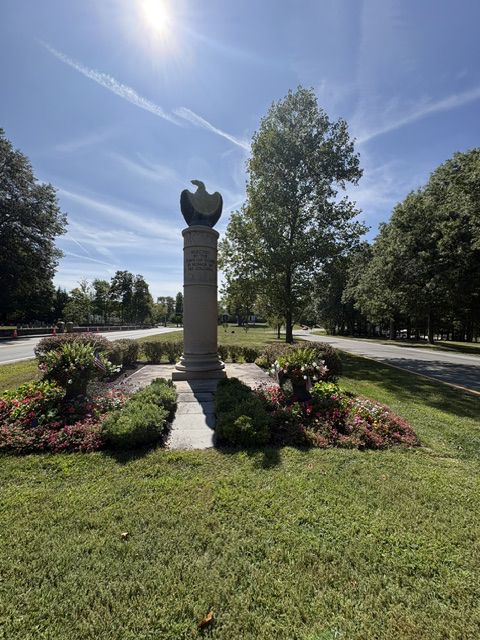
The project took definite form in 1909 with the appointment of Irving Colburn, Lewis B. Paine and J. Grant Forbes to a Soldiers’ Monument Committee. The following year, Dover voted to provide the additional money required to complete the memorial. Richardson, Barott & Richardson prepared the design, and the Holt-Fairchild Company of Boston received the contract to construct it. The completed monument cost $2,500.
Rather than honoring participants in only one conflict, the monument recognized Dover residents who had served in five wars: the French and Indian War, the American Revolution, the War of 1812, the Civil War and the Spanish-American War. The dates of these conflicts were placed on the reverse of the monument. Bronze letters on the front declared, “Erected by the Town of Dover in Honor of Her Soldiers.”
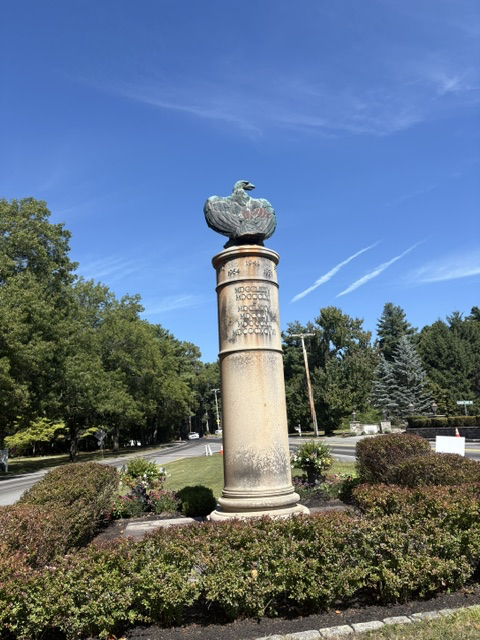
The memorial stands approximately twenty feet tall. Its circular shaft, measuring fourteen feet high, was constructed from Westerly granite and rests upon a square base of Rockport granite. A bronze eagle copied from an ancient Roman model crowns the column. The eagle was selected as an emblem of the Union and as a symbol of courage. The original account also connected it with the Native people who once traveled and hunted throughout the area.
The location carried its own history. Dover placed the monument on the Old Training Field, where local soldiers had assembled beginning in the eighteenth century. Dover’s minutemen gathered there on April 19, 1775, before sixty-six men marched under Captain Ebenezer Battelle in response to the Lexington Alarm. State militia companies continued to hold training days on the field until about 1850.
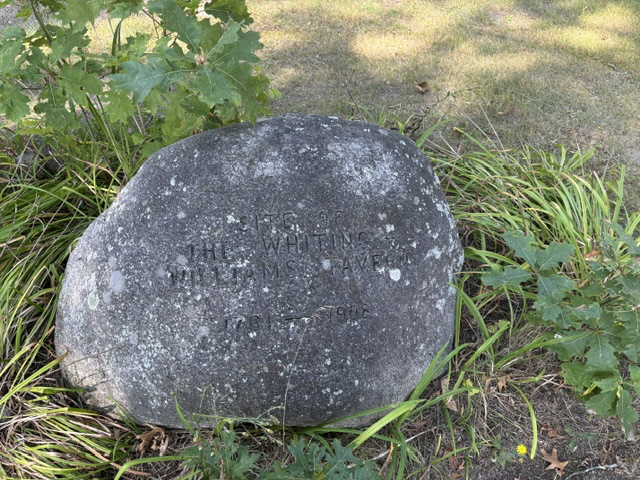
Beneath the monument are the foundation stones of a parish tavern built in 1761. The tavern had served as a gathering place for soldiers from three different wars and remained part of Dover life for nearly a century. By placing the memorial over its foundations, the town connected the monument physically with the ground on which generations of residents had assembled before entering military service.
The Dover Soldiers’ Monument was therefore created as more than a memorial to the Civil War. Its column, eagle, inscriptions and carefully chosen location were intended to preserve the town’s long history of military service. Standing on the old training ground and above the remains of the parish tavern, it connects several generations of Dover residents through one shared place of remembrance.
Read More
Read More From Nancy
Highland Cemetery
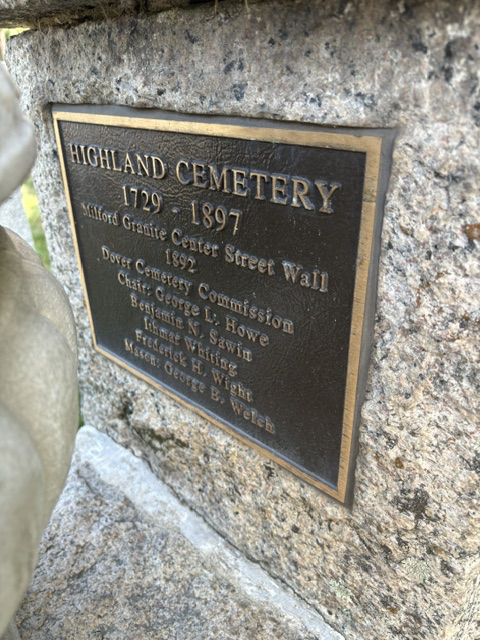
Highland Cemetery began as a small colonial burying ground on land belonging to Nathaniel Chickering. Dating to 1729, it was established when Dover was still part of Dedham and consisted of scattered farms connected by narrow roads and footpaths. Chickering later formally gave the original tract to the community, ensuring that local families would have […]
E. F. Hodgson Portable Houses
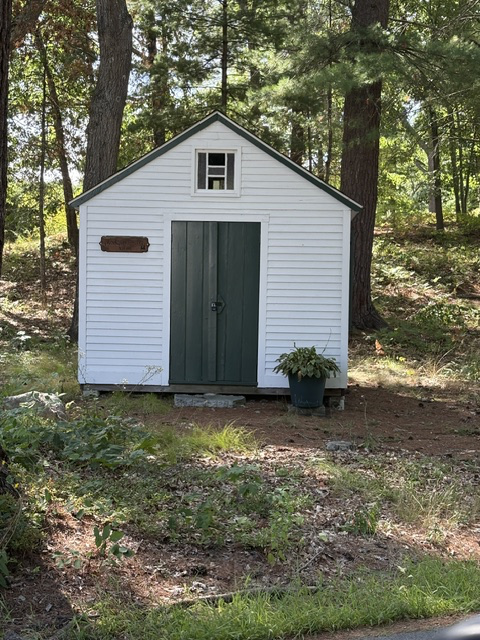
In 1892, Ernest F. Hodgson began manufacturing portable poultry brooders in Dover. Marketed under names such as “Peep o’ Days” and “Wigwarms,” the small structures were designed to be produced efficiently, transported easily and assembled where they were needed. The success of the brooders encouraged Hodgson to expand into other prefabricated products. The company manufactured […]
Town Pound
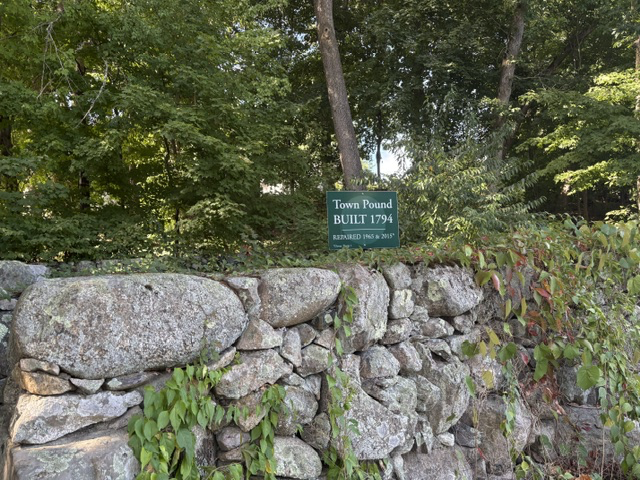
Dover’s Town Pound was built in 1794, when farming shaped nearly every part of community life. Families depended upon cattle, pigs, sheep and other animals for food, labor and income. Before the pound was constructed, cattle and swine were generally permitted to roam, creating problems when they wandered onto neighboring farms or damaged fields and […]

