William Penn Statue
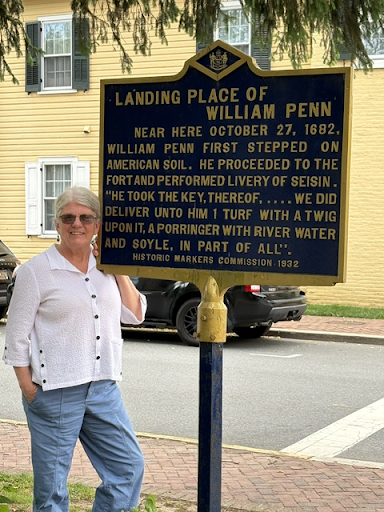
If you happened to miss the historic marker commemorating William Penn’s landing in New Castle, this statue would quickly remind you of the important role he played in the history of both Delaware and Pennsylvania. Standing on the New Castle Common, it honors the man whose arrival here in 1682 forever changed the future of the region.
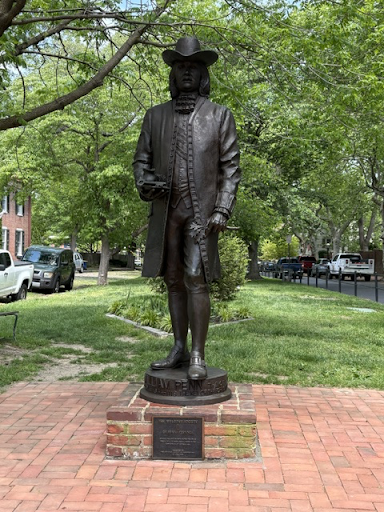
The bronze statue was dedicated in 1982 to commemorate the 300th anniversary of Penn’s landing in New Castle. It portrays him as a thoughtful statesman rather than a military leader, dressed in the clothing of a prosperous seventeenth-century English Quaker gentleman. In his left hand he carries the Charter of Pennsylvania, symbolizing the authority granted to him by King Charles II to establish his colony. In his right hand he holds a small twig, a subtle reference to the ancient English legal ceremony of “livery of seisin,” through which he formally accepted possession of the Lower Counties. Together, these symbols represent both the legal authority that brought Penn to America and the vision that would shape the future of the region
Most people associate William Penn with Pennsylvania, yet his first steps in America were taken here in New Castle. Before traveling north to establish Philadelphia, Penn came to Delaware to take legal possession of the Lower Counties, lands transferred to him by the Duke of York. Without control of the Delaware River and these counties, his vision for Pennsylvania may never have succeeded.
Penn’s influence extended far beyond the founding of a colony. A Quaker, he believed that the government should protect religious freedom, encourage representative government, and seek peaceful relationships with Native Americans. His “Holy Experiment” became one of the most successful examples of religious tolerance in the colonial world and influenced many of the principles later incorporated into the United States.
The statue portrays Penn not as a military leader or monarch, but as a thoughtful statesman carrying the documents that represented his vision for a new society. It is a fitting tribute, reminding visitors that some of history’s greatest accomplishments are achieved not through conquest, but through ideas, leadership, and the courage to put those ideas into practice.
After spending the day exploring New Castle, I came to appreciate why William Penn is honored here. Although history often remembers him as the founder of Pennsylvania, his American story began in Delaware.
Read More From Nancy
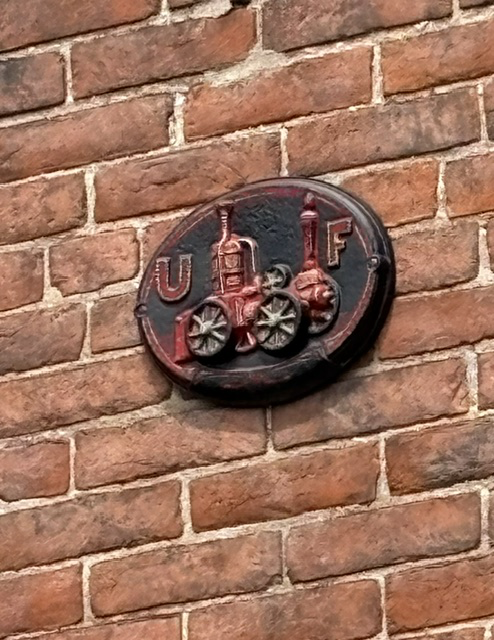
Union Fire Company
One of the things I enjoy most about exploring historic towns is noticing the small details that are easy to overlook. While walking through New Castle, I spotted this cast-iron plaque mounted high on the side of a brick building. At first I wasn’t sure what it represented, but I soon learned that it was […]
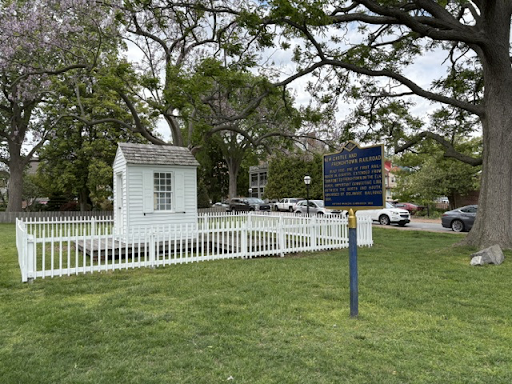
Frenchtown Railroad Ticket Office
As I explored Battery Park, I was surprised to discover this tiny white building. At first glance, it would be easy to walk past without giving it a second thought. Yet this modest structure is one of the oldest surviving railroad ticket offices in the United States and one of the few remaining physical reminders […]
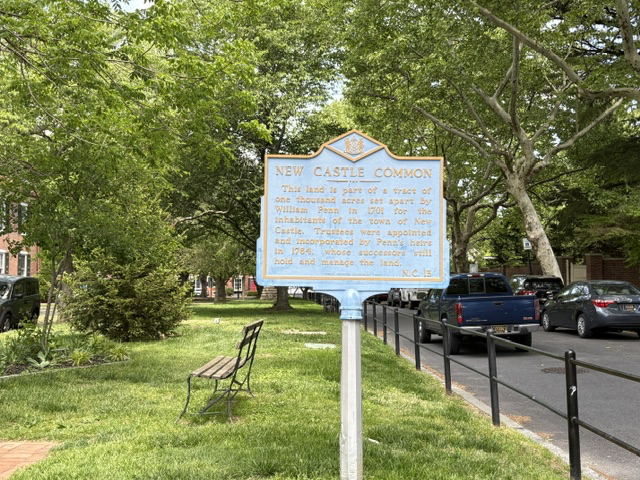
New Castle Common
As I continued exploring New Castle, I came upon another historic marker that tells a story few visitors know. At first glance, the New Castle Common appears to be a pleasant town green, but it represents one of the oldest examples of land set aside for the benefit of an entire community. The marker explains […]

