Frenchtown Railroad
One of the most fascinating stories I discovered in New Castle was that this small colonial town became the eastern terminus of one of America’s earliest railroads. Completed in 1832, the New Castle and Frenchtown Railroad stretched just sixteen miles across the Delmarva Peninsula, linking the Delaware River with the Chesapeake Bay.
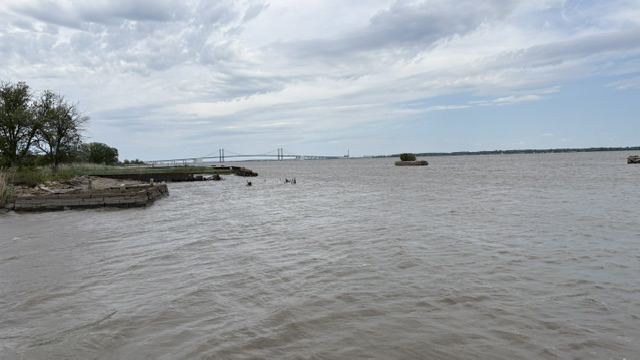
Although the railroad was relatively short, its impact was enormous. Before direct rail lines connected the major East Coast cities, travelers journeying between Philadelphia and Baltimore arrived in New Castle by steamboat, boarded the train to Frenchtown, Maryland, and then continued by another steamboat down the Chesapeake Bay. This combination of rail and water travel dramatically reduced travel time and represented one of the nation’s first truly integrated transportation systems.
The railroad quickly became a busy corridor for passengers, mail, and freight, demonstrating how rail transportation could transform commerce and communication throughout the young nation. It was an important step in the evolution of America’s transportation network, bridging the gap between the age of sailing ships and the coming era of long-distance railroads.
Like many early innovations, its success was eventually overtaken by progress. As more direct rail routes were built between Philadelphia and Baltimore, the New Castle and Frenchtown Railroad gradually lost its importance. Yet its influence remained. It proved that railroads could connect existing waterways into a seamless transportation system, laying the foundation for the rapid expansion of rail travel across the United States.
Standing beside the Delaware River today, it is remarkable to think that this quiet town once played such an important role in the nation’s transportation history. The New Castle and Frenchtown Railroad may have operated for only a relatively brief period, but it helped demonstrate the possibilities of a connected America, where people, goods, and ideas could move faster than ever before.
I continue to be amazed that such a small colonial town contributed so much to our nation’s history. Every marker I encountered revealed another chapter I had never known, making New Castle a rewarding historic community to visit.
Read More From Nancy
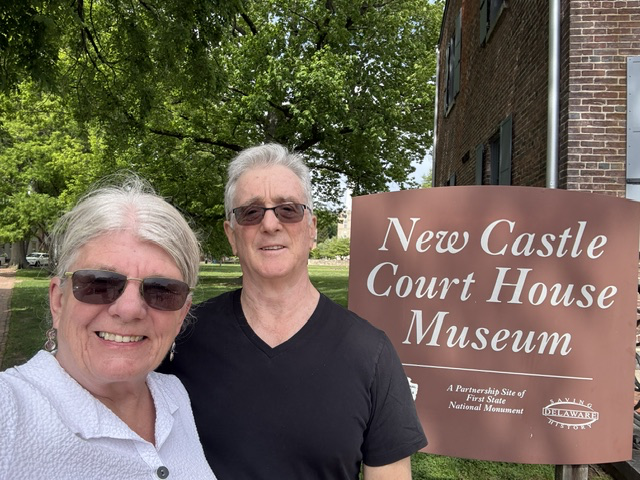
Court House Museum
One of the highlights of our visit to New Castle was the historic Court House, one of the oldest surviving courthouses in the United States. Standing before this building, it is easy to appreciate that it was much more than a courthouse. For nearly a century, it served as the center of government for Delaware, […]
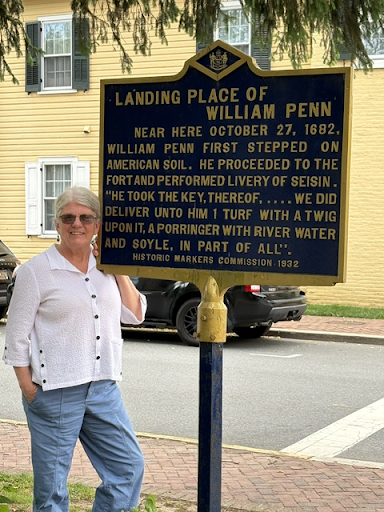
Landing Place of William Penn
Visiting New Castle in May of 2026 was so much more than I expected. It was my first time exploring this historic town, so everything was new to me. As I drove into town, my first impression was that I had arrived in Williamsburg, Virginia. It didn’t take long, however, to realize that unlike Williamsburg, […]
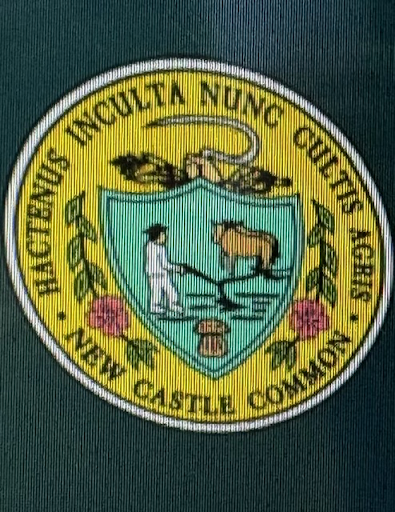
Seal of New Castle
One of the things I enjoy while visiting historic communities is paying attention to the symbols, they choose to represent themselves. This is the official seal of New Castle, and like so much of the town, it reflects centuries of history. The seal celebrates the everyday life that allowed the community to flourish. A farmer […]

