Tomb of Rabii Loew
Walking through the Old Jewish Cemetery in Prague is an extraordinary experience. The gravestones seem almost to overlap one another, leaning at different angles and filling nearly every available space. Among them is this particularly elaborate tomb belonging to one of the most important figures in the history of Prague’s Jewish community—Rabbi Judah Loew ben Bezalel, better known as the Maharal of Prague.
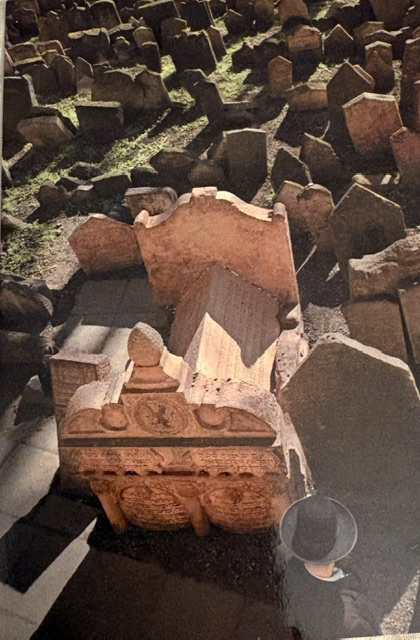
Born around 1525, Rabbi Loew became a renowned scholar, philosopher, educator, and rabbi. He served as chief rabbi of Prague and became an influential voice in Jewish thought at a time when the Jewish community lived under significant restrictions. His writings explored Jewish law, philosophy, ethics, education, and the relationship between faith and reason, and they continued to influence Jewish scholarship long after his death in 1609.
Over time, however, the Maharal also became associated with one of Prague’s most famous legends—the story of the Golem. According to the legend, Rabbi Loew created a giant figure from clay and brought it to life in order to protect Prague’s Jewish community from persecution and accusations. The Golem supposedly obeyed the rabbi until it became uncontrollable, at which point Rabbi Loew removed the sacred power that had animated it. One version of the story claims that the remains of the Golem were hidden in the attic of Prague’s Old New Synagogue.
There is no historical evidence that Rabbi Loew created a Golem, and the familiar Prague version of the legend developed long after his lifetime. Yet the story became so closely connected with him that the historical rabbi and the legendary creator of the Golem are now almost inseparable in popular memory. Behind that legend was a real man whose intellectual influence was far more significant than the mythical creature eventually associated with his name.
His tomb also gives us an opportunity to understand the remarkable cemetery surrounding it. For centuries, Prague’s Jewish community had only limited space in which to bury its dead. Jewish tradition prohibits disturbing graves, so when the cemetery became full, additional layers of earth were added and new burials placed above earlier ones. In some places, numerous burial layers accumulated. Older gravestones were raised to the new surface, helping create the dense landscape of stones we see today.
The Maharal’s large tomb stands prominently amid that sea of gravestones. It is a powerful setting for remembering a man whose life combined scholarship, leadership, and faith—and whose name, centuries later, remains woven into both the documented history and the legends of Jewish Prague.
Read More From Nancy
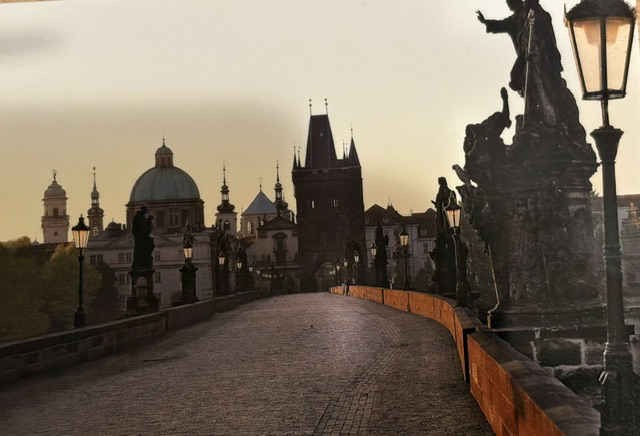
Charles Bridge and Old Town Bridge Tower
Few places in Europe are as magical as Charles Bridge in Prague. Stretching across the Vltava River and lined with statues of saints, the bridge has connected the Old Town and the Lesser Town for more than six centuries. Early one morning, before the crowds arrived, I was able to capture this view looking toward the magnificent Old […]
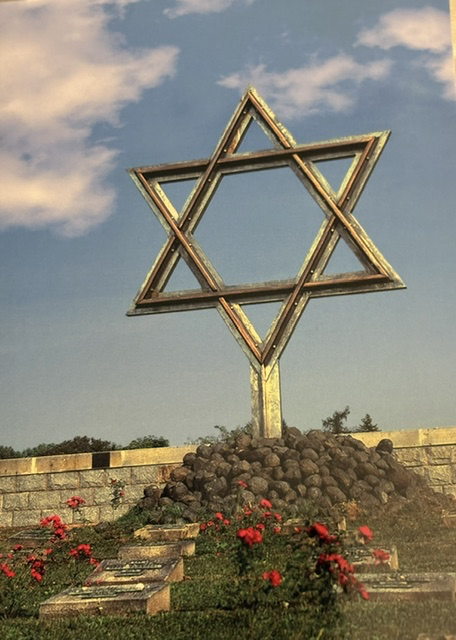
The Star of David at Terezín National Cemetery
Traveling through the Czech Republic, Marty and I visited Terezín, one of the places that has remained with me long after our journey ended. Unlike many historic sites that celebrate achievement or commemorate victory, Terezín exists to remember unimaginable human suffering and to ensure that those who died are never forgotten. Standing within the National […]
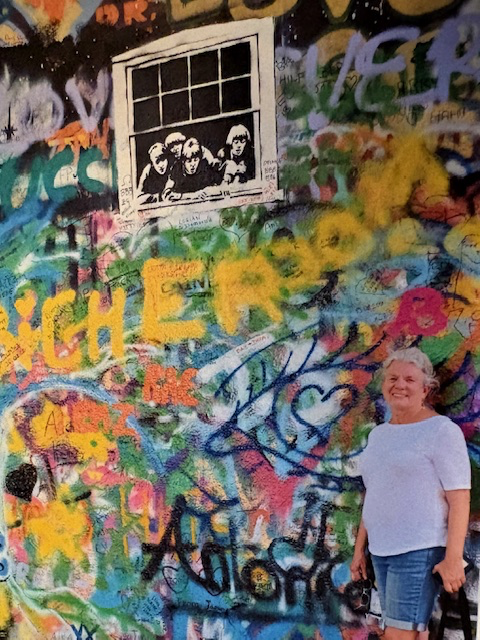
John Lennon’s Wall
On our visit to Prague, Marty and I stopped to see one of the city’s most colorful landmarks. Covered in layers of bright paint, messages and artwork, the wall is alive with expression. This famous spot is known as the John Lennon Wall. It stands near the historic Charles Bridge and has become a symbol of […]

