The Star of David at Terezín National Cemetery
Traveling through the Czech Republic, Marty and I visited Terezín, one of the places that has remained with me long after our journey ended. Unlike many historic sites that celebrate achievement or commemorate victory, Terezín exists to remember unimaginable human suffering and to ensure that those who died are never forgotten.
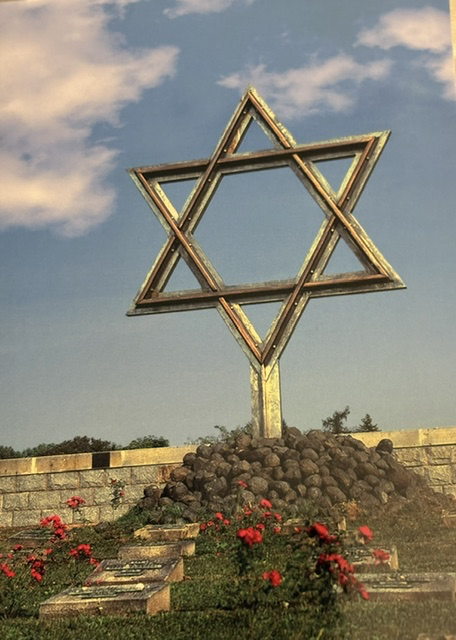
Standing within the National Cemetery is this large Star of David, overlooking the graves of thousands of victims of the Nazi concentration camp and ghetto. The cemetery contains the remains of more than 10,000 people who died in Terezín, while many thousands of others who passed through this place were deported to extermination camps farther east.
Terezín was originally built in the late eighteenth century as a military fortress by Emperor Joseph II. During World War II, the Nazis transformed the town into a Jewish ghetto and transit camp. More than 150,000 Jewish men, women, and children passed through Terezín. Although the Nazis attempted to portray it to the outside world as a “model” Jewish settlement, the reality was overcrowding, disease, hunger, and constant fear. Tens of thousands died there, while most of the survivors were later transported to Auschwitz and other death camps.
The Star of David rising above the cemetery is a powerful symbol. For centuries it has represented Jewish faith and identity. Here it also stands as a memorial to those whose lives were taken simply because they were Jewish. Surrounded by thousands of graves, it reminds visitors that every number associated with the Holocaust represents an individual life, a family, and a story that deserves to be remembered.
Over the years, Marty and I have visited several concentration camps and Holocaust memorials. Each tells a different part of the story, yet each leaves the same impression that history must be remembered, even when it is difficult to confront. Places like Terezín challenge us to move beyond statistics and dates and to recognize the human cost of hatred and intolerance. They remind us why preserving these places and telling their stories remains so important for future generations.