The Spirit of the Sea
As we walked through Bath’s Library Park, we came upon a broad pool with a bronze figure rising from its center. Water fell around her into the basin below. The fountain belonged to the park’s quiet setting, yet the figure’s upward reach gave it a sense of movement that drew us closer.
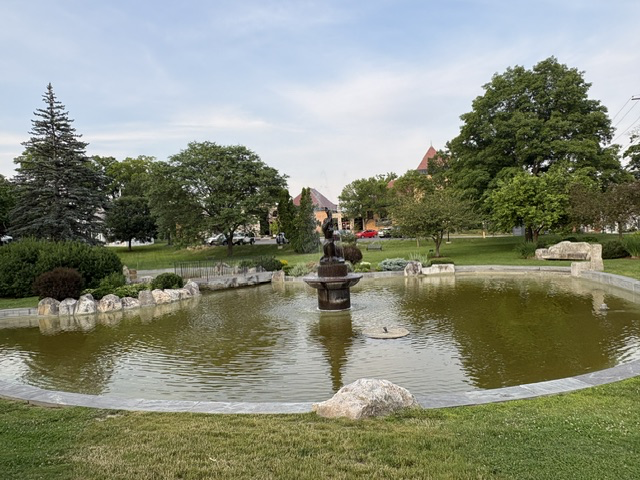
The sculpture is Spirit of the Sea, created by William Zorach and given to Bath in 1962. Zorach had a personal connection to this part of Maine. He and his wife, the artist Marguerite Zorach, had bought a home at Robinhood Cove in nearby Georgetown in 1923 and spent their summers there. Bath’s maritime history was part of the region he knew.
Bath earned its name, the City of Ships, through generations of work along the Kennebec River. Shipyards built vessels that would leave the river for distant ports. Zorach’s fountain brings that relationship with water into the heart of the city. Rather than depicting a particular ship or voyage, he gave Bath a figure that could suggest the energy and possibility of the sea.
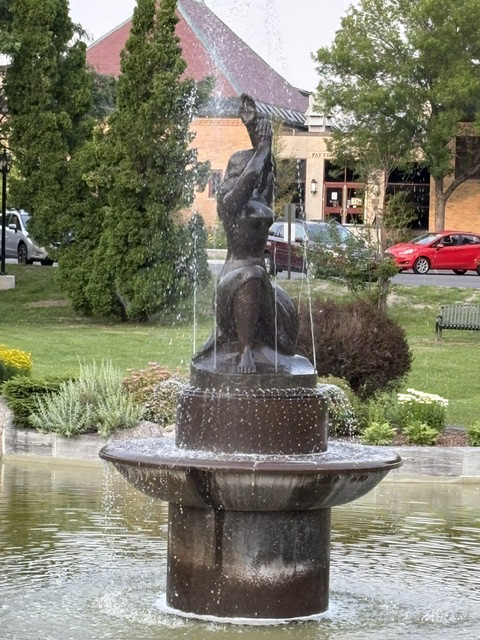
There is a history to the artwork itself. Drawings Zorach made while developing Spirit of the Sea are now held by the Smithsonian American Art Museum, and the Bath Historical Society preserves an image of him overseeing the sculpture’s installation. What visitors encounter as a familiar part of the park began with an artist working through an idea, then choosing to share the finished work with this city.
Read More From Nancy
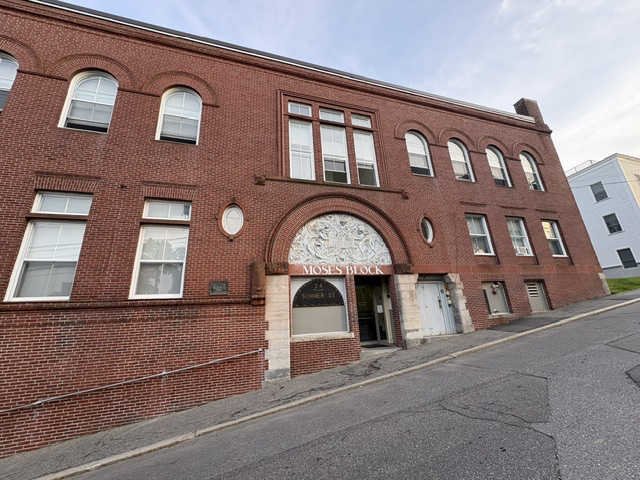
The Moses Block and Bath’s First YMCA Home
On Bath’s Front Street, the brick façade of the Moses Block holds a clue to a life that once unfolded inside it. Near the entrance, a small plaque dedicates the building to Bath’s young men. It recalls the years when this was home to the city’s YMCA, a place for learning, recreation, and companionship in a […]
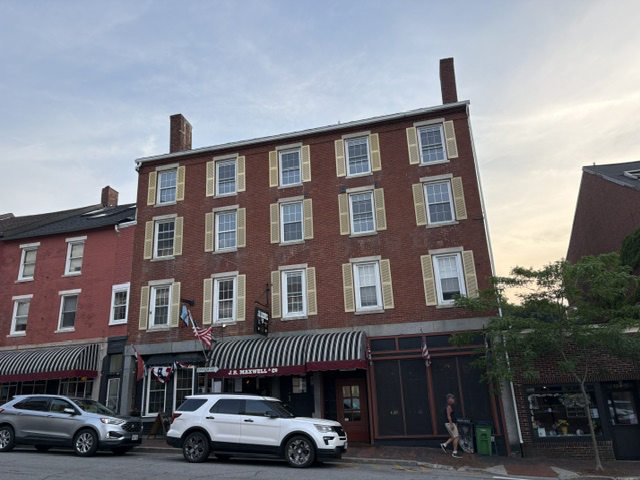
The Elliot House Block
A tall brick building on Bath’s Front Street recalls a time when the city’s waterfront drew travelers as well as ships. John Elliot had the building constructed as a hotel in 1840. Rising above many of its neighbors, the Elliot House would have been a prominent address in a town growing through shipbuilding and trade. Its […]
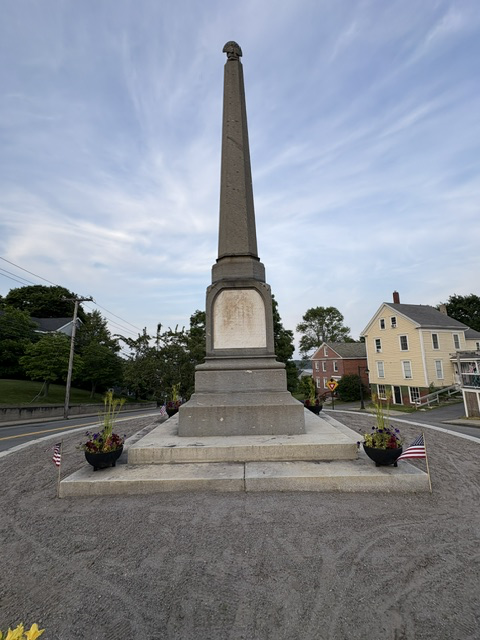
Civil War Soldiers’ Monument
The tall stone monument on Bath’s High Street was raised while the Civil War was still close in memory. Erected between 1867 and 1869, it honored the men from Bath who had died in the conflict. An eagle crowns the shaft; below it, the city’s dedication asks those passing by to remember its sons. The […]

